
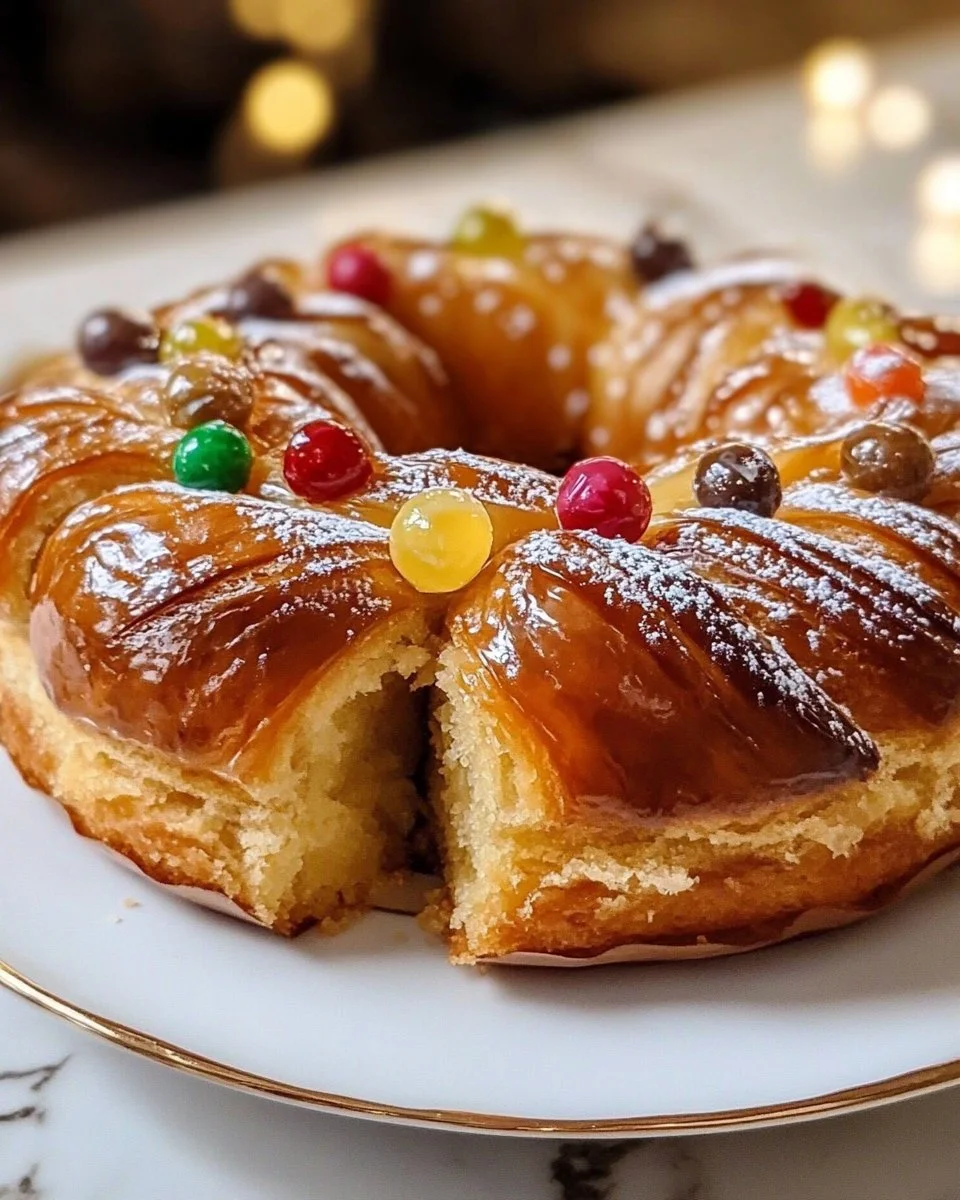
The scent of warm dough and sweet caramel curls through the house, and I can see my children tiptoeing into the kitchen with sleepy smiles, drawn by that slow, happy smell that says someone baked something special. I pull the Three Kings Cake Recipe (Latin American Rosca De Reyes) from the oven and watch the sugar glaze catch the light, and in that small moment the room feels simple and full. I keep a list of little kitchen habits that help me stay calm and steady, from a spoon I always use for stirring to a morning note about an apple cider vinegar detox for weight loss that reminds me to care for myself as I care for my family. Baking this rosca is more than following a recipe; it is a habit of love, something we do together and remember together.

Three Kings Cake (Rosca De Reyes)
Ingredients
Method
- Add the flours, yeast, sugar, and egg to a large mixing bowl.
- Gradually pour in the milk while working the dough; you may not need all of it.
- Mix until a dough starts forming, then transfer it to a floured surface and knead for about 2-3 minutes.
- Incorporate the butter and knead until the dough is smooth and elastic, about 5-6 minutes.
- Keep a light dusting of flour nearby to manage any stickiness.
- Shape the dough into a ball, brush with oil, place in a bowl, and cover with plastic wrap.
- Let it rise until double in size, about 1-2 hours.
- Roll out the dough into a large rectangle.
- Spread the dulce de leche onto 2/3 of the rectangle, adding the softened raisins on the remaining 1/3.
- Cut the remaining 1/3 (no filling) into thin horizontal stripes.
- Roll the dough from the left side with the fillings, then bring the thin stripes over the rolled dough.
- Pinch the ends of the log together to seal and form an oval shape.
- Place on a baking sheet and preheat the oven to 350°F (180°C).
- Whisk together the egg and milk in a small bowl.
- Brush the rosca with the egg wash for a golden finish.
- Garnish with sliced candied cherries, slivered almonds, and shredded coconut.
- Bake for 18-20 minutes or until golden brown.
- Check doneness with a toothpick; it should come out clean.
- Dissolve sugar in water over low heat and let it cool slightly.
- Brush the rosca with simple syrup immediately after baking.
- Serve warm with coffee, cocoa, or tea.
Nutrition
Notes
Tried this recipe?
Let us know how it was!The Story Behind Our Favorite Three Kings Cake Recipe
This cake has a way of carrying the past into the present. I first learned to make rosca at my mother-in-law’s kitchen table, where flour dusted the air and laughter filled the pauses. My mother-in-law moved her hands like a conductor as she braided and shaped the dough, and she always told stories about how children would hide tiny trinkets inside for good luck.
Making this Three Kings Cake Recipe (Latin American Rosca De Reyes) with my own little ones changed the ritual for me. They want to press the candied cherries on top and count the almonds like little treasures. Those hands-on tasks are small and sticky and perfect, and they make a quiet holiday into something everyone remembers.
What I love most is how this bread brings people together. It is a centerpiece that asks for company, for coffee refills, for a second helping of dulce de leche. The oval shape makes it easy to pass around, and the warm chew of the dough paired with the caramel sweetness feels like a gentle hug from the inside out.
This rosca also reminds me that good baking is patient work. The dough needs time to rise and the flavors need that slow moment to meld. If you listen, your kitchen will tell you when it is ready: a soft spring in the dough, the smell of butter and sugar turning to caramel, the warm note of vanilla floating through the room.
How to Make Three Kings Cake Recipe
“Every time I stir this pot, it smells just like Sunday at home.”
Bringing Three Kings Cake Recipe (Latin American Rosca De Reyes) Together
Making the rosca is a gentle rhythm. You measure, you mix, you wait, and you shape. The dough moves from rough and dusty to smooth and elastic, and it is the kind of texture that invites you to get your hands in there. When you add the butter, the dough will feel silkier and slightly sticky, and that tells you you are on the right path.
Spread the dulce de leche like a slow ribbon of brown gold. The raisins will plump and sing with a little soaking, and when you roll the dough you will see layers where the filling peeks out. As the oven warms, the kitchen fills with a warm note that makes everyone pause and breathe it in.
The decoration is simple and honest. Candied cherries bring color, almonds bring crunch, and a dusting of coconut brings brightness. The egg wash gives the rosca a golden smile that makes it hard to wait. When it comes out of the oven, brush it with simple syrup so the top keeps a soft shine and a little extra sweetness.
Ingredients You’ll Need
1 and 2/3 cups (200 g) all-purpose flour
1 cup (125 g) bread flour
2 and 1/4 tsp (7 g) instant yeast
1/4 cup (50 g) white granulated sugar
1 egg (room temperature)
3/4 cups (185 ml) whole milk (room temperature)
1/2 stick (55 g) unsalted butter (room temperature)
1/2 cup (160 g) dulce de leche
1/2 cup (60 g) raisins (softened in a pot of boiling water for 2 minutes)
1 egg
1 tbsp whole milk
4-5 candied cherries (sliced)
1/4 cup (27 g) slivered almonds
2 tbsp shredded coconut
2 tbsp water
2 tbsp sugar
A little extra vanilla if you love a cozy aroma. Fresh butter gives this its richness and a softer crumb. If your raisins feel dry after soaking, pat them lightly so they do not add too much liquid to the dough. These small choices shape the loaf in gentle ways.
Step-by-Step Directions
Make the dough. Add the flours, yeast, sugar, and egg to a large mixing bowl. Gradually pour in the milk as you work the dough, you may not need all of it. Mix until a dough starts forming then transfer the dough to a floured work surface and knead until the dough comes together, about two to three minutes.
Add butter and knead. Add in the butter and knead until the dough is smooth and elastic, about five to six minutes. The dough will become glossy and soft under your hands, and that feel tells you the gluten has developed. Be patient and keep a light dusting of flour nearby if the surface is sticky.
First rise. Form the dough into a ball, brush with oil, place in a clean bowl, then cover the bowl with plastic wrap. Allow the dough to rise until double in size, about one to two hours. You will see it puff and breathe, and you can press a finger gently to check if it springs back slowly.
Roll out and spread. Roll out the dough into a large rectangle. Spread the dulce de leche onto about two thirds of the rectangle, then add the softened raisins to one third of the dulce de leche side. The dulce de leche should be glossy and easy to spread, like a caramel ribbon.
Cut and roll. Cut the remaining third, the one with no fillings on it, into thin horizontal stripes. Roll up the dough starting from the left side, the raisins and dulce de leche side, and stop rolling when you reach the cut dough. Pull the thin stripes of dough over the log. This weaving feels like braiding a story.
Shape the rosca. Finally, bring the ends of the log together and pinch them to seal to create an oval shape. Transfer the dough to a baking sheet lined with parchment paper and preheat the oven to 350 F, 180 C. The shape should sit proud and even on the sheet, ready to brown.
Prepare the egg wash. Prepare an egg wash by adding the egg and milk to a small bowl and whisking them together until fully combined. Brush your prepared egg wash onto the rosca using a pastry brush. This wash gives the rosca its warm, golden finish.
Decorate. Place a few sliced candied cherries on top of the rosca, then add the slivered almonds and finally sprinkle with shredded coconut. Place the decorations with care so the rosca looks bright and festive, the colors and textures like small crowns.
Bake. Bake for 18 to 20 minutes or until golden brown on top. A toothpick inserted in the center of the rosca should come out clean, sticky dulce de leche is okay but there should be no wet crumbs of dough. Wait for the edges to turn golden and breathe in the aroma that fills your kitchen as it bakes.
Make simple syrup. While the rosca is baking, prepare a quick simple syrup by adding the water and sugar to a small pot. Heat the pot over low heat until the sugar has dissolved completely then turn off the heat. Stir until glossy and let it cool slightly before brushing.
Finish and serve. Brush with simple syrup. As soon as the rosca comes out of the oven, use a clean pastry brush to brush the rosca with your prepared simple syrup and serve immediately. Your kitchen will smell like caramel and butter and a hint of toasted coconut, and the first slice will be soft and warming.
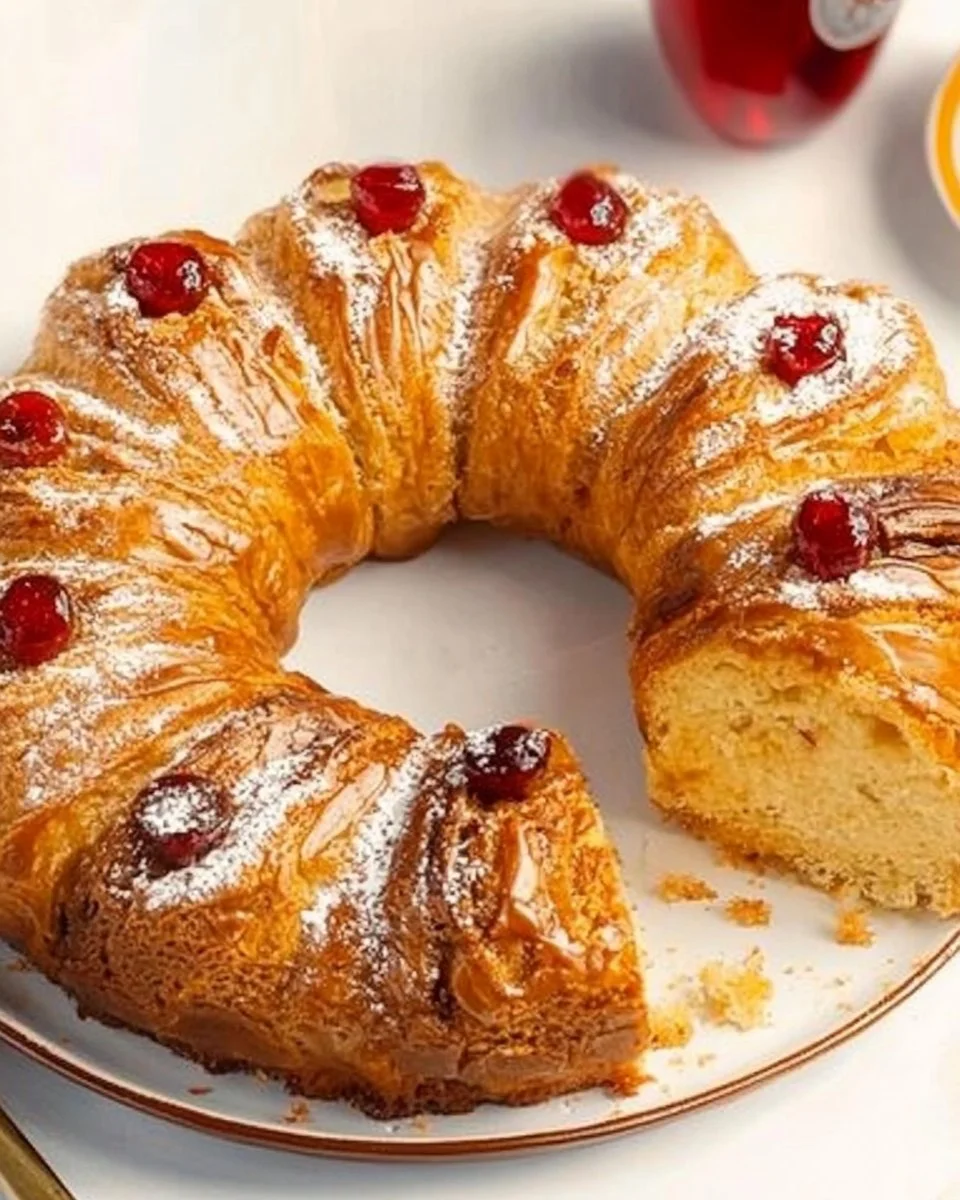
Serving Three Kings Cake Recipe With Family Warmth
Serve the rosca on a large wooden board or a simple white plate so the colors of the cherries and almonds pop. Slice with a serrated knife for clean rounds and offer coffee, cocoa, or a pot of strong tea. A mug in each hand and a warm bite in the other will pull people close, and the room fills with quiet talk as everyone finds their favorite piece.
We have a small tradition of passing the rosca around and letting each person take a piece that matches the trinket they hope to find. Sometimes the kids will shake a slice to guess if something is tucked inside. The dulce de leche shows up in soft ribbons inside each slice, and the raisins give little bursts that make the crust more interesting.
For a casual weekend, I serve thin slices with fresh fruit and yogurt to balance the sweetness. For a holiday table, pair the rosca with flans or small custards and let folks pick their extras. The rosca is flexible, and it becomes the kind of dish that invites sharing and stories.
Storing Three Kings Cake Recipe for Tomorrow
Store leftover Three Kings Cake (Rosca de Reyes) in an airtight container at room temperature for up to two days. If you live in a warmer climate, keep the rosca in the refrigerator and bring it back to room temperature before serving so the texture softens again. The simple syrup plays a big role in keeping the crust tender and lightly glossy, so don’t skip that final brush—it makes a noticeable difference in both flavor and texture.
To reheat, place a slice on a baking sheet and warm it in a 300 F oven for five to eight minutes, or use a toaster oven for a quick reset. The heat will bring the dulce de leche back to a gooey state and the crust will regain a light crisp. You can also pop a slice in the microwave for about fifteen seconds if you are in a hurry, but the oven gives a nicer texture.
Leftovers can taste even better the next day as the flavors settle. The dulce de leche will mingle more evenly through the crumb, and the raisins will feel juicier. Wrap slices individually if you plan to take them to a neighbor or tuck them into lunchboxes.
Clara’s Kitchen Notes
I keep a bowl of warm water nearby when I knead this Three Kings Cake (Rosca de Reyes) dough. If it starts to feel dry, a small splash of warm water helps it come together without adding too much flour. Aim for a soft, slightly tacky dough, since that gentle texture bakes into a tender rosca, while a dry dough can lead to a stiff, dense loaf.
If your butter is too cold, cut it into small cubes before adding so it melts into the dough more evenly. Room temperature butter helps the dough take on that tender, rich crumb that makes each bite feel like a treat. If you are short on time, warm the milk slightly to help the yeast wake up faster.
Use a kitchen towel rather than plastic wrap for the first rise if you prefer. The towel lets the dough breathe while keeping it from drying out. I also preheat my oven with a small pan of hot water on the bottom rack to create a gentle steam for the first few minutes of baking if I want a slightly softer crust.
For helpful lifestyle ideas that pair well with slow, soothing baking, I sometimes read about the benefits of sea moss detox and other gentle routines that support energy and calm. These small practices are part of how I keep my kitchen a place of care.
Family Variations on Three Kings Cake Recipe
We sometimes swap raisins for chopped dried apricots or figs during the winter months, and the chewy texture with those bright, fruity notes changes the flavor just enough while keeping the Three Kings Cake (Rosca de Reyes) warm and homey. You can also add a bit of fresh orange zest to the dough for a gentle citrus lift that pairs beautifully with the dulce de leche and makes the whole rosca feel even more festive.
If you prefer chocolate, spread a thin layer of chocolate ganache in place of some of the dulce de leche and sprinkle with chopped hazelnuts. This twist makes the rosca feel like a special treat for birthdays or cozy movie nights. For a nut-free version, replace the almonds with toasted coconut flakes only, and add a pinch of cinnamon to the dough.
For a lighter version of this Three Kings Cake (Rosca de Reyes), reduce the sugar in the dough by one tablespoon and add a touch more vanilla. The rosca will still be gently sweet thanks to the dulce de leche, and the crumb will stay soft and tender. Family favorites naturally change over the years, and I always encourage you to try a small tweak and watch how this rosca slowly becomes your own.
FAQs About Three Kings Cake Recipe
Can I make this Three Kings Cake ahead of time?
Yes, you can absolutely make this Three Kings Cake (Rosca de Reyes) ahead of time, and it often tastes even better the next day. Once baked and fully cooled, store it in an airtight container at room temperature for up to two days. The flavors settle beautifully overnight, and the crumb stays soft thanks to the simple syrup finish. When you’re ready to serve, warm slices gently in a low oven to bring back that fresh-from-the-oven aroma and soft, caramel-kissed texture.
What if I do not have bread flour for Three Kings Cake?
No worries at all. You can make this Three Kings Cake (Rosca de Reyes) using only all-purpose flour. Bread flour adds a slightly chewier texture, but all-purpose flour will still give you a soft, tender crumb that’s perfect for this festive cake. If you want a bit more structure, you can knead the dough for an extra minute or two to help develop the gluten, but even without bread flour, your rosca will bake up beautifully.
Can I freeze the rosca (Three Kings Cake)?
Yes, this Three Kings Cake (Rosca de Reyes) freezes very well. Let it cool completely, then wrap it tightly in plastic wrap followed by a layer of foil to protect it from freezer burn. You can freeze it whole or in individual slices for up to two months. When you’re ready to enjoy it, thaw overnight in the refrigerator or at room temperature, then warm gently in a low oven to bring back the soft crumb and that fresh-baked aroma.
My dough did not rise much. What should I check for Three Kings Cake?
If your Three Kings Cake (Rosca de Reyes) dough didn’t rise as expected, a few small things are usually the reason. First, check that your yeast is fresh and active, since old yeast won’t give the dough enough lift. Make sure the milk you used was warm but not hot, as high heat can kill the yeast. Also consider the room temperature—dough rises best in a warm, draft-free spot. If your kitchen is cool, give the dough a little extra time, as a slow rise often still leads to a soft, flavorful rosca.
How do I keep the top from burning while the inside bakes?
Tent the rosca loosely with foil after the top reaches a golden color if the center needs more time. This keeps the top from over-browning while the middle finishes baking.
A Warm Note From My Kitchen
As this Three Kings Cake recipe finds its place in your kitchen story, I hope you’ll wander through a few more favorites from my table to yours, like my Salted Honey Pie, Amish Peanut Butter Cream Pie, Peanut Butter and Jelly Pie, Simple Dark Chocolate Pumpkin Tart, Pumpkin Mascarpone Pie, Fluffernutter Pie, Maple Buttermilk Pie, or even a cozy batch of Candy Cane Whipped Shortbread when the holidays roll around. These recipes live together in my kitchen the same way memories do, layered and sweet in different ways.
You can also find me sharing everyday baking moments, family favorites, and quiet kitchen rituals over on Pinterest and Facebook, where I love connecting with fellow home bakers. Whether you’re baking for a celebration or a slow morning at home, I’m so glad you’re here, and I hope these recipes keep your kitchen warm, familiar, and full of love.
