

The first time I made that layered bowl of comfort it was after a day where nothing went according to plan. The kids had fought over mittens, the heater hiccuped, and I found a cracked pie plate when I reached for dessert. I pulled a soft sponge from the pantry, whisked together a quick custard, and layered fruit I had sliced while the baby slept in my arms. By the time my husband came in from shoveling, the kitchen smelled like warm sugar and vanilla, and everyone forgot the rest of the chaos for a little while.
Why This Christmas Trifle Fits Our Real Life
This trifle became a staple because it forgives mistakes. I once used a slightly stale sponge and it still soaked up the custard just right. A week with late practices and half-made meals needs a dessert that works with what is on hand, not something that demands perfection. Kids can help tear cake and toss fruit, so it folds into chaotic evenings without adding stress.
We first made it properly during a winter weekend when my in-laws were visiting and the oven decided to die mid-roast. I shrugged, cut up a sponge cake we had bought at the market, and layered it with custard and berries. The cousin who barely says two words asked for seconds, and my mother-in-law said something soft about tradition. That night the trifle felt like a small rescue, and it has been on the table often since.
This dish is adaptable in ways that match school nights and slow Sundays. It travels from a hurried assembly in the afternoon to a showpiece at a low-key holiday dinner. For parents juggling carpools and piano lessons, that flexibility has real value. A trifle can sit in the fridge while you deal with bedtime, and then come out like a gift to whoever is left at the kitchen table.
The Story Behind This Recipe
I did not grow up with a trifle, but I grew up with layered desserts of one kind or another. My grandmother would layer store cake with jam and custard in a deep dish, and I kept that memory. When I had children, I wanted a dessert that felt festive without needing a pastry degree. I wanted something that could use day-old cake, that would work with frozen fruit, and that would still look like effort.
One winter evening I experimented with a quick custard and a box sponge. I cut the cake too big the first time and the top layer slid when I tried to cover it with cream. After a few tries I learned the right cube size, the trick of cooling the custard slightly before pouring, and the way to press the fruit gently so the layers stay pretty. Those small mistakes taught me how to make it in a hurry and how to make it ahead, which is my favorite kind of lesson.
Later, when we moved to Oregon and the seasons started to feel more vivid, the trifle adapted again. Summer berries went in when they were loud and sweet. In fall I used sliced pears with a touch of cinnamon. Around Christmas it became an excuse to add chocolate shavings and a few festive sprinkles to make the kids smile. The dish keeps our holidays casual and warm, which is the point for us.
“This is the part where the kitchen starts to smell like dinner is really happening.”
Bringing Christmas Trifle Together
When I start making a trifle, I listen to simple cues. The custard should thicken enough to coat the back of a spoon, not be so thin it slides right through the sponge. The fruit should be bright and not watery because water makes the cake soggy fast. The whipped cream needs to hold a soft peak so it spreads easily and looks light on top.
Begin with the sponge cubes and think of the bowl as a story. The bottom layer is foundation. Pour the custard when it is warm but not hot so it settles into the cake instead of melting the cream. Add fruit in a way that creates pockets of juice but does not drown the layers. Finish with cream and decorate so it looks like you cared, even if you put it together between soccer pickup and a piano practice.
I often make the custard a while before assembly and let it cool on the counter. Meanwhile, I cut fruit, rough chop some nuts for topping, and set out sprinkles that will make the kids giggle. If you are doing this with little helpers, give each child a small bowl of berries to scatter. It makes them feel useful and keeps them close without turning the kitchen into a war zone.
Ingredients You’ll Need
- sponge cake
- use day-old or store-bought if you are short on time; this stretches the dish.
- custard
- homemade or store-bought both work; homemade gives a warmer flavor and store-bought saves time.
- fresh fruit (e.g., berries, bananas)
- pick fruit that is in season or on sale; this helps picky eaters and keeps cost down.
- whipped cream
- lightly sweetened, or whipped from a can in a pinch; it makes the top feel festive.
- festive toppings (e.g., chocolate shavings, nuts, sprinkles)
- a little goes a long way to make it look special for guests or kids.
For me, these ingredients are flexible by design. If you have leftover fruit from a Friday breakfast, use it. If the custard is too thin, fold in a little whipped cream and it holds better. If you have extra sponge, you can layer more cake for people who love that bready texture. I have also linked a little idea that pairs well with leftovers, like a breakfast the next day, if you want to turn spare fruit into another simple treat. Try this Christmas overnight oats recipe for a morning when you are short on time but still want something cozy.
Step-by-Step Directions
-
Begin by cutting the sponge cake into cubes.
Cut into roughly one-inch cubes so they absorb the custard evenly and are easy to spoon.
Use a serrated knife or break softer cakes with your hands for a rustic look. -
In a large trifle dish, layer half of the sponge cake cubes at the bottom.
Spread them out so the base feels even and not lumpy, pressing lightly to fit the shape.
This first layer sets the stage for the rest, so take a moment to smooth it. -
Pour a layer of custard over the cake, followed by a layer of fresh fruit.
Pour the custard gently, watching it seep into the edges and coat the cake.
Scatter fruit over top, leaving some color peeking through for later layers. -
Add a layer of whipped cream on top.
Spoon the cream with a gentle hand so it stays light and airy rather than pushed flat.
Smooth with a spatula or leave it with soft peaks for a homemade feel. -
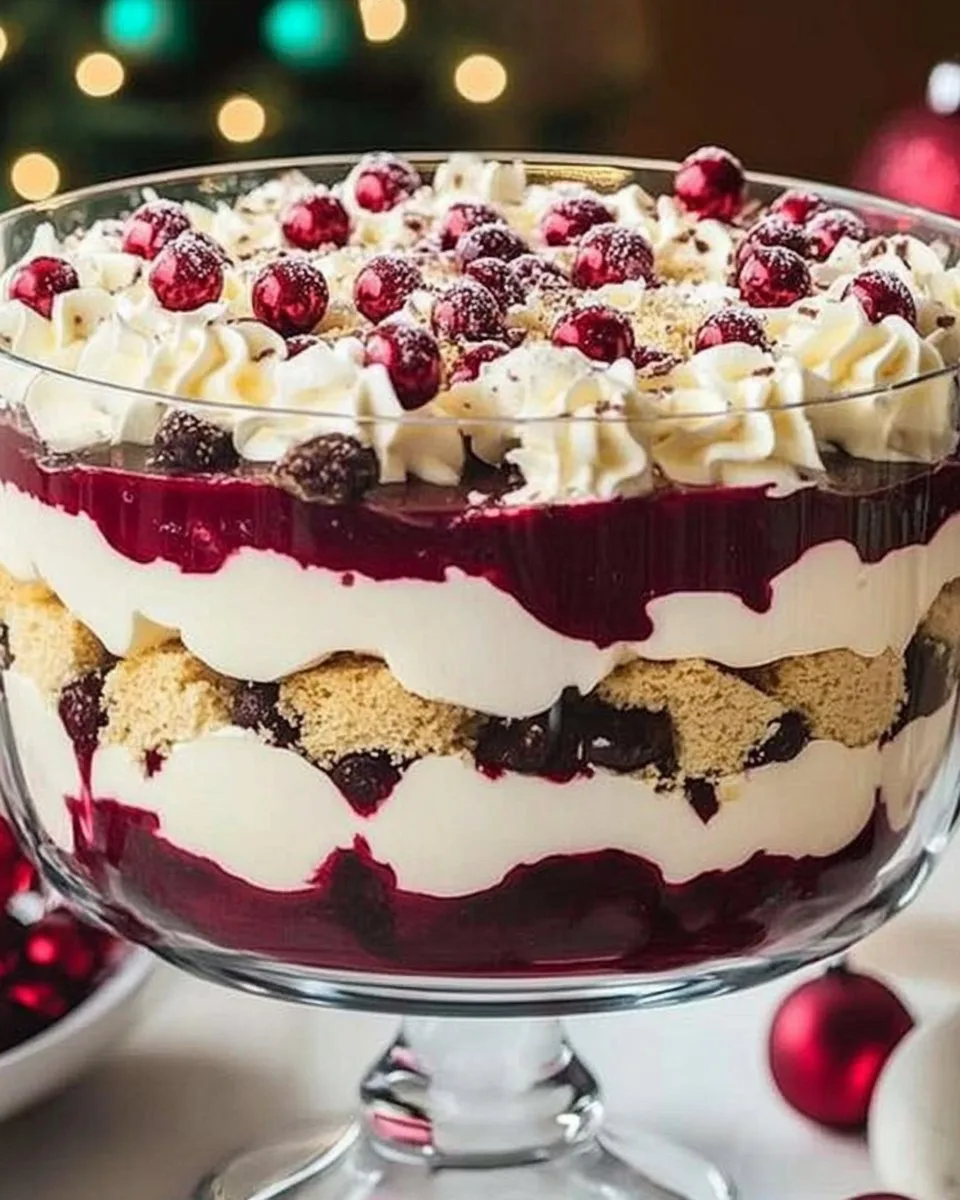
Repeat the layers with the remaining ingredients, finishing with whipped cream on top.
Alternate sponge, custard, fruit, and cream until you run out of ingredients or reach the top.
The final cream layer should be thick enough to hold your toppings. -
Garnish with festive toppings.
Sprinkle chocolate shavings, chopped nuts, or colorful sprinkles for a holiday look.
Keep it simple so the dish stays approachable and kid friendly. -
Chill for a few hours before serving to allow the layers to set.
Cover with plastic wrap and place it in the fridge for at least two to three hours.
Let it sit overnight for better blending of flavors and easier slicing.
Serving Christmas Trifle in Real Life
When it is time to serve, I pull the trifle out while dinner is still warm. We position chairs around the table and let anyone grab a spoon. The kids hold their bowls and eat in bits between stories and a more earnest discussion about school. Sometimes we eat at the counter, sometimes in the living room on messy laps. The point is the togetherness, not the porcelain.
I like to spoon the trifle into shallow bowls so the layers are obvious, and people get a bit of each thing. If you have guests, use a large, shallow spoon and serve a good scoop so the presentation looks like a treat. For toddlers, a small, shallow dish makes for less of a meltdown when they drop spoons. If you want to stretch servings, cut smaller pieces of sponge and add more fruit to bulk up the layers without losing flavor.
On more festive nights I place the trifle in the center, light a few candles, and let it be the last thing we all reach for together. When someone compliments the dessert, I shrug and say it was mostly luck and leftovers, and they are nicer about it. This kind of comfort dessert does what it is supposed to do: it brings people closer without asking for perfection.
I also sometimes take a portion of the leftover trifle and turn it into a quick breakfast for the morning. A spoonful of cream with berries over oats or stirred into yogurt is a little joy on a rushed day. If you plan to make a breakfast from leftovers, you might like checking this Christmas overnight oats for a different way to reuse fruit and custard flavors.
Storing Christmas Trifle for Busy Days
Leftover trifle keeps well in the refrigerator for up to three days, though the cake will soften more with time. Cover it tightly so it does not pick up other smells from the fridge. If you want to keep decorative toppings crisp, store them separately and add them just before serving.
If the top cream weeps a little after a day, give it a gentle stir or add a fresh spoonful of whipped cream to refresh the look. If the fruit releases extra juice, you can drain a bit if you prefer a firmer texture, but I usually let it mellow because that mingled flavor is part of the charm. When using leftovers for breakfast, mix small portions with yogurt or oats for a quick meal the kids are more likely to eat.
Freezing is not my first choice because the texture changes. If you must, freeze in smaller single-serve containers and plan to use them as a semi-frozen treat rather than a plated dessert. Thawed custard can be grainy and the cream may separate. For me, the fridge is the sweet spot, especially if you want to enjoy the dessert over a couple of busy days.
Clara’s Kitchen Notes
- Shortcuts that work: Store-bought custard and pre-whipped cream are not cheating. They save time and let you focus on the layers and the family. Use them when evenings are tight.
- Substitutions: If you do not have sponge cake, plain pound cake or even stale croissants can be a fun switch. They absorb custard differently but still taste good. Bananas are forgiving fruit and help keep kids happy if berries are out of season.
- Clean up tip: Assemble on a baking sheet. If things spill, the sheet catches drips and makes cleanup faster. Kids can help wipe counters in exchange for a spoon taste.
- Fixes I learned the hard way: Too watery custard can be thickened by warming gently and whisking in a small slurry of cornstarch dissolved in milk. Do this carefully to avoid lumps.
- Make-ahead thinking: If you are planning for company, assemble most of it and hold off on the final decorative layer. The cream topping looks freshest if you add it an hour before serving.
Family Variations on Christmas Trifle
- Berry-Only Family Trifle: Use three kinds of berries for a bright, tart version. My kids prefer this one in summer when berries are cheap and sweet. It feels festive without chocolate and pairs well with tea.
- Chocolate Layered Trifle: Add a thin layer of chocolate pudding or drizzle melted chocolate between layers for a richer feel. This is my husband’s favorite on nights when he wants an extra treat.
- Nut-Free, Kid-Friendly: Skip chopped nuts and add crunchy toasted cereal on top instead. It gives texture without allergy worries and the kids think it is extra special.
- Spiced Fruit Winter Trifle: Toss pears or apples with a pinch of cinnamon and a splash of orange juice before layering to warm the flavors for a cold evening. This is the version I make when the wind wants to blow us inward.
- Make-It-With-Cookies: If you are out of sponge, use soft cookies like shortbread or vanilla wafers. They crumble differently but create a familiar layered feel that kids love.
These variations keep the core method the same, which makes it easy to adapt on a moment’s notice. My rule is simple: use what you have, and make the presentation feel like kindness. If the kids are involved, offer one choice and stick to it so the process does not get longer than dinner.
FAQs About Christmas Trifle
Can I make this ahead of time?
Yes, you can assemble much of it the day before and finish the top layer of whipped cream just before serving. Assembling ahead helps on busy days and actually lets the flavors marry.
What if I do not have fresh berries?
Frozen berries work well if you thaw them and drain excess water first. You can also lightly cook them with a teaspoon of sugar to make a quick compote that still tastes fresh.
How do I stop the cake from getting too soggy?
Use slightly thicker custard and cool it before pouring. Also, layer the fruit so it does not sit directly on every piece of cake. These small steps slow the sogginess without changing the taste.
Can I make this for a crowd?
Yes, use a larger trifle bowl or two medium bowls. You can double the ingredients and assemble them in two dishes to feed a larger group. That also means you can leave one on the counter and one in the fridge.
Is this good for picky eaters?
Yes. You can put a bowl of components out for people to add themselves, or make a layer that is simple and recognizable so kids will eat it. I often make a plain custard and cake layer just for the picky crowd.
A Final Thought
I hope this trifle finds its way to your table on a night when you need something easy and warm. It is the kind of recipe that does not demand perfection and rewards small kindnesses, like a dish wiped clean and a child who sits for a minute longer. If you make it and it turns into a memory of a quiet evening or a funny kitchen mishap, then it has done what it was meant to do. From my slightly messy counter to yours, may your kitchen smell like vanilla and warmth tonight.

Christmas Trifle
Ingredients
Method
- Begin by cutting the sponge cake into roughly one-inch cubes.
- In a large trifle dish, layer half of the sponge cake cubes at the bottom.
- Pour a layer of custard over the cake, followed by a layer of fresh fruit.
- Add a layer of whipped cream on top.
- Repeat the layers with the remaining ingredients, finishing with whipped cream on top.
- Garnish with festive toppings.
- Chill for a few hours before serving to allow the layers to set.
