
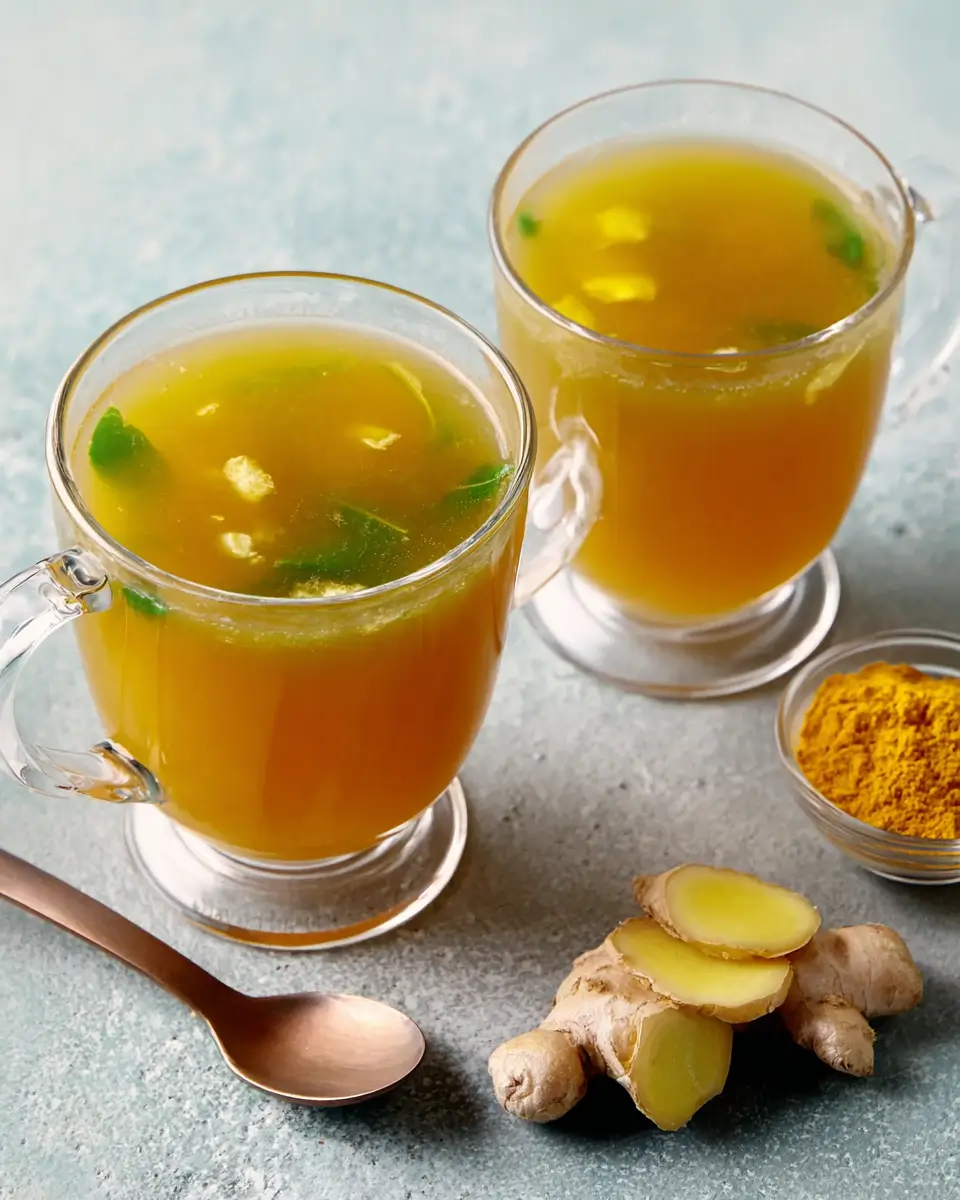
I started making bone broth turmeric ginger on a whim one Sunday afternoon, mostly because I had a leftover chicken carcass and a knob of ginger that had been sitting in the back of my fridge for too long. I threw in some ground turmeric, covered everything with water, and let it simmer overnight in the slow cooker. What I woke up to the next morning was a golden, fragrant broth that smelled like something my grandmother would have made. I had one cup before breakfast and felt genuinely better by mid-morning. That batch turned into a weekly habit, and it has stayed one ever since.
Bone Broth Turmeric Ginger
Ingredients
Method
- Place the chicken carcass or bones into a large slow cooker or stockpot.
- Add the onion, carrots, celery, smashed garlic, ginger pieces, bay leaf, and peppercorns.
- Sprinkle in the ground turmeric and sea salt, then pour in the apple cider vinegar.
- Fill the pot with enough filtered water to fully cover the ingredients, leaving about ½ inch space from the top.
- Slow Cooker Method: Set the slow cooker to high for 3–4 hours until the broth reaches a steady simmer. Reduce heat to low and cook for at least 12 hours, ideally up to 24 hours.
- Stovetop Method: Bring the pot to a boil over medium-high heat. Reduce to a very low simmer, cover, and cook for 8–12 hours, adding water as needed to keep bones submerged.
- When finished cooking, place a fine-mesh sieve over a large bowl and strain the broth, discarding all solids.
- Taste the broth and adjust seasoning with additional sea salt if needed.
- Allow the broth to cool to room temperature before transferring to airtight glass jars or containers.
- Store in the refrigerator for up to 5 days or freeze for up to 3 months.
Nutrition
Notes
Tried this recipe?
Let us know how it was!Key Takeaways: Bone Broth Turmeric Ginger
- Bone broth turmeric ginger is one of the most anti-inflammatory drinks you can make at home, and the ingredients cost very little.
- The long simmer, between 12 and 24 hours, is what extracts collagen, gelatin, and minerals from the bones. You cannot rush this part.
- Fresh ginger root and ground turmeric each do something specific and different. Using both together in the same pot gives you benefits neither could deliver alone.
- This recipe works in a slow cooker, on the stovetop, or in an Instant Pot, so it fits almost any kitchen routine.
- One batch makes around 4 quarts. It keeps in the fridge for five days and in the freezer for up to three months.
Why You Will Love This Bone Broth Turmeric Ginger Recipe
There is something old-fashioned about making bone broth turmeric ginger at home, and I mean that in the best way. Long before anyone called it a wellness trend, cooks around the world were simmering bones low and slow because they understood, through experience, that it made people feel better. This recipe honors that tradition and adds two of the most well-researched anti-inflammatory ingredients you can find in any kitchen.
The bone broth turmeric ginger benefits go well beyond what you taste in the cup. A slow, long simmer pulls collagen, gelatin, glycine, and bioavailable minerals out of the bones and into the liquid. What you end up with supports gut lining integrity, helps cushion joints, and keeps skin hydrated and more resilient. Turmeric contributes curcumin, one of the most studied compounds in nutrition science for its ability to reduce inflammation throughout the body. Fresh ginger adds gingerols that calm the digestive tract and support the immune system, particularly helpful during colder months.
Compared to commercial options like Kettle and Fire bone broth turmeric ginger or Roli Roti bone broth ginger and turmeric, a homemade batch gives you complete control over quality. You choose the bones, the ginger, the garlic. No fillers, no natural flavors listed at the bottom of the label, no shortcuts. The cost per batch is a fraction of what you pay for a carton at Costco, and the flavor is noticeably richer.
If you love nourishing, warming recipes like this one, our hearty soup recipes that support weight loss are a great place to keep exploring. They use homemade broth exactly like this as a base.
Bone Broth Turmeric Ginger Ingredients and Why Each One Matters
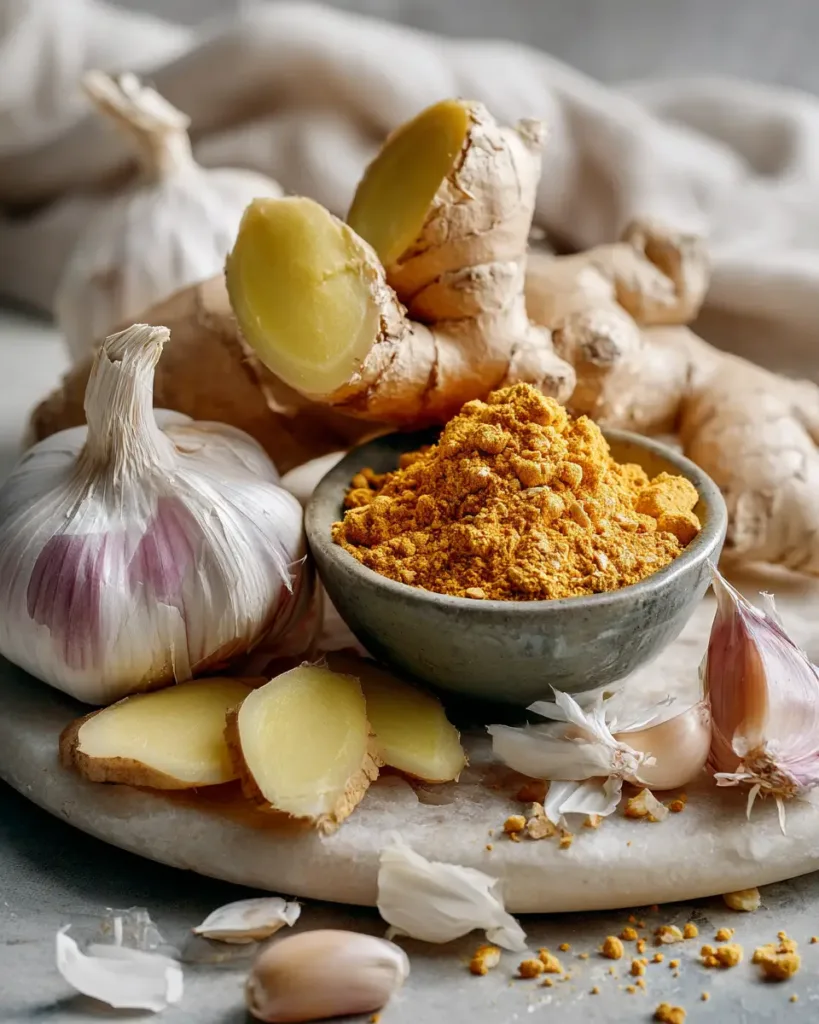
Every single ingredient in a good bone broth turmeric ginger recipe has a reason to be there. Understanding what each one does makes you a more confident cook and helps you make smart adjustments when something is not available.
Chicken bones are the heart of this recipe. You can use the carcass from a roasted chicken, raw backs and wings, or any leftover bone-in pieces you have on hand. The bones release collagen, gelatin, and minerals into the liquid during the long simmer. One thing worth knowing from experience: skip the store-bought rotisserie chicken. Those birds are typically coated in starches, oils, and preservatives that you do not want simmering in your pot for twelve or more hours. Roast your own, or use bones from a fresh bird.
Fresh ginger root is one of the two defining flavors in this recipe, and fresh is the only way to go. About three to five inches of root, cut into one-inch pieces, is the right amount. Do not bother peeling it; the broth gets strained anyway. Cutting rather than grating keeps the ginger from turning too sharp and overwhelming the other flavors. According to Medical News Today, ginger contains gingerol compounds with well-documented antimicrobial and anti-inflammatory effects that are significantly more potent in the fresh root than in dried or jarred forms.
Ground turmeric is more concentrated than fresh turmeric root, which makes it actually more effective here. Use one and a half teaspoons. That is the right amount for a 6-quart pot. I once used a full tablespoon and the broth turned bitter. More is not better with turmeric powder. If you prefer fresh turmeric root, double the quantity to account for the lower concentration. Choose organic turmeric when you can for a cleaner flavor and higher curcumin content.
Fresh garlic cloves, smashed and halved, add depth and meaningful nutritional value. Do not use pre-minced garlic from a jar. By the time jarred garlic sits on a shelf, most of its active allicin compounds have degraded. Four whole fresh cloves make a real difference in both flavor and health value.
Apple cider vinegar, just two tablespoons, does something you cannot see but will definitely taste. The mild acidity breaks down bone structure during the long simmer, pulling more collagen and minerals into the liquid. You will not notice the vinegar flavor in the finished broth, but you will notice the extra richness. Research from the National Institutes of Health confirms that an acidic cooking environment significantly improves mineral extraction from animal bones.
Aromatics, meaning onion, carrots, celery, and bay leaf, complete the flavor base. They are flexible. Leeks, mushrooms, fennel, and parsnips all work well here and each brings its own gentle sweetness or earthiness. Use whatever you have. This is one of those forgiving recipes that adapts to your fridge rather than demanding a precise shopping list.
Chicken feet are optional but genuinely worth trying. They are mostly skin, tendons, and cartilage, which is exactly where collagen is concentrated. Adding two or three feet to the pot gives the finished broth a notably richer, silkier texture. Most butcher counters carry them, and they are inexpensive. If the idea feels like a stretch, skip them this time. Your broth will still be wonderful. But once you try it with chicken feet, you may not go back.
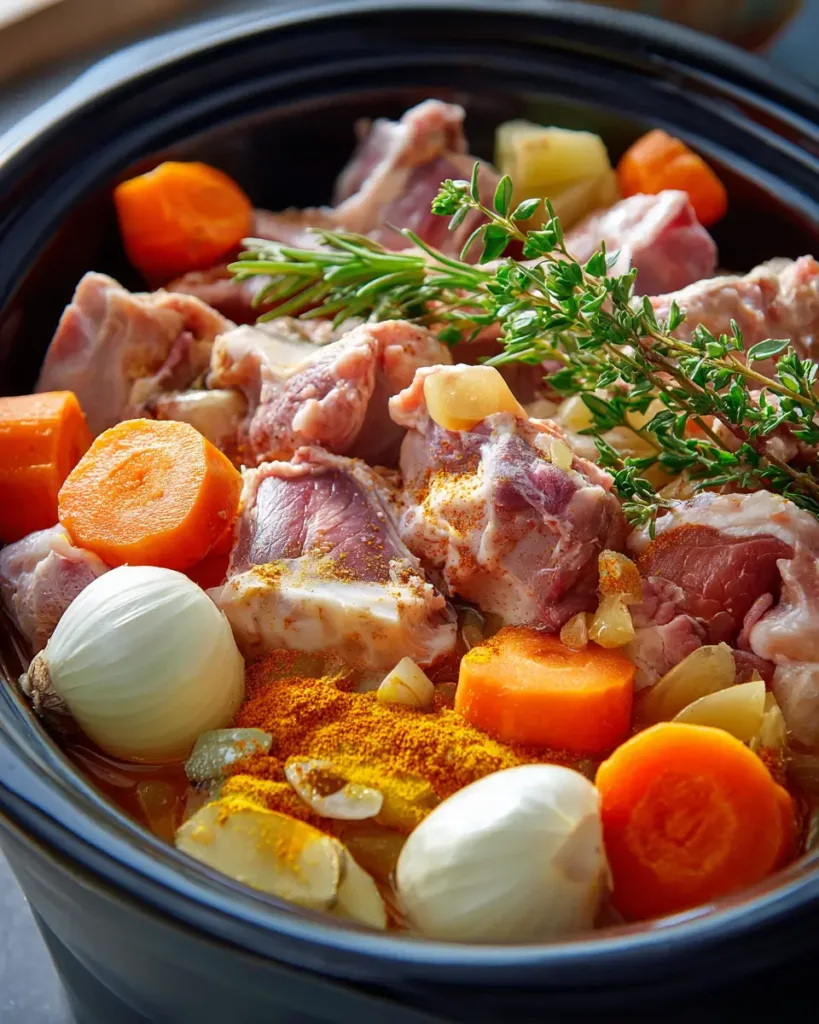
How to Make Bone Broth Turmeric Ginger Step by Step
This is a hands-off recipe in the best sense. You put things in a pot, cover them with water, and let time do the work. The actual prep takes about fifteen minutes. Everything after that is just waiting, and the result is more than worth it.
Step 1: Assemble the pot. Place the chicken carcass into your slow cooker or stockpot. Add the onion, carrots, celery, and smashed garlic directly on top. Tuck in the ginger slices, scatter the peppercorns, and add the bay leaf. Sprinkle in the ground turmeric and sea salt, then pour in the apple cider vinegar. Fill with enough filtered water to cover everything, leaving about half an inch of space from the top. No need to stir yet.
Step 2: Slow cooker method. This is the method I use almost every time. Set the slow cooker to high for the first three to four hours until the liquid reaches a full simmer. Then reduce the heat to low and let it go for at least twelve hours. Overnight is ideal. I start mine on Sunday evening and strain it Monday morning. The house smells extraordinary by the time the alarm goes off.
Step 3: Stovetop method. Bring everything to a boil over medium-high heat. Once boiling, reduce to the lowest possible simmer you can manage, just occasional small bubbles breaking the surface. Keep the lid on to minimize evaporation and simmer gently for eight to twelve hours. Check every few hours and add water as needed to keep the bones fully submerged. Do not leave a gas burner on overnight without supervision; this is the main reason the slow cooker is my preferred method for bone broth turmeric ginger.
Step 4: Strain the broth. Set a fine-mesh sieve over a large bowl. If you want a very clear broth, line the sieve with cheesecloth first. Carefully ladle or pour the broth through, letting it drain completely. Discard all the solids. The vegetables are completely spent at this point; their nutrients have transferred to the liquid. Taste the broth and add more sea salt until it tastes rich and balanced.
Step 5: Cool and store. Let the broth cool to room temperature, then transfer to glass jars for the refrigerator. A well-made bone broth turmeric ginger will often turn thick and slightly gelatinous when cold. That is not a problem; it is actually exactly what you want. It means the collagen extracted properly. Reheat gently and it returns to liquid immediately. The broth keeps in the fridge for five days and in the freezer for up to three months.
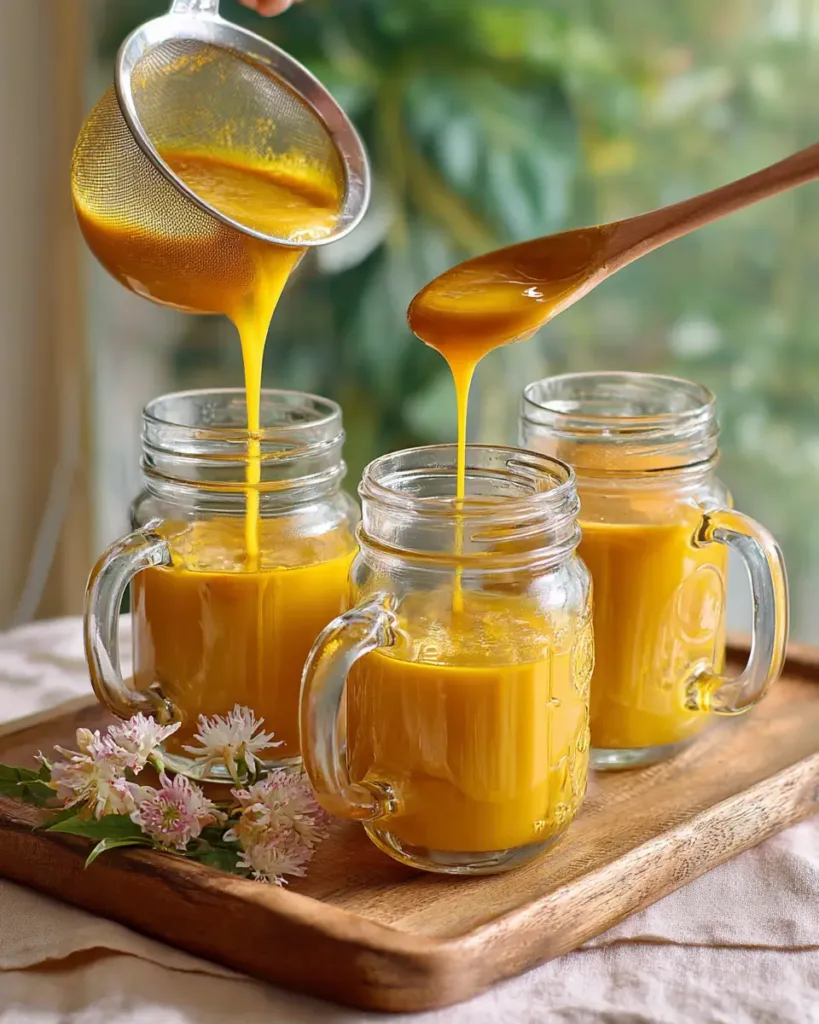
Bone Broth Turmeric Ginger Tips, Variations and Storage Guide
A few things I have learned from making this regularly that are worth passing on before you start your first batch.
Roast the bones first if you have time. If you are starting from raw bones rather than a leftover carcass, spread them on a rimmed baking sheet and roast at 400 degrees Fahrenheit for twenty-five to thirty minutes before adding them to the pot. It adds a deeper, more complex flavor to your bone broth turmeric ginger that you will notice in the finished cup. Not a required step, but a good one.
Go for the full simmer time. Eight hours gives you a decent broth. Twelve gives you a good one. Twenty to twenty-four hours gives you something genuinely exceptional, richer, more gelatinous, and more mineral-dense than anything you can buy in a carton. If you can manage it, go the full distance at least once so you know what a really well-made batch tastes like.
Keep the turmeric measured. One and a half teaspoons for a 6-quart pot. That is the sweet spot. Any more and the broth can turn slightly bitter, especially after a very long simmer. I learned this the hard way with a batch that smelled wonderful but tasted sharp. Start at the recommended amount and adjust gradually in future batches if you want more turmeric character.
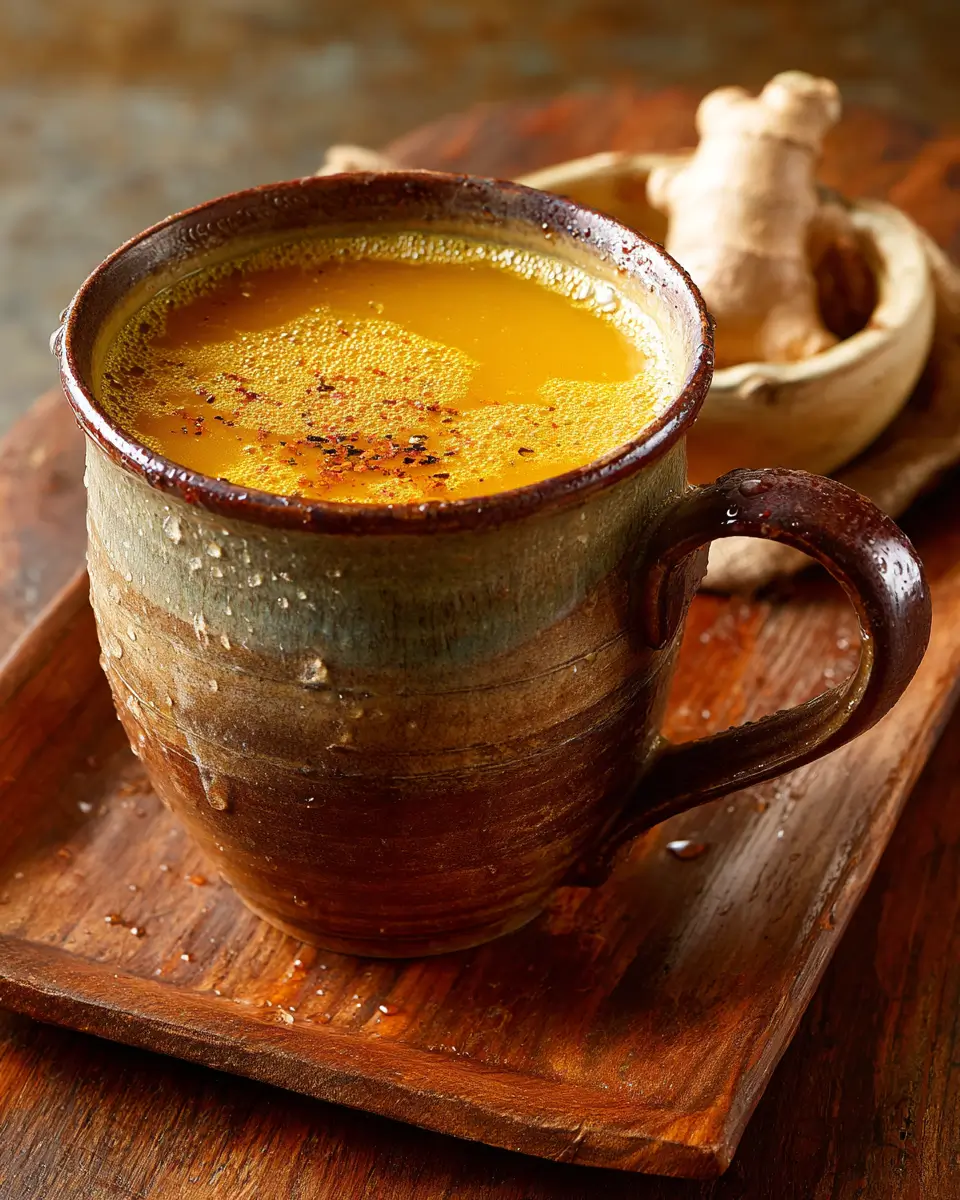
Sip it like tea. This is my favorite way to use a fresh batch. Fill a mug, add a pinch of extra sea salt and a squeeze of fresh lemon or lime, and drink it warm before a meal or first thing in the morning. It is grounding and satisfying in a way that is hard to explain until you try it. Many people who start drinking bone broth turmeric ginger daily find it becomes a ritual they actually look forward to. If you enjoy warming morning drinks, our high protein coffee smoothie is another great option to rotate in.
Turn it into a full meal. Return the strained broth to a large pot. Add the reserved chicken meat, chopped, along with one or two fresh carrots, celery stalks, and one cup of cooked rice or noodles. Simmer on low for twenty minutes until the vegetables are just tender. Season generously with sea salt and black pepper. That is a complete healing meal built almost entirely from the same batch of ingredients. Our lemon chicken orzo soup follows this exact approach and is one of the most popular recipes on the site. The high protein chicken pot pie soup is another reader favorite that uses homemade broth as its base.
Freeze in ice cube trays. This is the most practical storage tip I can give you. Silicone ice cube trays let you freeze individual portions of broth that you can drop directly into soups, grain dishes, or pan sauces without thawing. One cube usually equals about two tablespoons. It is a small habit that quietly improves a lot of weeknight cooking.
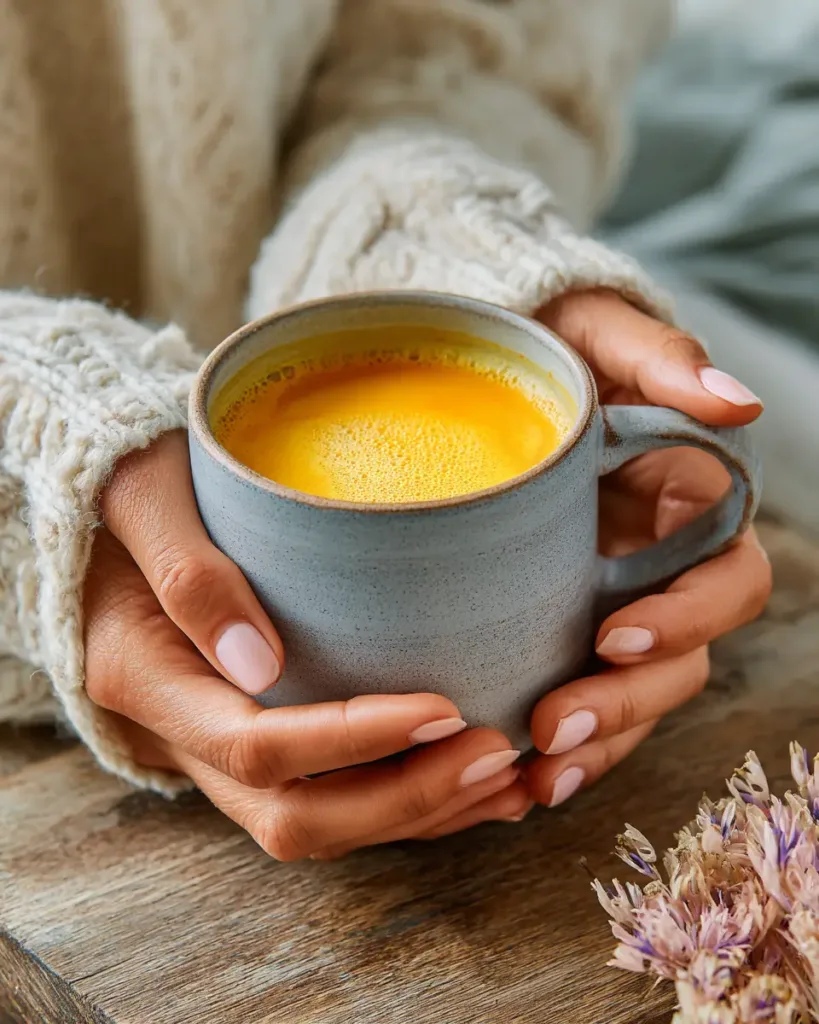
Bone Broth Turmeric Ginger: Frequently Asked Questions
Is bone broth with ginger and turmeric good for you?
Yes, significantly so. Bone broth turmeric ginger benefits your body on several levels at once. The long-simmered broth provides collagen, gelatin, glycine, and bioavailable minerals including calcium, magnesium, and phosphorus. These support gut lining health, joint cushioning, and skin resilience. Turmeric adds curcumin, one of the most studied anti-inflammatory compounds in nutrition science. Ginger adds gingerols that calm the digestive tract and support immune function. Together, this is one of the most nutrient-dense, low-calorie drinks you can make from scratch. One cup typically has around 35 to 50 calories while delivering meaningful protein, minerals, and active plant compounds.
What not to mix with ginger and turmeric?
In the context of this bone broth turmeric ginger recipe, avoid using too much turmeric powder, which causes bitterness, and skip jarred or dried ginger, which has lost most of its beneficial gingerol content. More broadly, if you take blood-thinning medications like warfarin, speak with your doctor before consuming large daily amounts of turmeric, since curcumin has mild blood-thinning properties at higher doses. For most healthy people, the amounts used in cooking are completely safe. Dairy can mildly reduce curcumin absorption, which is one reason this broth is traditionally served plain or with a squeeze of lemon rather than cream.
Is bone broth good for female fertility?
It is not a fertility treatment, but it is a genuinely supportive food for reproductive health. The collagen and gelatin in bone broth turmeric ginger support tissue health throughout the body, including the uterine lining. The glycine content supports liver detoxification, which plays a quiet but meaningful role in hormone regulation. Minerals like zinc and magnesium, both present in well-made bone broth, are important for hormonal balance and egg quality. Many nutritional practitioners include bone broth in whole-food protocols for fertility support. It is safe, gentle, affordable, and easy to make regularly, which makes it a practical addition to any nourishing daily routine.
What bone broth is best for IBS?
Homemade bone broth turmeric ginger is often the best choice for people managing IBS, and here is why. The gelatin in a properly made bone broth helps coat and soothe the intestinal lining, which reduces sensitivity and discomfort. Fresh ginger has well-established gut-calming effects and helps regulate motility. Turmeric has been studied for its ability to reduce intestinal inflammation. Among commercial options, Butcher’s bone broth ginger and turmeric and Kettle and Fire bone broth turmeric ginger tend to have cleaner ingredient lists than many mass-market versions. That said, homemade always wins for IBS because you control every single ingredient. Start with one small cup per day and increase gradually based on how your body responds.
Ready to Make Bone Broth Turmeric Ginger at Home?
Making bone broth turmeric ginger from scratch is simpler than it sounds and more rewarding than almost anything else you can do in a kitchen with fifteen minutes of actual effort. You put the ingredients in the pot, cover them with water, and let time take care of the rest. What comes out the other side is deeply nourishing, genuinely anti-inflammatory, and unlike anything that comes in a carton from the store.
I have made this recipe more times than I can count now, and what I keep coming back to is how quietly useful it is. It becomes soup base on Monday, a morning ritual on Tuesday, a quick snack on Wednesday. A single batch earns its space in your week multiple times over. And the more you make it, the more you will feel the difference.
Try it this weekend. Start it in the slow cooker on Saturday night and strain it Sunday morning. Then come back and let me know in the comments how it turned out and how you used it. I read every one. If you want to keep building healing recipes into your week, our homemade digestive gummies with ginger and fennel are a natural next step and one of the most popular posts on this site.
Save this recipe, share it with someone who could use a little extra nourishment, and make a batch this week. Your gut, your joints, and your immune system will thank you quietly and consistently over time.
