
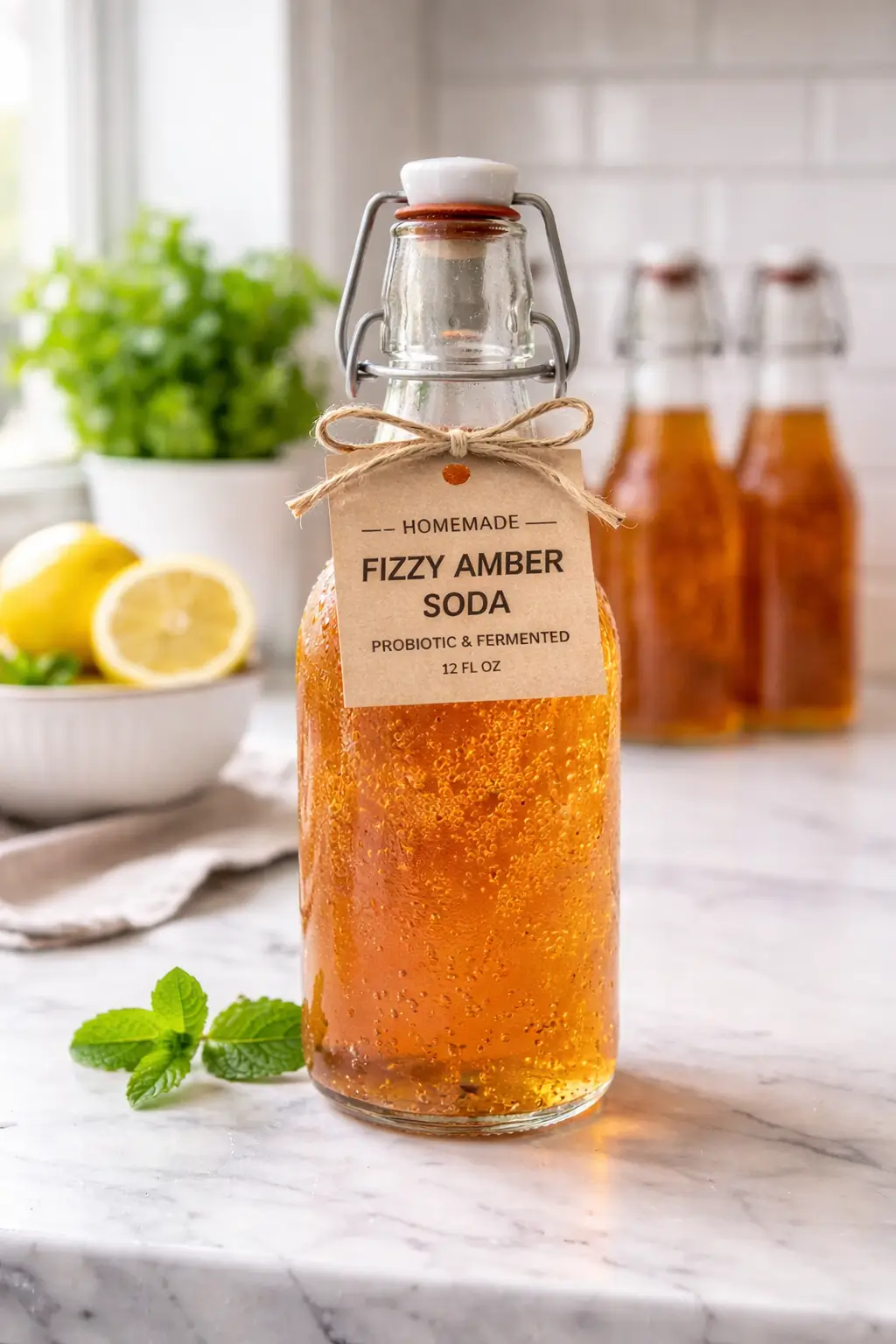
For years, fizzy drinks were just a tiny daily ritual for me—cold, sweet, and gone in a few sips, without much thought about what they were actually doing for my body. Once I started caring more about gut health, that familiar habit suddenly felt like a missed opportunity.
So I began turning that same craving for bubbles into something that could actually nourish my microbiome instead of just spiking my blood sugar.
Today I’m sharing the best probiotic soda recipes for gut support and gentle weight management that I’ve tested in my own kitchen—simple, realistic, and easy to keep in your routine week after week. The fizz is real, the cultures are alive, and the changes are subtle but steady over time: less bloating, more comfortable digestion, and fewer urges for ultra‑sweet drinks that don’t give anything back.
If you enjoy gut-friendly drinks you can make from scratch, you might also love this High Protein Coffee Smoothie from YourDailyTaste as a morning companion to your probiotic soda routine.
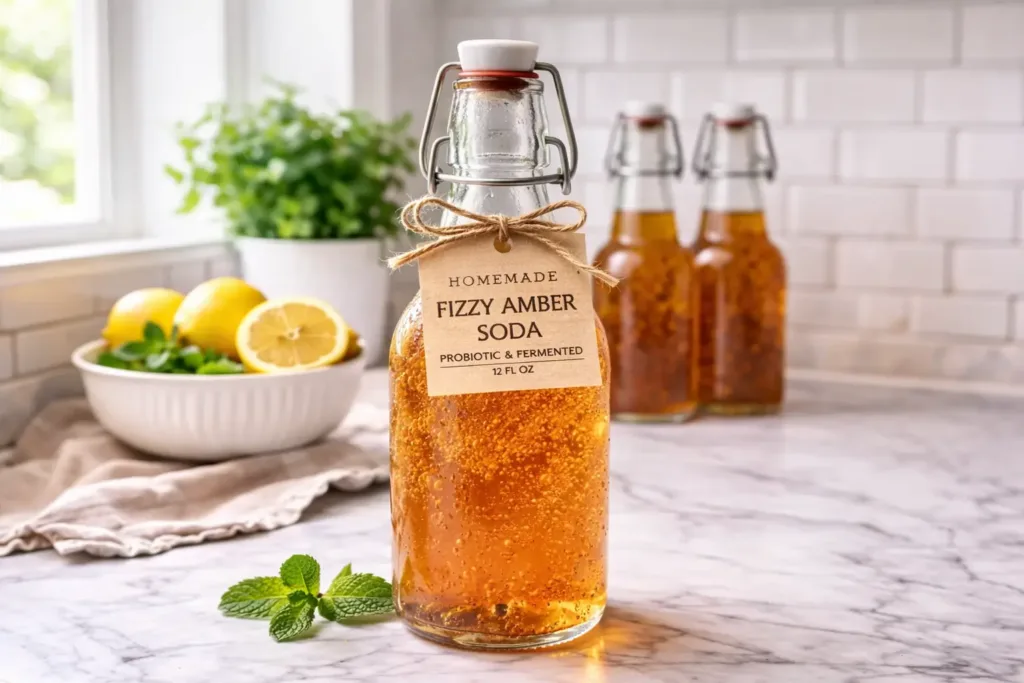
Key Takeaways
✔ These probiotic soda recipes for gut health and weight loss use just 3 to 4 ingredients and take about 10 minutes of active prep.
✔ A ginger bug is the natural wild fermentation starter that creates real carbonation with no equipment beyond a jar and a swing-top bottle.
✔ The sugar in the recipe is consumed by bacteria during fermentation, leaving a drink far lower in calories than the ingredient list suggests.
✔ Research links regular probiotic intake to improved gut microbiome balance, better metabolism, and reduced sugar cravings.
✔ Once your ginger bug is active, each new batch takes only 10 minutes of prep plus 1 to 3 days of fermentation.
✔ Replacing one commercial soda per day with a homemade probiotic soda removes up to 140 calories and 39 grams of sugar from your daily intake.
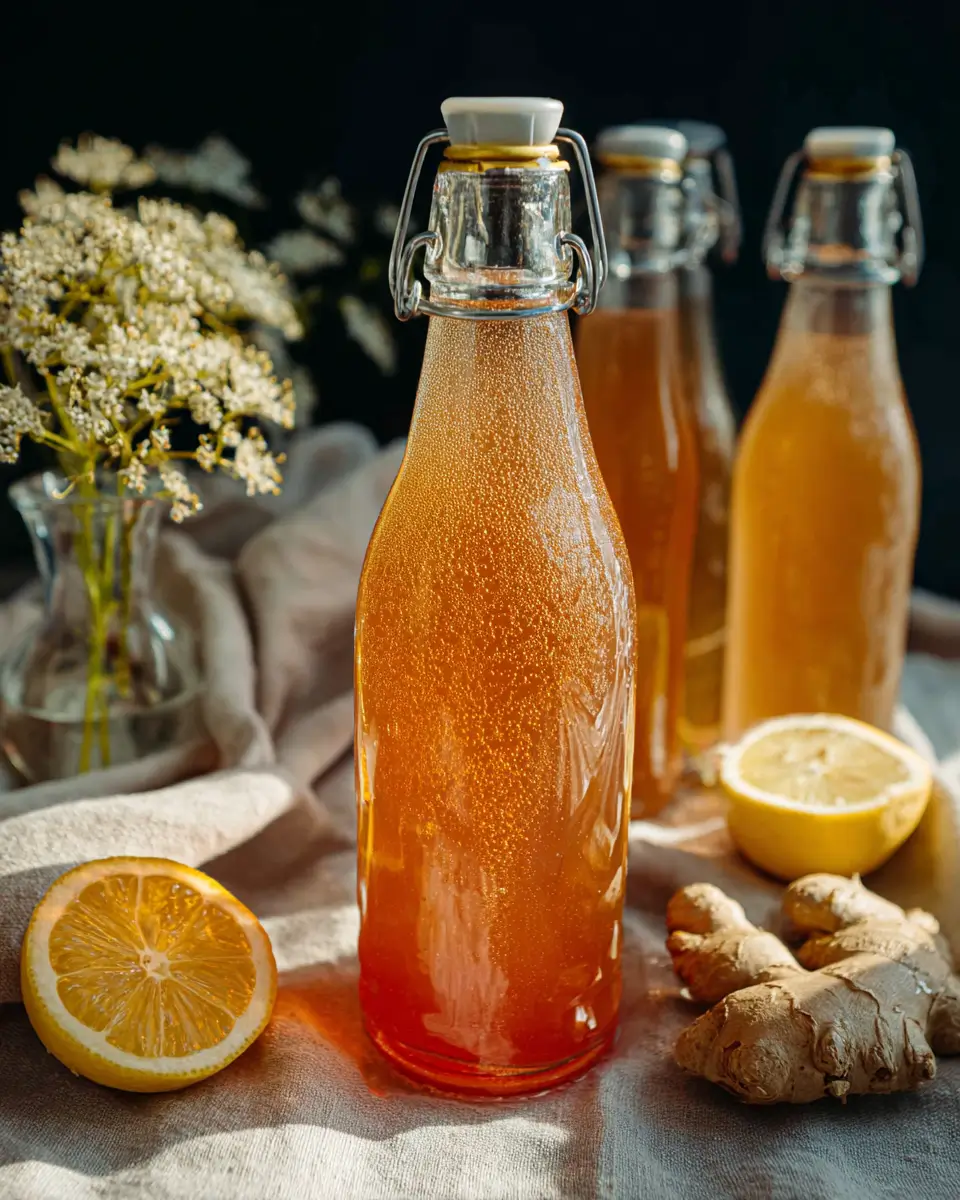
Best Probiotic Soda (Ginger Bug Fermented Soda)
Ingredients
Method
- Make the ginger bug: In a jar, mix 1 tablespoon grated ginger, 1 tablespoon sugar, and 1/4 cup filtered water. Stir and cover loosely.
- Feed daily for 4 to 5 days with the same amount of ginger and sugar, adding a little water as needed, until bubbly and pleasantly sour.
- Prepare soda base: Bring 4 cups water to a simmer and dissolve 1/4 cup sugar.
- Add lemon juice (and zest) or fruit/hibiscus. Let steep for 20 minutes.
- Strain the liquid and allow it to cool completely to room temperature.
- Stir in 1/4 cup active ginger bug liquid.
- Pour into a sealed bottle and leave at room temperature for 2 to 3 days.
- Burp the bottle once or twice daily to release pressure.
- Taste after 2 days. When fizzy and slightly tart, transfer to the refrigerator.
- Serve chilled over ice and enjoy your homemade probiotic soda.
Nutrition
Notes
Tried this recipe?
Let us know how it was!Why You Will Love This Best Probiotic Soda Recipe
A probiotic soda recipe is a simple method for making a naturally carbonated, fermented drink at home using live bacterial cultures. Unlike store‑bought soda, which is carbonated with injected CO₂ and often loaded with artificial sweeteners or refined sugar, homemade probiotic soda gets its fizz entirely from fermentation.
The bacteria and wild yeasts in your starter consume the sugar in your base liquid, produce carbon dioxide as a byproduct, and that trapped gas creates gentle, natural bubbles inside a sealed bottle.
The most common starter for these probiotic soda recipes for gut health and weight management is a ginger bug, which is simply fresh ginger, water, and a small amount of sugar left to ferment for about five days until it becomes bubbly, yeasty, and active.
You then use that living starter to ferment any juice, cooled tea, or flavored water you enjoy. The result is a drink that is genuinely lower in sugar than regular soda, full of live cultures, and completely customizable to your own taste.
In short: a probiotic soda recipe produces a naturally fizzy, low‑sugar beverage rich in live cultures by combining an active ginger bug with cooled fruit juice or tea, then sealing it to carbonate for one to three days at room temperature. When you use it consistently as a replacement for conventional soda, it can support a healthier gut environment, more comfortable digestion, and indirectly assist with weight control by cutting back on excess sugar and empty calories.
If you enjoy making drinks from scratch, you might also love this High Protein Coffee Smoothie from YourDailyTaste, which is another great option when you want something energizing and nourishing in the morning.
Ingredients and Why They Matter in a Probiotic Soda Recipe
For the Ginger Bug Starter:
Ginger bug starter
- 3 tablespoons fresh ginger, finely grated, unpeeled (organic if possible)
- 3 tablespoons organic cane sugar
- 2 cups filtered or non‑chlorinated water
Add the grated ginger, sugar, and water to a clean glass jar and stir until the sugar dissolves. Cover the jar with a breathable cloth and keep it at room temperature, out of direct sunlight. Feed the ginger bug with 1 tablespoon of grated ginger and 1 tablespoon of sugar once a day for 5 to 7 days, stirring well each time, until it bubbles actively and smells pleasantly yeasty and tangy.
For the Soda Base Per Bottle:
For one batch of probiotic soda (about 1 liter)
- 4 cups fruit juice, brewed tea, or flavored water, cooled to room temperature
- 1/2 cup active ginger bug liquid, strained
- 2 to 3 tablespoons organic cane sugar (skip if using pre‑sweetened juice)
- Juice of 1 lemon or lime, for brightness (optional)
- 1/4 teaspoon vanilla extract or 1/2 teaspoon dried hibiscus, for extra flavor (optional)
Add the cooled juice, tea, or flavored water to a clean bottle or fermentation‑safe jar, leaving a little headspace at the top. Stir in the ginger bug liquid and sugar until fully dissolved, then mix in the lemon or lime juice and any optional flavorings. Seal tightly and let ferment at room temperature for 1 to 3 days, “burping” once a day to release excess pressure, until the soda is nicely fizzy. Transfer to the fridge to slow fermentation and chill before serving
For those curious about gut health foods in general, this Cherry Blueberry Gut Healthy Gelatin Gummy recipe on YourDailyTaste is another lovely way to support digestion with real food ingredients.
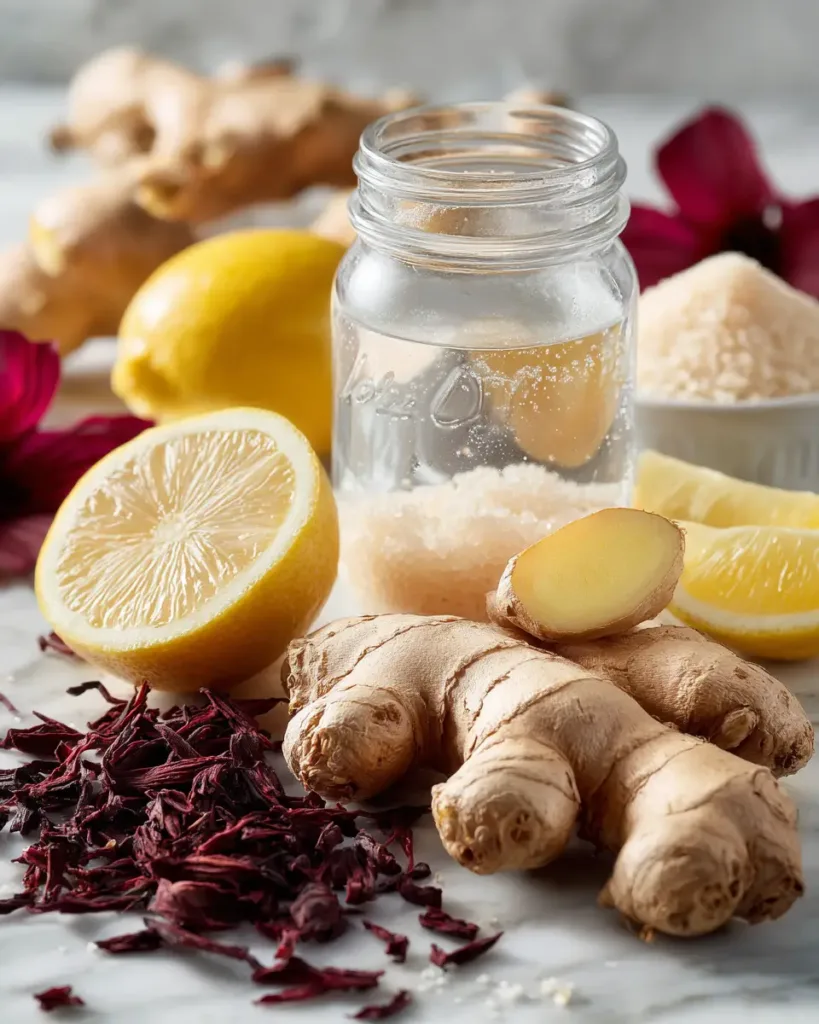
Step by Step Instructions for the Best Probiotic Soda Recipe at Home
Step 1 – Build Your Ginger Bug for the Probiotic Soda Recipe
Combine 2 cups of filtered or non‑chlorinated water, 3 tablespoons of freshly grated ginger (skin on), and 3 tablespoons of organic cane sugar in a clean glass jar. Stir until the sugar fully dissolves. Cover the jar loosely with a breathable cloth secured with a rubber band. Avoid sealing it tightly at this stage: the gases produced during fermentation must be able to escape, or pressure can build up and crack the jar.
Step 2 – Feed Your Probiotic Soda Starter Daily Until Active
Every day for 5 to 7 days, add 1 tablespoon of grated ginger and 1 tablespoon of sugar. Stir the mixture once in the morning and once in the evening to keep the microbes well distributed and oxygenated. By day 3 or 4, you should start seeing small bubbles forming at the surface, and the smell will shift from simply sweet to gently yeasty and tangy—that’s exactly what you’re looking for. By around day 5, the ginger bug should be visibly bubbly when stirred and active enough to use in your probiotic soda recipes
Step 3 – Prepare Your Probiotic Soda Base
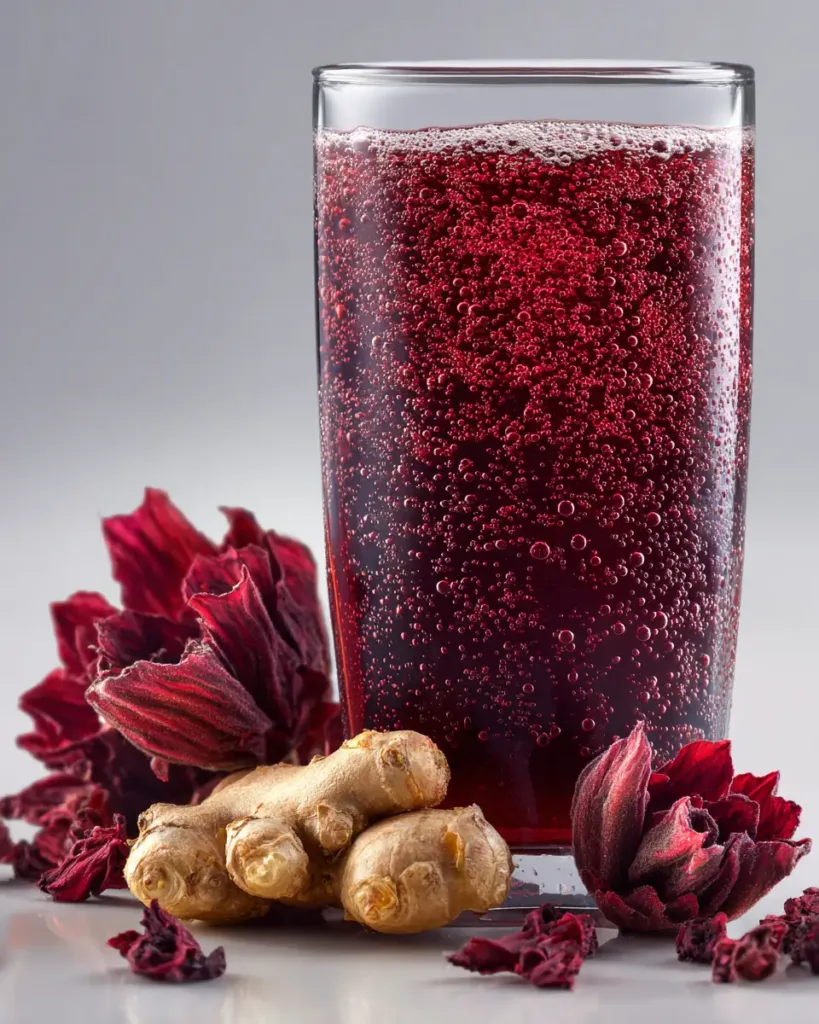
Choose your flavor first, then let your fruit juice or brewed tea cool completely to room temperature before you do anything else. If you add your ginger bug to a liquid that’s too warm (above roughly 90–95°F / 32–35°C), you can damage or kill the live cultures and end up with flat soda that never ferments. I ruined my very first batch this way—the tea was still warm, I was impatient, and nothing ever bubbled. Let it cool all the way down; this step really cannot be rushed.
Step 4 – Combine and Bottle Your Probiotic Soda
Mix 4 cups of your fully cooled base (juice, tea, or flavored water) with ½ cup of strained active ginger bug liquid and any optional sweetener you like. Pour the mixture into clean swing‑top glass bottles, leaving about 1 to 2 inches of headspace at the top. Too little room can allow carbonation to build up to the point of cracking the glass, so that space is essential. Seal the bottles tightly once filled, then move on to fermentation.
Step 5: Ferment at Room Temperature Then Refrigerate
Leave the sealed bottles at room temperature for 1 to 3 days. “Burp” each bottle once a day by briefly cracking the cap to release built‑up pressure, then resealing it. On day 2, taste a small sip; when the soda is nicely fizzy and pleasantly tart, transfer the bottles to the refrigerator. Cold stops fermentation and locks in the carbonation. The exact timing depends on your kitchen temperature, not a strict clock. On a warm summer day it may be ready in just 2 days; in a cooler winter kitchen you may need closer to 3 .
Probiotic Soda vs Store-Bought Drinks: What You Are Actually Getting
Many store‑bought probiotic sodas are pasteurized after bottling, which destroys or greatly reduces the live cultures you’re paying for. Homemade probiotic soda recipes for gut health and weight management, on the other hand, let you fully control the fermentation, the ingredients, and the final sugar level. Here’s how the numbers usually compare:
Why Probiotic Soda Recipes for Gut Health and Weight Loss Actually Work
Emerging research suggests that increasing probiotic intake can modestly support weight management by helping maintain a healthier balance of gut bacteria involved in metabolism and fat storage, especially when this is combined with an overall balanced diet and lifestyle. Fermented foods that contain live cultures also contribute to greater gut microbiome diversity, and a more diverse microbiome is one of the factors linked to how your body extracts and processes energy from food.
When your gut microbes are well supported, digestion tends to run more smoothly. Many people notice less bloating, more regular bowel movements, and a more stable appetite, although everyone’s experience is a little different. Swapping just one commercial soda per day for a lightly sweetened homemade probiotic soda can meaningfully reduce your daily sugar and calorie intake while adding live cultures from fermentation. That combination—lower added sugar plus more fermented foods—is one of the reasons these probiotic soda recipes for gut health and gentle weight control can be so helpful in real life, especially when they are part of a broader pattern of healthy eating and regular movement rather than a stand‑alone quick fix.
According to the National Center for Complementary and Integrative Health, fermented foods with live cultures play a measurable role in gut microbiome diversity, which is directly linked to how your body extracts and processes energy from food.
For more gut-friendly kitchen projects, these Cherry Blueberry Gut Healthy Gelatin Gummies from YourDailyTaste are another lovely way to support digestion with real food every day.
How to Make Probiotic Soda Part of Your Weekly Routine
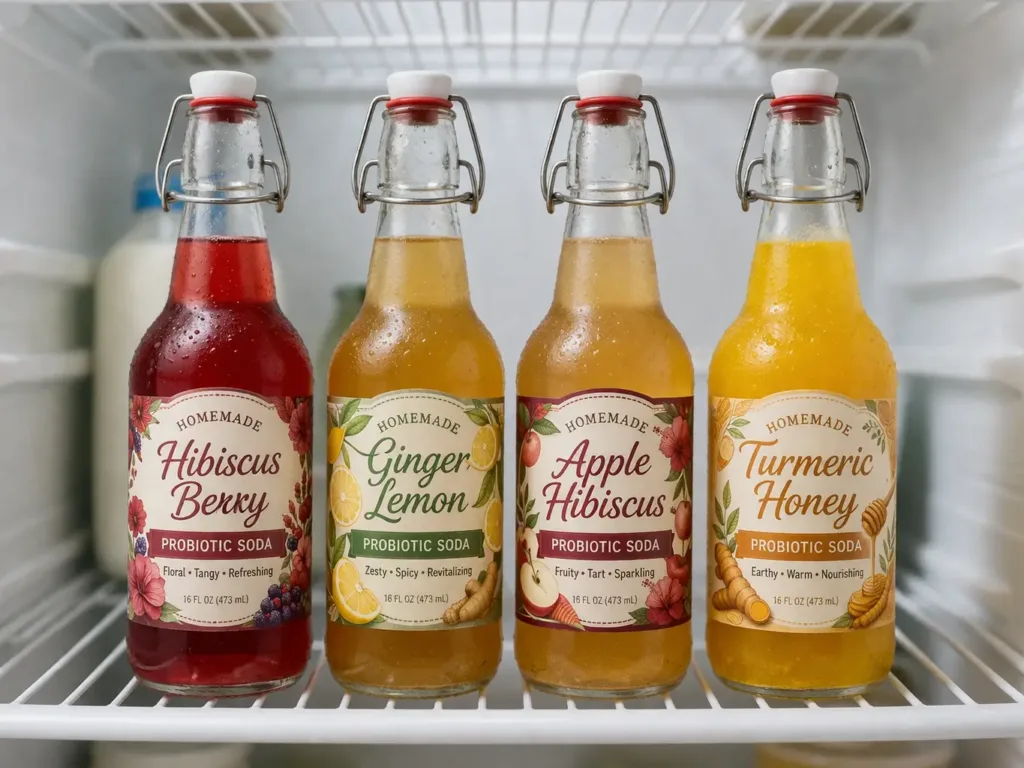
The easiest way to make these probiotic soda recipes for gut health and weight loss a consistent habit is to treat your ginger bug like an everyday kitchen staple. Once it is active, keep it in the refrigerator and feed it once a week. Every Sunday, take it out, let it warm up for a few hours, then mix a fresh batch of soda for the week ahead. Storing an active ginger bug in the fridge and giving it a small weekly feeding is a simple, low‑maintenance way to keep it healthy between brewing sessions.
Weekly Probiotic Soda Prep Schedule
Mix one or two batches in your chosen flavors. Bottle and leave them at room temperature.
Burp the bottles once daily and check the fizz level.
Move the bottles to the refrigerator as soon as they are bubbly and pleasantly tart.
Enjoy one serving per day, about 12 ounces per serving.
Take the ginger bug out of the fridge, feed it, and let it wake up overnight so it is ready to brew again on Sunday.
Consistent gut support matters more than occasional large doses. Keeping a cold bottle in the refrigerator and reaching for it every afternoon instead of something else is where the habit forms. Pair it with something nourishing like these Healthy Homemade Gummies for a genuinely satisfying gut-friendly afternoon.
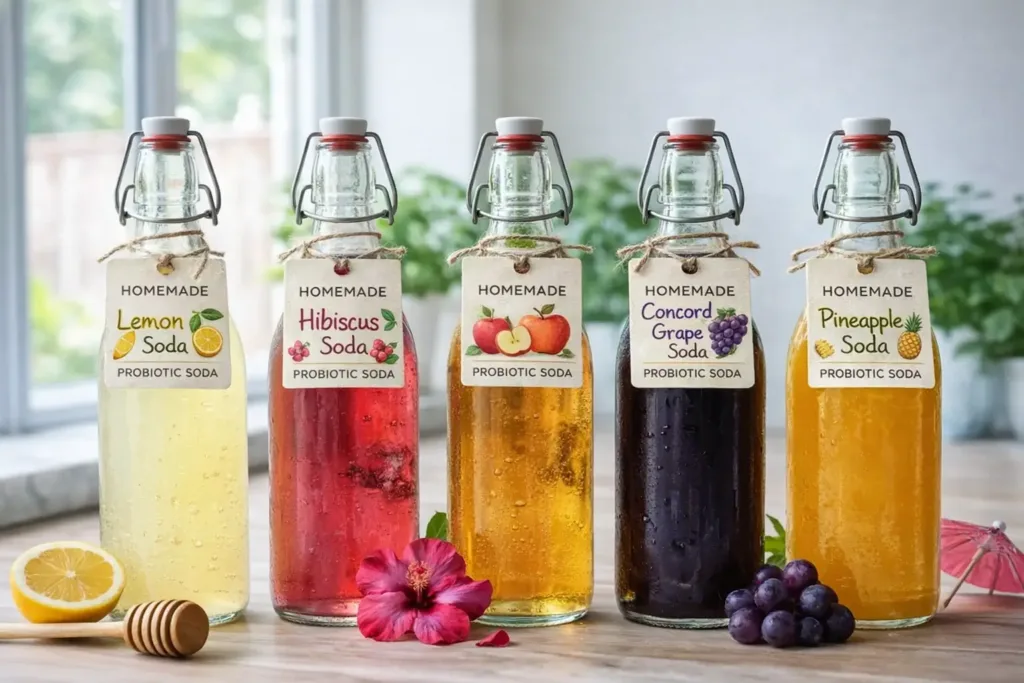
5 Best Probiotic Soda Recipe Flavors to Try
1.Classic Ginger Lemon Probiotic Soda
Combine 4 cups of filtered water, the juice of 3 lemons, 3 tablespoons of cane sugar, and ½ cup of active ginger bug. The result tastes like a bright, fizzy lemonade with a warm ginger finish. I always recommend this one for beginners because it is forgiving to ferment and almost everyone loves the flavor.
2.Hibiscus Berry Probiotic Soda
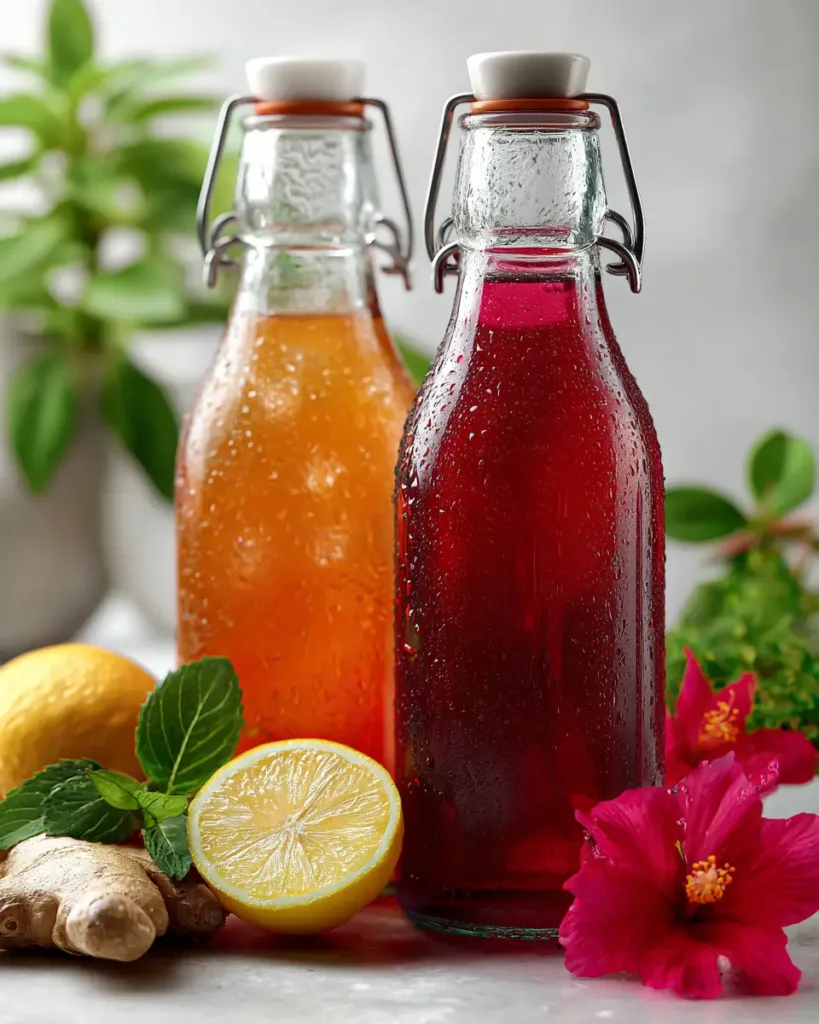
Use 4 cups of strong hibiscus tea, cooled to room temperature, plus ½ cup of ginger bug and 2 tablespoons of honey. It pours a deep pink color, floral, slightly tart, and genuinely beautiful in the glass. The color alone makes it feel like something you would have paid good money for—only you made it at home.
3.Apple Cinnamon Probiotic Soda
Combine 4 cups of unsweetened apple juice with ½ cup of ginger bug and ¼ teaspoon of ground cinnamon. The flavor is warm, lightly spiced, and works all year long. Cinnamon also brings its own digestion‑friendly properties, which makes this an especially good option in the probiotic soda recipes for gut health and weight loss category.
4.Grape Mint Probiotic Soda
Mix 4 cups of unsweetened grape juice with ½ cup of ginger bug and 4 fresh mint leaves, steeped in the base before bottling. The result is light, refreshing, and naturally sweet without needing extra sugar. The mint adds that “cool” sensation that makes the drink feel chilled even before it hits the fridge.
5.Tropical Pineapple Probiotic Soda
Combine 4 cups of unsweetened pineapple juice with ½ cup of ginger bug and the juice of 1 lime. This is my personal favorite for summer. The pineapple ferments beautifully, the lime brightens everything, and the finished soda tastes like something you would order at a beach bar. In my house, every batch disappears from the refrigerator in about three days.
5 Mistakes to Avoid With Your Probiotic Soda Recipe
1.Using Hot Liquid in Your Probiotic Soda Recipe
If your base liquid is hotter than about 90°F (32–35°C), it can damage or kill the ginger bug cultures on contact. Always let tea, infusions, or juice cool completely to room temperature before you add the starter. This is the most common beginner mistake and the easiest one to avoid once you know about it .
2.Using Chlorinated Tap Water
Chlorine is added to many municipal water supplies to control microbes, and that same disinfecting power can stress or weaken the beneficial bacteria and yeasts you’re trying to grow. Whenever possible, use filtered or non‑chlorinated water for both the ginger bug and the soda base. If tap water is your only option, let it sit uncovered for several hours or overnight, or boil and cool it first, to help dissipate chlorine.
3. Skipping Pressure Checks on Bottles
During active fermentation, CO₂ builds up inside sealed bottles. If you ignore that pressure for several days, you can end up with gushers that spray everywhere when opened—or, in extreme cases, bottles that crack or explode. Gently opening each bottle once a day just enough to vent excess gas, then resealing, is a quick safety check that takes only a few seconds per bottle .
4. Letting Soda Over‑Ferment at Room Temperature
Most probiotic sodas taste best after 1 to 3 days at room temperature. Beyond that, they can become increasingly sour or vinegary and lose their pleasant, refreshing flavor. Start tasting on day two; as soon as the soda is nicely fizzy and pleasantly tart, move it to the fridge to slow fermentation and lock in the flavor you like.
5. Using Reactive Containers or Utensils
Acidic fermented liquids can react with certain metals, which may affect both taste and safety over time. For home probiotic sodas, stick with glass jars, food‑safe plastic or silicone tools, and glass or BPA‑free bottles, and avoid prolonged contact with bare metal. Whatever equipment you use, make sure it is thoroughly cleaned and sanitized before fermenting to minimize the risk of unwanted organisms growing alongside your intended cultures . According to CDC food safety guidelines, proper sanitation of all fermentation equipment before use is essential to prevent unwanted organisms from growing alongside your intended cultures.
Frequently Asked Questions About Probiotic Soda
How to make your own probiotic soda?
Start with a ginger bug, a simple five‑day fermentation starter made from fresh ginger, sugar, and water. Once it is active and bubbling, use it to ferment a sweetened flavored water base, such as lemon or berry juice. Bottle the mixture in airtight containers at room temperature for two to three days, burping once daily, then transfer it to the refrigerator. The full process takes about a week from scratch, but once your ginger bug is established, each new batch is ready in just a few days. The detailed step‑by‑step instructions are in the recipe above and walk you through everything from the first jar to the first sip.
Which probiotic soda tastes the best?
Choosing a favorite probiotic soda flavor is genuinely personal, but for most beginners a ginger lemon soda tends to be the crowd‑pleaser. It is bright, slightly tart, and has just enough ginger warmth to feel interesting without ever becoming overpowering. If you prefer something fruitier, raspberry or strawberry fermented sodas made with a ginger bug are especially good in summer. Hibiscus brings a beautiful ruby color and a tart, floral edge that many people end up liking even more than plain lemon. Turmeric soda is earthy and warming, and pairs naturally well with honey. Try a few different flavor combinations over several batches and you will quickly discover the one that feels like your personal signature drink.
Are probiotic sodas actually good for you?
Yes, when it is made through real fermentation, homemade probiotic soda does contain live bacteria and wild yeasts that can support gut health. Fermented foods with live cultures are linked with greater gut microbiome diversity, and a more diverse microbiome is associated with better digestion and immune function.
Not all fermented products keep their microbes alive, though. Many commercial drinks and “probiotic” sodas are heated or pasteurized after fermentation for shelf stability, and high temperatures can destroy most of the beneficial microbes unless they are added again afterward or specially protected. Homemade naturally fermented soda is not pasteurized, so as long as you handle it safely and keep it refrigerated once it is ready, the cultures remain active. That is one of the biggest advantages of making it yourself at home compared with buying a pasteurized “probiotic” soda that may contain little to no live cultures by the time you drink it.
Is it okay to drink probiotic soda every day?
For most healthy people, about one cup of homemade probiotic soda per day is fine. If you are new to fermented foods, start with a smaller amount to see how your digestion reacts. These drinks contain a tiny amount of natural alcohol from fermentation (usually very low), so people who are pregnant, immunocompromised, or have specific medical conditions should check with a healthcare professional first A good reference is the National Center for Complementary and Integrative Health, which offers straightforward, evidence-based guidance on probiotics and fermented foods.
How to make your own probiotic soda at home?
Build a ginger bug by combining fresh grated ginger, sugar, and filtered water in a jar and feeding it daily for 5 to 7 days, until it smells yeasty and bubbles actively. Once it is ready, mix ½ cup of strained ginger bug with 4 cups of cooled juice or tea, then bottle the mixture in airtight swing‑top glass bottles and let it ferment at room temperature for 1 to 3 days. Burp the bottles once a day, start tasting on day 2, and move them to the refrigerator as soon as the soda is fizzy and pleasantly tart. The full step‑by‑step instructions are in the recipe card above
Is a homemade probiotic soda recipe good for weight loss?
A homemade probiotic soda recipe can support weight management in two very practical ways. Swapping a regular soda for a lightly sweetened homemade version immediately cuts a significant amount of calories and sugar—many recipes land closer to about 35 calories and roughly 6 grams of sugar per 12‑ounce serving instead of the 140 calories and nearly 39 grams of sugar found in a standard soda. Over time, regularly drinking fermented beverages also means you are consistently feeding your gut with live cultures, which helps support a healthier microbiome. Research links a more diverse, balanced gut microbiome to better metabolism, reduced fat storage, and improved nutrient absorption, especially when it is part of an overall healthy diet pattern. These probiotic soda recipes for gut health and weight loss work best as a steady, daily habit alongside other supportive choices, not as a one‑time quick fix.
Which probiotic soda tastes the best?
For most beginners, the classic ginger lemon probiotic soda is usually the easiest crowd‑pleaser. It is bright, lightly tart, and has a clean fizz that feels genuinely refreshing. Hibiscus berry and pineapple lime are great if you prefer something fruitier, while apple cinnamon is a warm, comforting option in cooler months. The honest answer, though, is that the “best” probiotic soda recipe is the one you happily reach for every day, because that consistency is what actually turns the gut health and gentle weight loss benefits into real results over time
Can I make a probiotic soda recipe without a ginger bug?
Yes, you can absolutely use whey as an alternative starter for homemade probiotic soda. Whey strained from plain whole‑milk yogurt contains live lactobacillus cultures that ferment a sweet juice base in a similar way to a ginger bug . An easy alternative starter is ¼ cup of whey strained from plain, whole‑milk yogurt. Whey naturally contains live lactobacillus cultures that can ferment your soda base in a similar way to a ginger bug, with a slightly more neutral flavor and less pronounced ginger note. To use it, combine ¼ cup of whey with 4 cups of cooled juice, 3 tablespoons of sugar, and a small pinch of sea salt. Bottle the mixture, let it ferment at room temperature for 1 to 2 days, then refrigerate as soon as it is fizzy and lightly tart
Ready to Make Your Own Gut‑Friendly Probiotic Soda?
You do not need pricey wellness‑store bottles to get the real benefits of probiotic soda. A glass jar, some organic ginger, a little patience, and about ten minutes a week are genuinely all it takes. The five recipes above cover everything from bright and citrusy to deep and fruity, and each one can fit easily into a gut‑friendly, weight‑conscious routine.
What I keep coming back to is how effortless this becomes once a ginger bug simply lives in your kitchen. The bug does the work: you choose your flavors, bottle them on Sunday, and have something genuinely good waiting for you by mid‑week. If you are serious about gut health and want a low‑calorie soda swap that actually sticks, these probiotic soda recipes for gut health and weight loss are a smart place to start.
Try one batch this week. Leave a comment below and tell me which flavor you chose and how long it took to get fizzy in your kitchen. And if you want more nourishing everyday recipes alongside your new habit, the Easy Lemon Mousse Recipe is a lovely no-bake pairing that goes beautifully with anything citrusy.
Happy fermenting.
Medical & Nutritional Disclaimer
The information provided on this website is for general informational and educational purposes only and is not intended as medical advice. Always consult a qualified healthcare professional before making changes to your diet, especially if you have underlying health conditions, are pregnant, nursing, or taking medication.
Nutritional values shared in recipes are estimates and may vary based on ingredients, brands, and portion sizes. This content should not replace professional medical or nutritional guidance.
While probiotic foods and fermented drinks may support gut health, individual responses vary. It is recommended to introduce fermented foods gradually and pay attention to how your body responds.
