
The first time I tried to bake gluten free bread at home, I hovered in front of the oven like it was a science experiment. I kept asking myself the same question you might be asking right now: is this actually going to rise, or did I just waste expensive gluten free flour again. I had already tossed one brick-like loaf in the trash that week, and I promised myself I would not repeat that story if I could help it.
What finally changed everything was treating gluten free bread like its own thing, not a copy of regular wheat bread. Once I understood how the dough should look and feel, which flour blend behaved reliably, and exactly when to get it into the oven, my loaves turned out soft, bendable, and perfect for sandwiches. This simple and easy gluten free bread recipe is the one I wish I had when I started. If you are a beginner, I will walk you through every step so you can pull a golden loaf from the oven without that anxious guesswork.
Key takeaways
Key Takeaways
- Beginner-friendly gluten free bread recipe that bakes in the oven, with no special equipment required beyond a basic mixer and loaf pan.
- Soft, bendable sandwich bread that slices cleanly and does not crumble when you make toast or sandwiches.
- Uses a tested gluten free flour blend, rapid rise yeast, and egg whites for structure and moisture.
- Step-by-step guidance with visual cues so you know what the dough should look like at each stage.
- Includes storage and freezing tips so you can bake once and enjoy gluten free bread all week.
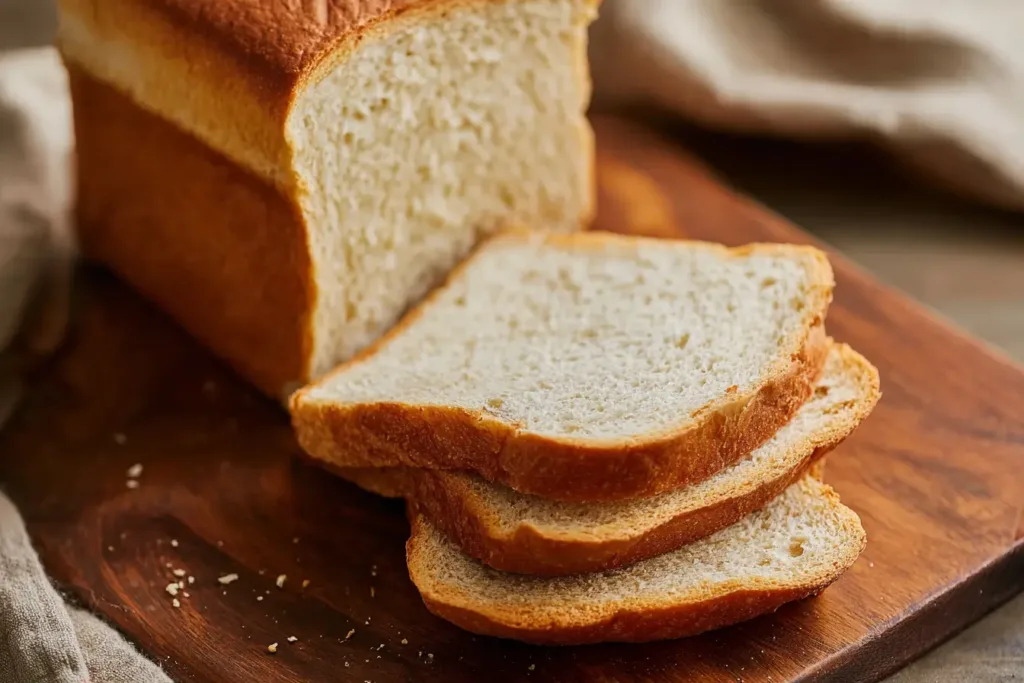
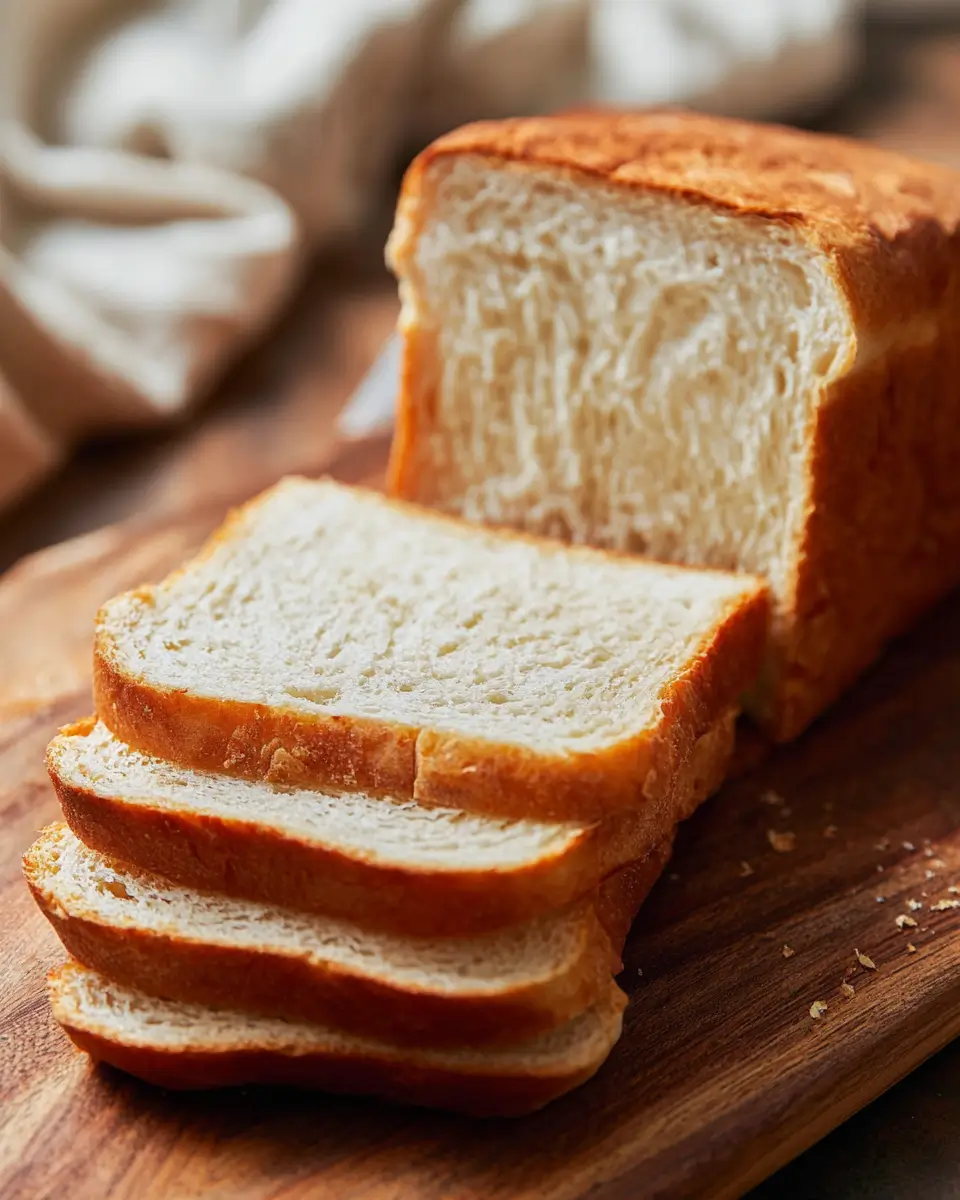
Simple Gluten Free Sandwich Bread
Ingredients
Method
- Preheat the oven to 350°F (175°C) and grease a 9×5-inch loaf pan thoroughly.

- In a large mixing bowl, whisk together gluten free flour, xanthan gum (if needed), baking powder, and rapid rise yeast.
- Add olive oil, honey, apple cider vinegar, and warm water. Mix on low speed until combined into a thick batter.
- Add egg whites and salt. Mix on medium speed for about 1 minute until the batter becomes smooth and slightly elastic.
- Pour the batter into the prepared loaf pan and smooth the top with a spatula.
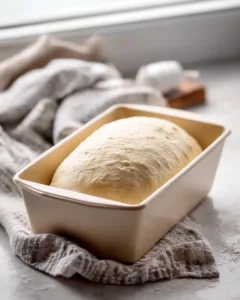
- Cover loosely with greased plastic wrap and let rise in a warm place for about 30 minutes, or until doubled in size.
- Remove the plastic wrap and bake for 30 minutes, or until the top is golden brown and the internal temperature reaches 205–210°F.
- Let the bread cool in the pan for 10 minutes, then transfer to a wire rack to cool completely.
- Slice with a serrated knife once fully cooled and serve.
Nutrition
Notes
Tried this recipe?
Let us know how it was!Why you will love this gluten free bread
If you have ever bought a loaf of gluten free bread at the store and found it dry, crumbly, or strangely sweet, you are not alone. That was my experience for years. I could not get over how expensive it was, and how fast it went stale once the bag was open. This recipe is my answer to that frustration. It gives you a simple and easy gluten free bread recipe you can bake in your own oven with ingredients you can actually find.
This loaf is meant to be everyday bread. It is soft enough for sandwiches, sturdy enough for toast, and gentle enough for picky eaters who are still getting used to gluten free options. The texture is closer to a soft white sandwich loaf than a dense health bread. When it is baked properly, the slices bend without cracking, and you can squish them a little without the crust peeling away or the crumb crumbling in your hands.
Beginners often worry that gluten free bread will not rise, or that it will collapse in the middle. That usually comes from a few small things going wrong at once. Maybe the water was too hot for the yeast, or the pan was not quite the right size, or the dough was allowed to proof too long. In this recipe, we keep each step clear and controlled. We use rapid rise yeast for a predictable lift, a warm but not hot liquid, and a loaf pan size that supports the dough as it rises and bakes. You get built-in safeguards against the most common beginner mistakes.
Another reason to love this beginner gluten free bread is that the ingredients list is straightforward. You do not need a long mix of different flours or an advanced starter. All-purpose gluten free flour, yeast, olive oil, honey, egg whites, and a few pantry basics do the work. Once you make this recipe a couple of times, it becomes a quiet Sunday habit, not a stressful project. You will get used to the look of the dough, the feel of the loaf when it comes out of the pan, and the way your kitchen smells when it is just about ready.
When this loaf comes out of the oven and cools for a bit, you will notice the crust is a soft golden brown, and the inside stays moist without turning heavy. For a first gluten free bread, that is the confidence boost you need. You will know that you can make gluten free sandwich bread at home that tastes better than what you find on the shelf and fits into your everyday routine.
If you are still getting familiar with what gluten actually is and where it hides, it can help to read a simple overview from a trusted celiac organization.
If you want to go deeper on choosing gluten-free flour blends that really work for bread, this practical guide from an experienced gluten-free baker is very helpful.
Why This Gluten Free Bread Works
If store-bought gluten free bread has ever felt dry, crumbly, or oddly sweet to you, you are not alone. This recipe is my calm answer to that frustration, giving you a simple gluten free bread you can bake at home with ingredients you actually recognize.
The loaf is soft enough for sandwiches, sturdy enough for toast, and designed with beginners in mind. With straightforward ingredients, rapid rise yeast, and clear steps, it bakes into a golden, bendable bread that feels like it finally deserves a spot in your everyday routine.
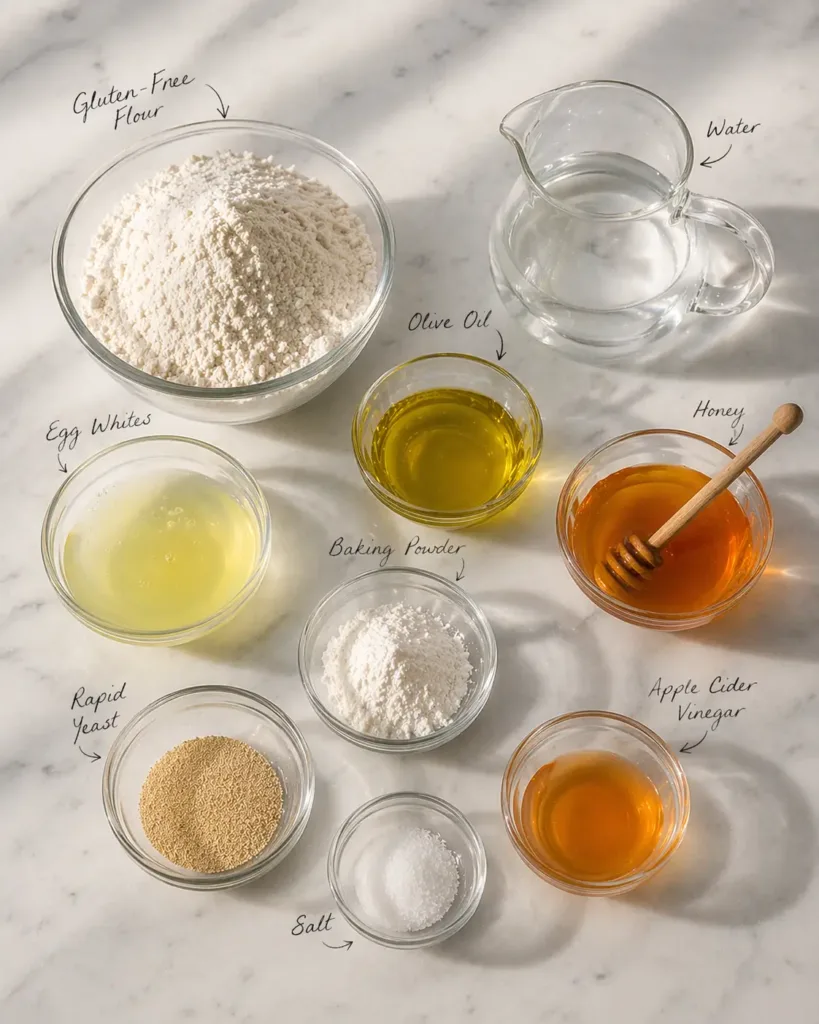
Ingredients and why they matter
One of the biggest secrets to gluten free bread that works every time is choosing the right ingredients and understanding what each one does. Instead of just listing them, I want to show you why they belong in the bowl, so you feel more confident making your own changes later.
The base of this recipe is an all-purpose gluten free flour blend that is suitable for yeast baking. Not every gluten free flour mix behaves well in bread. Some blends are better for cookies or cakes and will not give you a strong structure in a loaf. For this recipe, a cup-for-cup gluten free flour that includes a mix of rice flour and starches works best. If your blend does not contain xanthan gum, you will add a small amount to help the dough hold together and mimic the stretch you used to get from gluten.
Xanthan gum might sound technical, but in your bowl it is basically the net that catches all the bubbles from the yeast. Without it, gluten free dough can rise and then collapse or crumble. With the right amount, the bread stays tender but holds its shape when you slice it. You do not want to overdo it though, or the loaf can become too chewy. That is why we stay close to the tested amount and trust the blend that has already worked well.
Rapid rise or instant yeast plays the starring role in lifting this bread. It does not need to be proofed in a separate cup like traditional active dry yeast, which keeps the process simple for beginners. You will still use warm water to help it wake up, but you can mix it directly with the dry ingredients. The water should feel warm but not hot when you touch it. If it feels too hot on your finger, it is too hot for the yeast and can keep the bread from rising.
Olive oil adds moisture and softness to the crumb. In gluten free bread, you are always balancing structure and tenderness. The oil helps keep the slices from feeling dry or chalky, especially after a day or two on the counter. Honey adds both sweetness and a bit of extra food for the yeast. You can substitute agave nectar or maple syrup if you prefer, but honey gives a mild flavor that works beautifully in sandwich bread.
Apple cider vinegar is a quiet helper in the background. It adds a touch of acidity that can improve the texture and support the rise. You will not taste a sharp vinegar flavor in the finished bread. Think of it as one of those ingredients that you notice more when it is missing because the loaf feels flatter or less lively.
Egg whites are responsible for much of the structure and spring in this loaf. They whip into the dough and help trap air, which leads to a lighter crumb. Using just the whites keeps the bread lighter in color and texture. The salt balances the flavor and keeps the bread from tasting flat. It also helps control the yeast so the rise is steady rather than wild and uneven.
Finally, the pan you use matters more than you might expect. A smaller Pullman loaf pan or a standard 9 by 5 inch loaf pan both work, but the smaller Pullman pan gives the dough more support as it rises, which can be especially helpful for beginners. If your pan is larger, the loaf will spread more and rise a little less tall. It will still taste good, but the slices may be shorter. Greasing the pan well before you pour the dough in also prevents sticking and helps you remove the baked loaf without tearing the crust.
The Key Ingredients
A reliable gluten free flour blend made for yeast baking gives this loaf its structure, and a little xanthan gum helps the dough hold together and stay sliceable.
Rapid rise yeast, warm water, olive oil, honey, and egg whites work together to create a soft, light crumb, with apple cider vinegar quietly supporting the rise.
A well-greased smaller Pullman pan or standard 9×5 inch pan lets the dough rise up nicely, so your gluten free bread looks tall and slices neatly.
Step-by-step: how to make gluten free bread
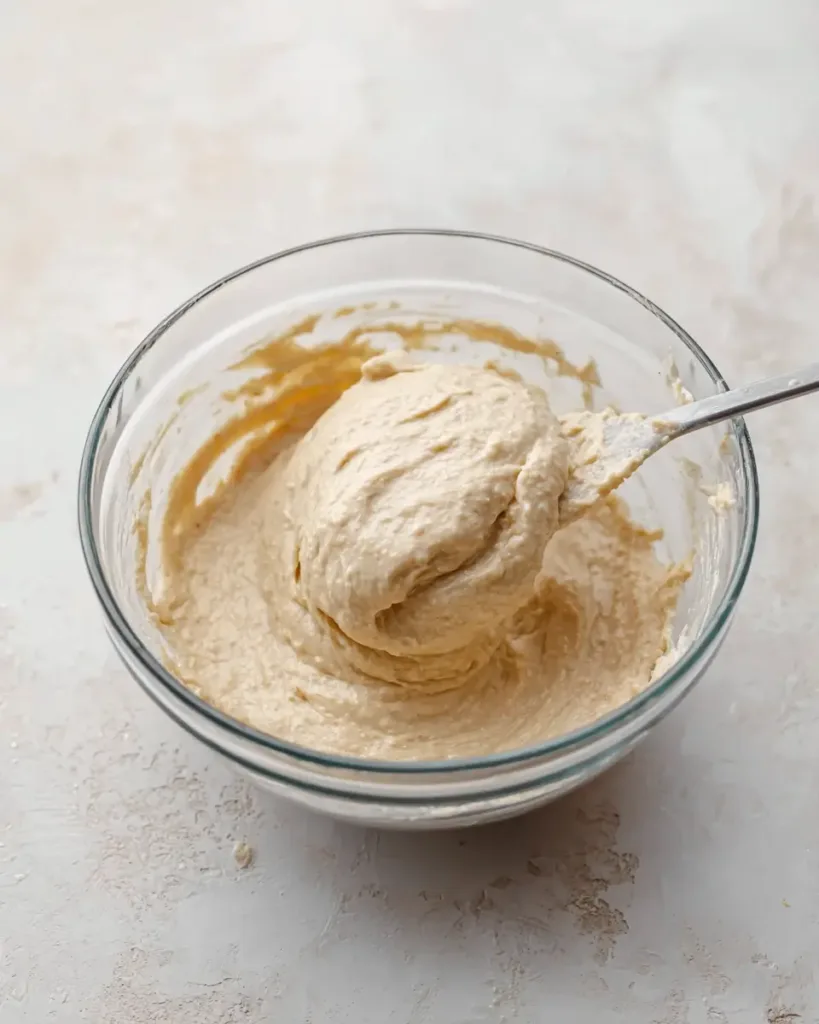
When you are new to baking gluten free bread, it helps to think of this as a thick batter rather than a kneaded dough. You will not be turning it out on the counter or shaping it by hand. Instead, you mix it well in a bowl, pour it into the pan, let it rise, and then bake. Each step is simple, and once you see the texture with your own eyes, it gets easier every time.
Start by preparing your pan and oven so you are not scrambling later. Spray your loaf pan generously with gluten free cooking spray or brush it with oil. Make sure you get into the corners so the loaf does not catch there. Move your oven rack to the middle position and preheat the oven to 350 degrees Fahrenheit. If your oven has a bread proofing setting around 100 degrees Fahrenheit, you can use that later when it is time to let the dough rise.
In a large mixing bowl, combine your gluten free flour, xanthan gum if your blend needs it, baking powder, and rapid rise yeast. Use a whisk or a spoon to blend them thoroughly. You want the yeast and baking powder to be evenly distributed so the bread rises uniformly. As you stir, notice the texture of the flour mixture. It should look light and airy, not clumpy. This simple step sets you up for a smoother batter later.
Next, add the liquid ingredients. Pour in the olive oil, honey, apple cider vinegar, and warm water. The water should feel warm to the touch, similar to a comfortable bath. If you have a thermometer, aim for around 100 to 110 degrees Fahrenheit. Cooler water will slow the rise and hotter water can harm the yeast. Mix on low speed using a stand mixer with a paddle attachment or a hand mixer. After about a minute of mixing, the batter will start to look like a thick, smooth cake batter.
Now add the egg whites and salt. Make sure the egg whites are at room temperature if you can, because cold eggs can slow down the yeast. Mix again on medium speed for about a minute. Watch how the batter changes. It should become lighter and more elastic, still pourable but not runny. If you scoop up a spoonful and let it fall back into the bowl, it should slowly mound on the surface before settling.
Pour the dough into your prepared loaf pan. Use a spatula to scrape the bowl so you do not leave any batter behind. Once the dough is in the pan, smooth the top gently. You do not need to be precise, but evening it out helps the loaf bake uniformly. Lightly spray a piece of plastic wrap with gluten-free cooking spray and lay it loosely over the pan, oiled side down. This keeps the dough from sticking as it rises.
Find a warm, draft-free place for the dough to rise. If your oven has a proofing setting, place the covered pan inside with the oven on proof mode. Otherwise, a slightly warm kitchen counter away from open windows works well. The dough should rise for about 30 minutes, or until it has doubled in size. For beginners, it helps to mark the starting level on the outside of the pan with a piece of tape or a dry erase marker, so you can see how far it has grown.
Once the dough has doubled, carefully remove the plastic wrap. Avoid bumping or shaking the pan. Slide the pan onto the middle oven rack and bake at 350 degrees Fahrenheit for about 30 minutes. The top should turn a gentle golden brown. If you use an instant read thermometer, check the center of the loaf. When the internal temperature reaches around 205 to 210 degrees Fahrenheit, the bread is done.
When the loaf comes out of the oven, let it cool in the pan for about 10 minutes. This short rest helps the structure settle, but you do not want to leave it in the pan much longer than that. If it cools completely in the pan, steam can build up and make the bottom of the loaf soggy. After those 10 minutes, gently loosen the sides with a thin spatula if needed and turn the bread out onto a cooling rack.
Let the loaf cool completely before slicing. This part is hard to wait for, especially when the house smells like warm bread, but it is important. Cutting into gluten-free bread while it is still hot can make it seem gummy, even if it is baked perfectly. When it is fully cool, use a serrated knife and saw gently back and forth. A smooth bladed knife tends to squish the loaf instead of cutting it cleanly. Once you see those first even slices, you will understand why the patience was worth it.
As a beginner, you might not get every single detail perfect on your first try, and that is okay. Pay attention to a few cues. If the bread did not rise much, your water might have been too hot or too cold, or your yeast could be old. If the crumb feels too dense, you might have used a flour blend that is not ideal for yeast bread. Make a note of what you used and how it behaved. With one or two rounds of small adjustments, this simple gluten-free bread recipe will feel like second nature.
How to Make Beginner-Friendly Gluten Free Bread
- Think of this dough as a thick batter, not a kneaded loaf. You will mix everything in a bowl, pour it into the pan, let it rise, and then bake.
-
Prepare your pan and oven: grease the loaf pan well, move the rack to the middle, and preheat to 350°F. If your oven has
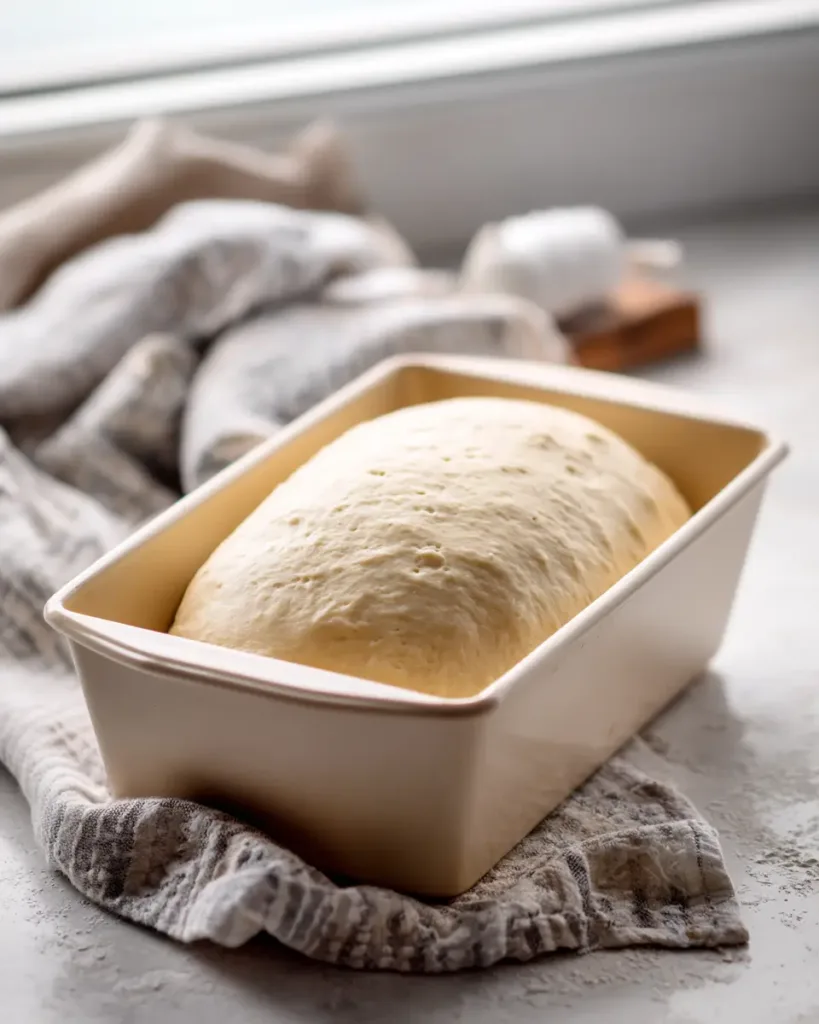
When the dough has doubled in size and looks puffed and airy, it is ready for the oven. Tips, variations, and storage
Once you are comfortable with the basic recipe, small tweaks can help you fit this bread into your daily routine. For a slightly sweeter breakfast loaf, you can add an extra spoonful of honey or a sprinkle of cinnamon to the batter. For a more savory version, try stirring in a pinch of dried herbs before you pour the dough into the pan. Just keep the add-ins modest at first so you do not weigh down the rise.
If you are tempted to swap in a completely different gluten-free flour blend, know that you may need to experiment a bit. Some blends absorb more water than others. If your batter looks much thicker than a cake batter, you can add a tablespoon or two of extra warm water to loosen it slightly. If it looks very thin, give it a minute to rest and thicken before you decide to add more flour. Keeping notes on which blend you used, how the batter looked, and how the bread turned out will save you time in the future.
This beginner gluten-free bread also adapts well to a bread machine with a gluten-free setting. If you prefer to use one, you can follow the order of ingredients recommended by your machine, usually liquids first, then dry ingredients, then yeast. Use the gluten-free cycle if you have it. The texture will be a little different than the oven-baked version, but it is a helpful option for busy days.
For everyday use, I like to slice only what I need at the moment. Once the loaf is completely cool, store it in an airtight container or a bread box at room temperature. Avoid storing it in the refrigerator, which can dry out gluten-free bread more quickly. Well wrapped, it should stay soft for a couple of days on the counter. If your kitchen is very warm, you can move it to a cooler spot or plan to freeze part of the loaf.
Gluten-free bread freezes surprisingly well if you do it correctly. Let the loaf cool completely, then wrap it tightly in plastic wrap. For extra protection, add a layer of foil or place the wrapped loaf in a freezer bag. Squeeze out as much air as you can. Label the bag with the date so you remember when you baked it. This bread can be frozen for up to three months. When you are ready to use it, thaw the loaf in the refrigerator overnight, then let it come to room temperature on the counter before slicing.
If you know you will be toasting most of the bread, you can slice it before freezing. Place parchment between slices or freeze them in a single layer on a baking sheet before bagging them. That way you can pull out a slice or two at a time and drop them into the toaster without thawing the whole loaf. It is one of those small habits that can make gluten-free living feel easier on busy mornings.
Serving this bread is where you can have fun. It makes a gentle base for toast with butter and jam, but it also works well with savory toppings like avocado, cottage cheese, or scrambled eggs. For sandwiches, slice it a little thicker so it can support fillings without tearing. Once you are comfortable with this simple gluten-free bread recipe, you can play with shapes and toppings, such as sprinkling seeds over the top of the loaf before baking for a bit of crunch.

This beginner gluten-free bread is perfect for toast, sandwiches, and simple breakfasts. Variations & StorageSimple Ways to Make It Your Own
Once the basic loaf feels comfortable, you can gently play with it. A spoonful of extra honey or a little cinnamon makes a cozy breakfast bread, while a pinch of dried herbs leans more savory. Keep the add-ins light so you do not weigh down the rise.
Different gluten free flour blends absorb water differently, so adjust as needed: a splash more warm water for very thick batter, or a short rest for thin batter to thicken. This bread can also go into a bread machine with a gluten free cycle if you prefer that shortcut.
For everyday use, store the cooled loaf in an airtight container at room temperature, or freeze slices with parchment between them so you can toast one or two at a time. Serve it simply with butter and jam, or pile on savory toppings like avocado or scrambled eggs when you want something heartier.
Frequently asked questions
Can I use any gluten-free flour blend for this bread?
It is best to use an all-purpose gluten-free flour blend that is recommended for yeast baking. Some blends are designed for cookies or cakes and will not rise the same way in bread. If your blend contains xanthan gum, you can skip adding extra. If it does not, follow the recipe amount so the loaf holds together and does not crumble when sliced.Does this gluten-free bread taste like regular sandwich bread?
This loaf is designed to be as close as possible to soft white sandwich bread. It has a mild flavor, a soft crumb, and slices that bend instead of breaking. The texture will not be identical to wheat bread, but for most beginners it feels pleasantly familiar and works beautifully for toast and sandwiches.How do I know if my yeast is still active?
Even though rapid rise yeast can be mixed with the dry ingredients, you can test it if you are unsure. Stir a little honey into warm water, sprinkle the yeast over the top, and let it sit for about five minutes. If it becomes foamy and bubbly, it is active. If it stays flat, it is time to open a fresh packet before you mix your dough.Why did my gluten-free bread collapse in the middle?
A common reason for a sunken loaf is over-proofing, which means the dough rose too long before baking. Another cause can be using water that is too hot and harming the yeast, or a flour blend that is not strong enough for this style of bread. Next time, watch the dough and bake as soon as it has doubled in size. Also, check your oven temperature with a thermometer if you suspect it might run low.Final thoughts and gentle encouragement
If gluten-free bread baking has intimidated you in the past, I hope this simple, beginner-focused recipe feels like a calmer way forward. You now know what the batter should look like, how warm your water needs to be, and how to tell when your loaf is done. Those small details add up to a big change in confidence.
The next time you plan sandwiches or toast for the week, consider giving this loaf a spot on your to-bake list. Set aside a quiet hour, gather your ingredients, and let yourself follow each step without rushing. Even if your first loaf is not perfect, you will learn something useful just by paying attention to the rise, the smell, and the way the crust looks in your oven. With one or two tries, you will have your own reliable gluten-free bread recipe you can come back to again and again.
When you do bake it, I would love for you to notice how you feel cutting into a loaf that you made yourself. There is something grounding about that first slice, especially if you have spent a long time depending on store-bought bread that did not quite satisfy you. Save this recipe, share it with a friend who is also gluten-free, and do not be afraid to tweak it slowly to fit your kitchen. You are more capable in the kitchen than you think, and this loaf can be one of the recipes that proves it to you.
When you do bake it, I would love for you to notice how you feel cutting into a loaf that you made yourself. There is something grounding about that first slice, especially if you have spent a long time depending on store-bought bread that did not quite satisfy you. If you want a fun next step, you can try a playful gluten-free twist like my Cloud Bread Recipe Pastel Swirl Loaf , or stay cozy with a slice of Strawberry Lemon Yogurt Brea on the side.
On busier days, keep breakfast simple with High Protein Cottage Cheese Blueberry Muffins, or add a little gut-friendly crunch by pairing your sandwich with a spoonful of Homemade Sauerkraut. Save this recipe, share it with a friend who is also gluten-free, and do not be afraid to tweak it slowly to fit your kitchen.
Author
-
