
The first time I made bibimbap at home, I honestly stood over the bowl for a full minute just looking at it. All those colors. Bright orange carrots, dark green spinach, pale bean sprouts, a golden egg sitting right on top. It looked like something you’d order at a restaurant, but I’d made it in my own kitchen on a Tuesday night. That moment stuck with me. This easy bibimbap recipe is the one I come back to whenever I want something that feels special but doesn’t ask too much of me. It’s flexible, forgiving, and deeply satisfying. Once you know the rhythm of it, you’ll find yourself making it on repeat.
Key Takeaways for This Easy Bibimbap Recipe
- Bibimbap means “mixed rice” in Korean. The whole point is to mix everything together right before eating.
- The gochujang sauce is what brings the bowl to life. You can adjust the heat level to your taste.
- You can swap the beef for tofu, chicken, or skip the protein entirely for a vegetarian version.
- Prep each topping separately. It takes a little time but gives every component its own flavor.
- Leftovers store well. Keep the components separate in the fridge and assemble fresh each time.
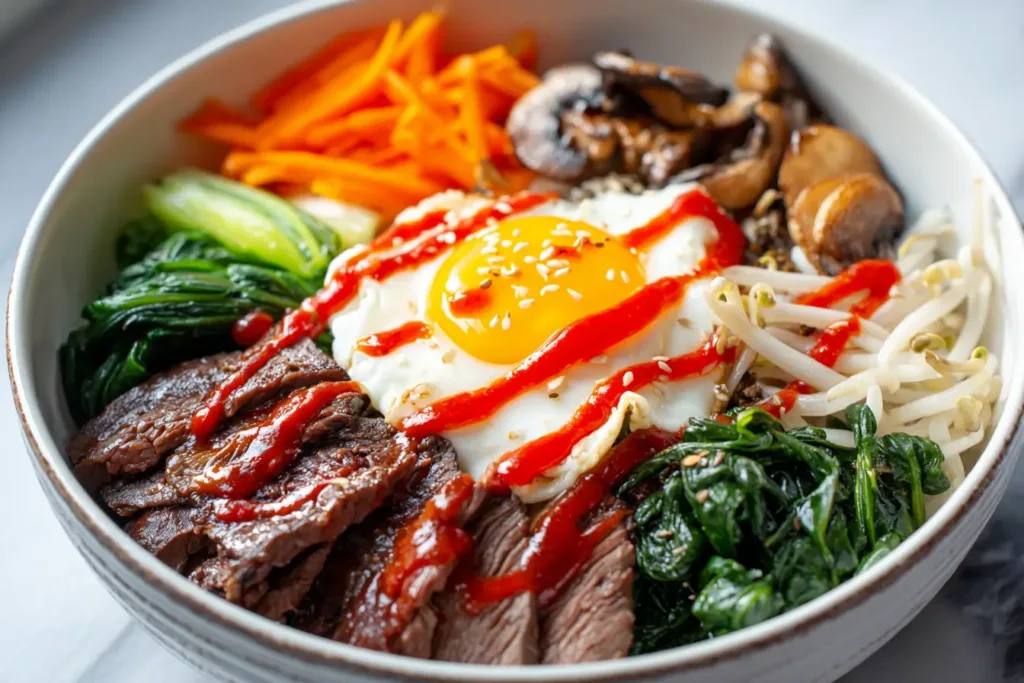
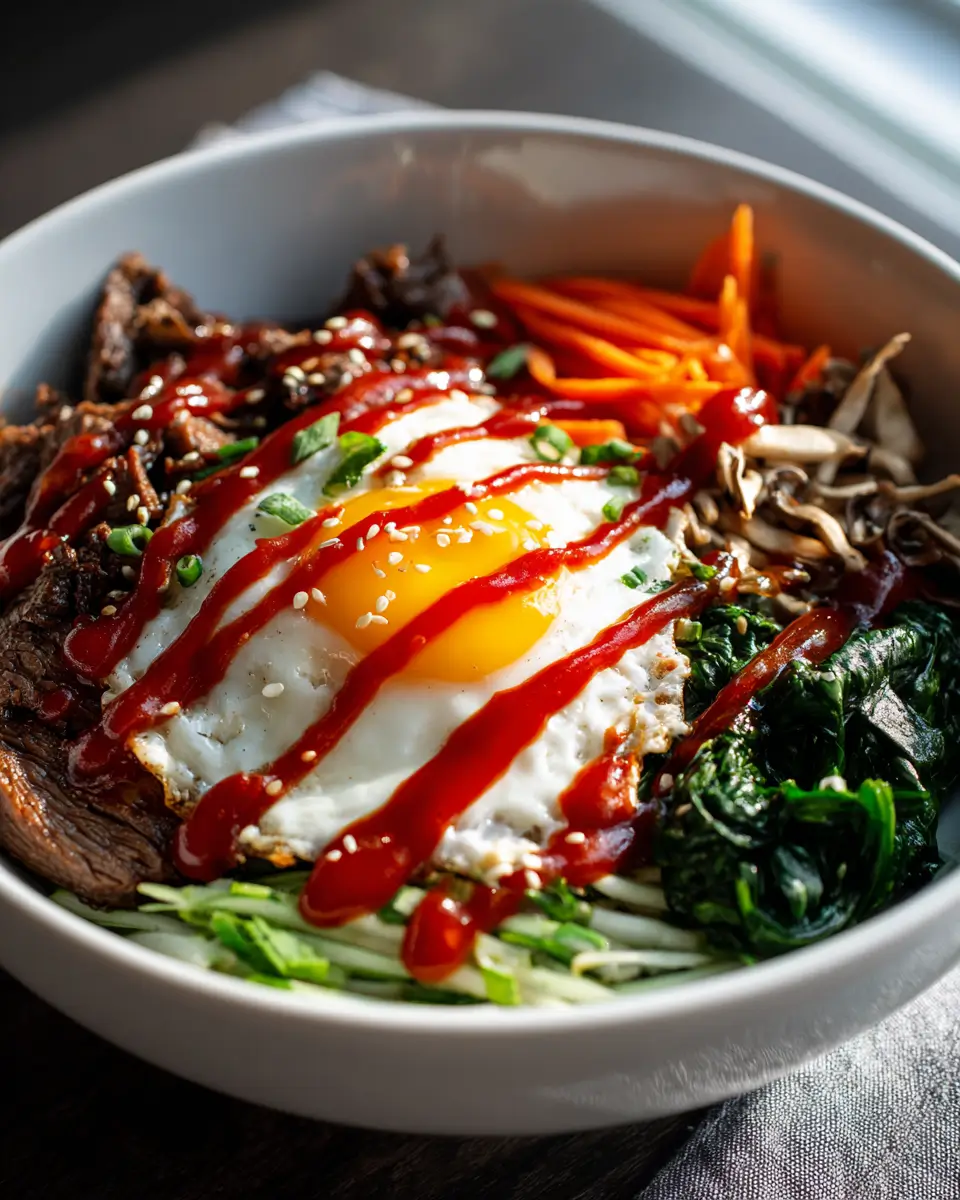
Easy Bibimbap
Ingredients
Method
- Mix beef mince with soy sauce, sesame oil, brown sugar, and garlic. Marinate for 30 minutes.
- In a small bowl, combine gochujang, sesame oil, sugar, water, sesame seeds, vinegar, and garlic. Stir until smooth and set aside.
- Blanch spinach in boiling water for 30 seconds. Drain, rinse with cold water, squeeze dry, and season with sesame oil and salt.
- Blanch bean sprouts for 2 minutes. Drain and season with sesame oil and salt.
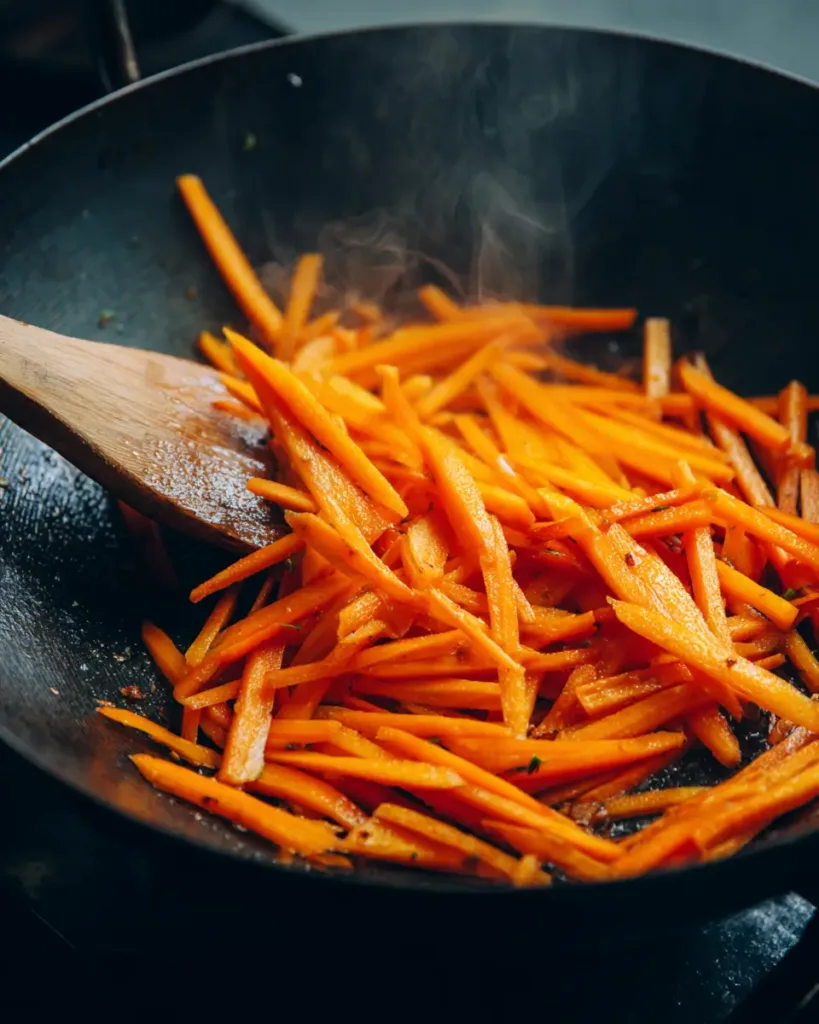
- Heat oil in a pan and stir-fry carrots with a pinch of salt for 2–3 minutes. Remove and set aside.
- In the same pan, cook sliced shiitake mushrooms over medium-high heat until lightly browned. Set aside.
- Cook the marinated beef in a hot pan for 3–5 minutes until fully cooked and slightly caramelized.
- Fry eggs sunny side up with runny yolks.
- Divide steamed rice into bowls. Arrange beef, vegetables, and seaweed on top in sections. Place a fried egg in the center.
- Spoon the sauce over the bowl, mix everything together thoroughly, and serve immediately.
Nutrition
Notes
Tried this recipe?
Let us know how it was!Why You Will Love This Easy Bibimbap Recipe
There’s a reason bibimbap has become one of the most searched korean bibimbap recipe searches online, and it’s not just because it looks beautiful in photos. It’s because it genuinely delivers on every level. You get a complete meal in one bowl. Protein, vegetables, carbs, and a sauce that ties it all together.
I love it because it’s adaptable. My daughter doesn’t eat beef, so I make her a vegetarian bibimbap recipe with tofu. My husband likes it spicy, so I add an extra spoonful of gochujang to his bowl. Nobody complains at this table on bibimbap night.
It’s also a great way to use up vegetables sitting in your fridge. Zucchini, bell peppers, even leftover roasted sweet potato work well here. This dish was traditionally made to use up banchan, Korean side dishes, and that spirit of resourcefulness still holds up. Want something a bit lighter afterward? I sometimes pair this with a high protein coffee smoothie for a satisfying, balanced day.
Bibimbap Ingredients and Why They Matter
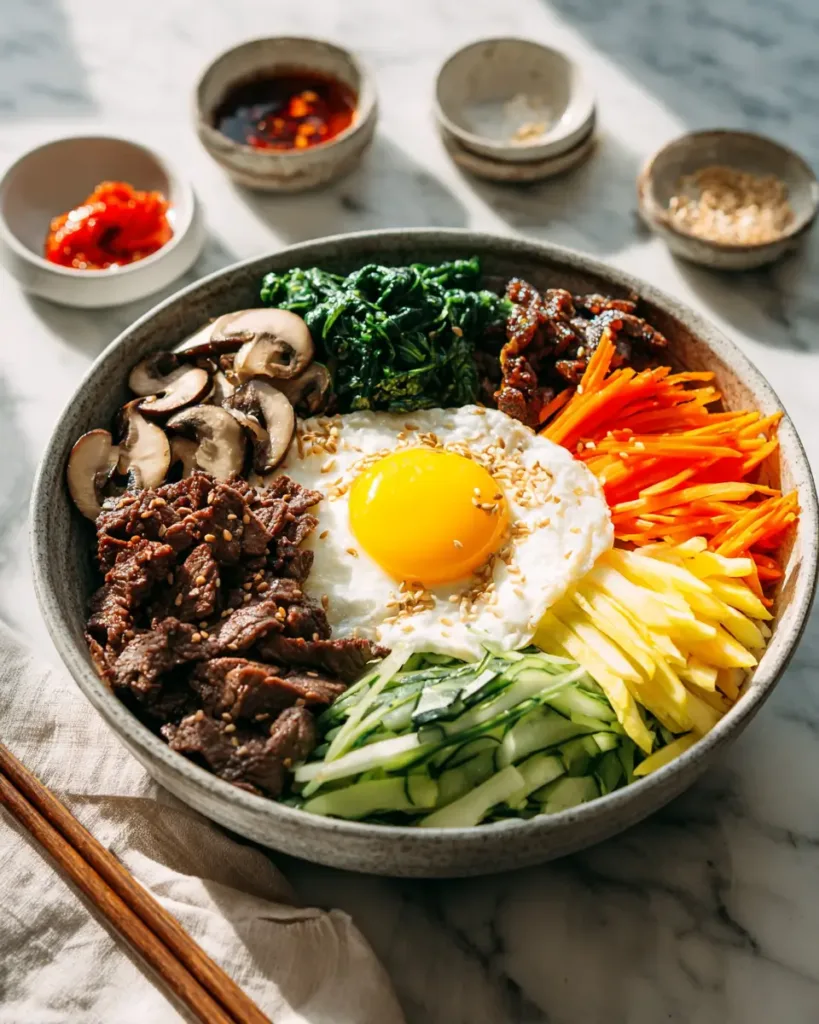
Understanding each component helps you make better choices and easier swaps. Here’s what goes into a classic bibimbap recipe and why each part earns its place in the bowl.
Steamed white rice is the base. Short-grain Japanese-style rice gives you that slightly sticky, tender texture that holds the toppings together when you mix. Day-old rice works fine too, just reheat it with a splash of water.
Beef mince is marinated in soy sauce, sesame oil, brown sugar, and garlic. That quick 30-minute soak transforms it completely. The sugar caramelizes as it cooks and gives the meat a subtle sweetness that balances the heat of the sauce. If you want a bibimbap recipe chicken version, thinly sliced chicken thigh with the same marinade works beautifully.
Spinach gets blanched and squeezed dry, then seasoned simply with sesame oil and garlic. The texture is silky and the flavor is mild. It’s a good counterpoint to the spicy sauce.
Bean sprouts add crunch. Don’t skip blanching them briefly, raw bean sprouts have a slightly raw, grassy taste that cooking takes away.
Shiitake mushrooms bring earthiness and a meaty chew. Slice them thin and cook hot and fast so they don’t steam. You want a little color on them.
Carrots add sweetness and a pop of color. Julienne them as thin as you can. They only need two to three minutes in a hot pan.
A fried egg on top is traditional. Sunny side up with a runny yolk is the move here. When you break it and mix everything together, the yolk becomes part of the sauce. It’s one of those things that just works.
Toasted seasoned seaweed, cut into thin strips, adds a salty, oceanic note that you don’t realize is missing until it’s there.
For the Bibimbap Sauce Recipe
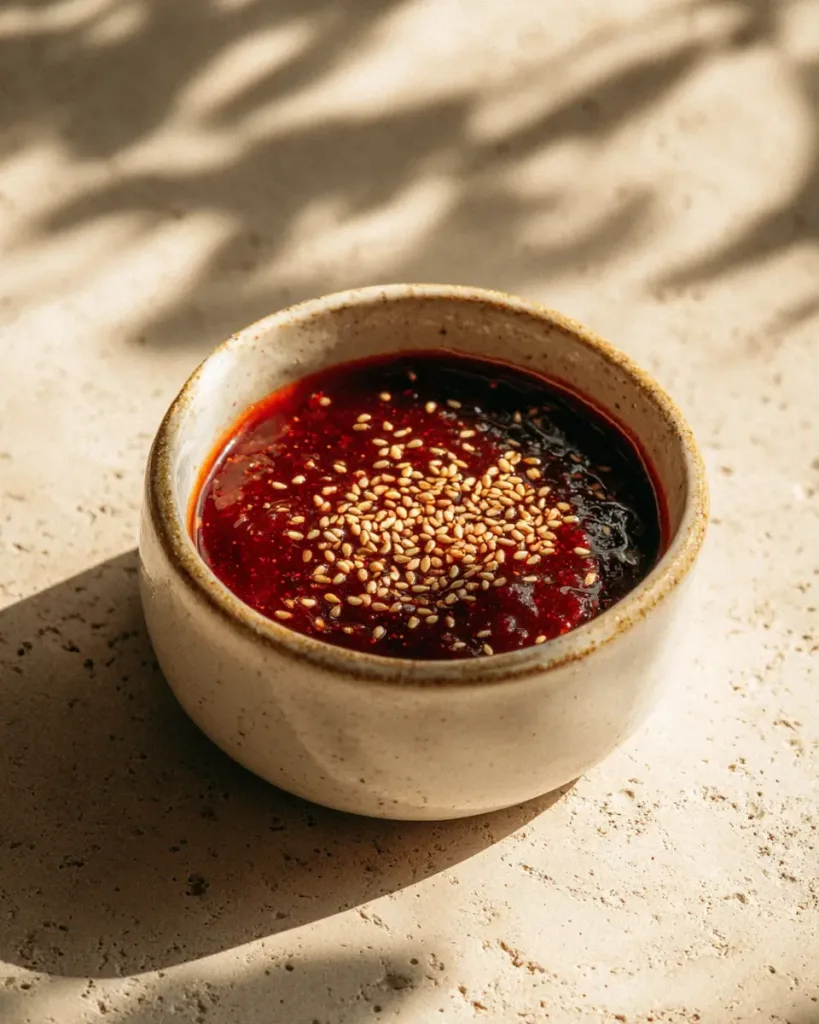
This is the soul of the dish. The bibimbap sauce recipe is built around gochujang, a fermented Korean red chili paste with depth and warmth that ordinary hot sauce just can’t replicate. Combined with sesame oil, a little sugar, vinegar, and garlic, it becomes something greater than the sum of its parts. You can find gochujang at most Asian grocery stores or online. The same bold flavor approach applies across bold recipe builds: it’s always about layering.
For a milder version, use half the gochujang and add a spoonful of doenjang, Korean fermented soybean paste. Or simply dial back the quantity and add a bit more sesame oil to keep the sauce rich without the heat.
Full Ingredients List for Bibimbap (Serves 3 to 4)
Meat and marinade: 100g beef mince, 1 tablespoon soy sauce, 1 tablespoon sesame oil, 1 teaspoon brown sugar, 1/4 teaspoon minced garlic.
Vegetables: 250g fresh spinach, 350g bean sprouts, 100g shiitake mushrooms, 120g carrots (1 small), 1/2 teaspoon fine sea salt, some cooking oil.
Bowl components: 3 to 4 servings steamed short-grain rice, 3 to 4 eggs, toasted seasoned seaweed strips.
Bibimbap sauce: 2 tablespoons gochujang, 1 tablespoon sesame oil, 1 tablespoon sugar, 1 tablespoon water, 1 tablespoon toasted sesame seeds, 1 teaspoon vinegar, 1 teaspoon minced garlic.
Step by Step Instructions for Easy Bibimbap Recipe
The key to this dish is mise en place. Get everything prepped and cooked before you start assembling. It sounds like more work but it actually makes the whole process much calmer.
Step 1. Marinate the beef. Mix the beef mince with soy sauce, sesame oil, brown sugar, and garlic. Set it aside for 30 minutes while you work on the vegetables. This is not optional. The marinating time is what gives the meat its depth.
Step 2. Make the bibimbap sauce. Combine the gochujang, sesame oil, sugar, water, sesame seeds, vinegar, and garlic in a small bowl. Stir until smooth. Taste it. Adjust the heat by adding more or less gochujang. Set aside.
Step 3. Cook the spinach. Blanch spinach in boiling water for about 30 seconds. Drain immediately, rinse with cold water, and squeeze out as much water as you can with your hands. Season with a tiny bit of sesame oil and salt. Set aside.
Step 4. Cook the bean sprouts. Blanch bean sprouts for two minutes in the same boiling water. Drain and season with sesame oil and a pinch of salt. Set aside.
Step 5. Stir fry carrots and mushrooms. Add a little oil to a hot wok. Cook the julienned carrots with 1/4 teaspoon of salt for two to three minutes over medium-high heat. Set aside. Repeat with the sliced shiitake mushrooms. You want a little color on both. Don’t crowd the pan or they’ll steam instead of fry.
Step 6. Cook the beef. Add a splash of oil to the same wok on medium-high heat. Add the marinated beef and cook for three to five minutes, breaking it up as it goes. It should be fully cooked and slightly caramelized.
Step 7. Fry the eggs. In a clean pan over medium heat with a little oil, fry your eggs sunny side up. Keep the yolks runny. This matters for the final mix.
Step 8. Assemble the bowls. Add a generous scoop of steamed rice to each bowl. Arrange the beef, spinach, bean sprouts, carrots, mushrooms, and seaweed strips in separate sections around the bowl. Place the fried egg in the center. Spoon bibimbap sauce on top.
Step 9. Mix and eat. This is the best part. Mix everything together with a spoon until the rice, vegetables, meat, egg yolk, and sauce become one unified, glossy, delicious mass. Eat immediately.
Bibimbap Nutrition Facts (Per Serving)
Tips, Variations, and Storage for Bibimbap Recipe
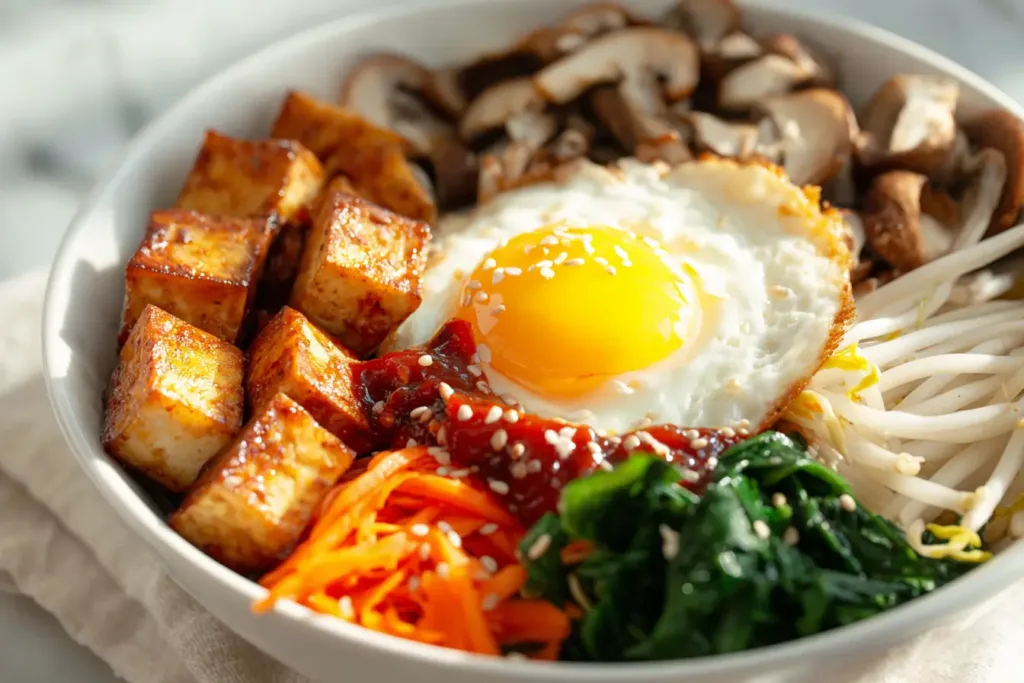
For a vegetarian bibimbap recipe: Skip the beef entirely and add pan-fried firm tofu. Press the tofu well first to remove moisture, then cube it and fry in sesame oil with a little soy sauce and garlic until golden. It absorbs the sauce beautifully. A bibimbap recipe tofu version is just as satisfying as the meat-based one.
For a bibimbap recipe chicken: Use boneless chicken thigh, sliced thin, with the same marinade as the beef. Cook it over high heat so it gets a little char. Chicken thigh stays juicy where breast would dry out.
Rice matters more than you think. Short-grain white rice is traditional and gives you that slightly sticky texture that helps everything bind when you mix. If you only have long-grain, it’ll still work but the texture won’t be quite the same. For a fiber boost, half white and half brown rice is a good compromise. Pair it with something lighter like a pineapple walnut salad for a fresh, balanced lunch spread.
Making it ahead: All the components store well in separate airtight containers in the fridge for up to three days. The sauce keeps for two weeks in a small jar. When you want to eat, just reheat the rice and meat, lay everything out cold or warm, and assemble fresh. Bibimbap that’s been mixed and stored doesn’t really hold up.
The sauce is adjustable. The traditional bibimbap recipe sauce uses gochujang as its base. If you can’t find gochujang, a mix of sriracha with a teaspoon of miso paste gets you close. It won’t be identical but it works. For a milder bowl, start with just one tablespoon of gochujang and build from there.
Don’t skip the seaweed. Those thin strips of toasted seasoned seaweed are easy to overlook but they add a salty, umami punch that you’ll miss if they’re not there. Look for gim, the pre-seasoned Korean variety, at Asian grocery stores. If you enjoy adding crunch and savory depth to your food, you might also love these crispy baked zucchini chips as a light snack alongside.
Is Bibimbap Healthy? Nutritional Benefits Explained
Bibimbap is genuinely one of the more nutritionally complete dishes you can make at home. A single bowl covers several food groups in one go. You have complex carbohydrates from the rice, protein from the beef and egg, and a wide range of vitamins and minerals from the vegetables.
The spinach delivers iron and vitamin K. Bean sprouts are low in calories but high in vitamin C. Carrots add beta-carotene. Shiitake mushrooms bring B vitamins and compounds linked to immune support. The egg provides complete protein and healthy fats from the yolk. According to nutrition research, eating a variety of colorful vegetables at each meal is one of the most consistent markers of a healthy diet. Bibimbap does exactly that, naturally.
One serving with beef runs approximately 570 calories with 24g of protein and 7g of fiber. Swap the beef for tofu and you bring the saturated fat down while keeping the protein solid. Use brown rice and you add more fiber and a lower glycemic impact. The dish genuinely adapts to health goals without losing its soul. You can also check out these high protein cottage cheese blueberry muffins if you’re building a high-protein eating routine around balanced, whole-ingredient meals.
Frequently Asked Questions About Bibimbap Recipe
What are the ingredients of bibimbap?
The core bibimbap ingredients are steamed white rice, seasoned vegetables (usually spinach, bean sprouts, carrots, and mushrooms), a protein like beef or tofu, a fried egg, toasted seaweed strips, and gochujang sauce. The vegetables are each cooked separately with simple seasonings like sesame oil, garlic, and salt. Every component is added on top of the rice and mixed together just before eating. The exact vegetables vary by region and what’s on hand, which is one of the things that makes this dish so adaptable.
What should I put in my bibimbap?
Start with the classics: spinach, bean sprouts, carrots, and shiitake mushrooms. From there, anything goes. Zucchini, daikon radish, bellflower root, cucumber, and kimchi all work well. For protein, beef mince is traditional, but chicken, pork, tofu, or even a simple fried egg only version are all valid. The gochujang sauce is non-negotiable for most people. Beyond that, build a bowl that suits what you have and what you enjoy. There’s no single correct bibimbap.
Is bibimbap actually healthy?
Yes, bibimbap is genuinely a balanced, nutrient-dense meal. A traditional bowl includes a good mix of complex carbohydrates, lean protein, and multiple vegetables that together provide vitamins, minerals, and fiber. The gochujang sauce adds flavor without significant calories. One serving contains around 570 calories with 24g of protein and 7g of fiber, which makes it filling without being heavy. If you want a lighter version, use less rice, more vegetables, skip the beef, and go with tofu. It adjusts well to most eating goals.
Is bibimbap good for diabetics?
Bibimbap can fit into a diabetes-friendly eating plan with a few thoughtful adjustments. The standard version uses white rice, which has a higher glycemic impact, so swapping in brown rice or using a smaller rice portion with more vegetables is a smart modification. The protein from the egg and beef, along with the fiber from all the vegetables, helps slow how quickly glucose enters the bloodstream. The gochujang sauce adds some sugar, so portion it carefully. As always, anyone managing diabetes should work with their healthcare provider on specific dietary choices.
A Few Last Notes Before You Cook
Bibimbap rewards a little patience. The components take time individually but each one is simple on its own. The whole dish comes together faster once you’ve made it two or three times and found your rhythm. The first time might feel like a lot of small tasks. The second time, you’ll realize it’s mostly just timing.
Start the marinade first. Get the rice going. Work through the vegetables while the meat sits. By the time everything is ready, the kitchen smells incredible and dinner is genuinely close.
I hope this easy bibimbap recipe becomes a regular in your kitchen the way it has in mine. It’s one of those dishes that feels like an occasion even on an ordinary weeknight. Try it once and you’ll understand why Korean bibimbap has been loved for centuries.
If you try it, I’d love to know how yours turned out. Leave a comment below and let me know which toppings you used or how you made it your own.
You can also find me sharing everyday recipe moments, family favorites, and quiet kitchen rituals over on
and
, where I love connecting with fellow home cooks and wellness enthusiasts. Come say hi — the community over there is warm, supportive, and always hungry for new ideas!
