
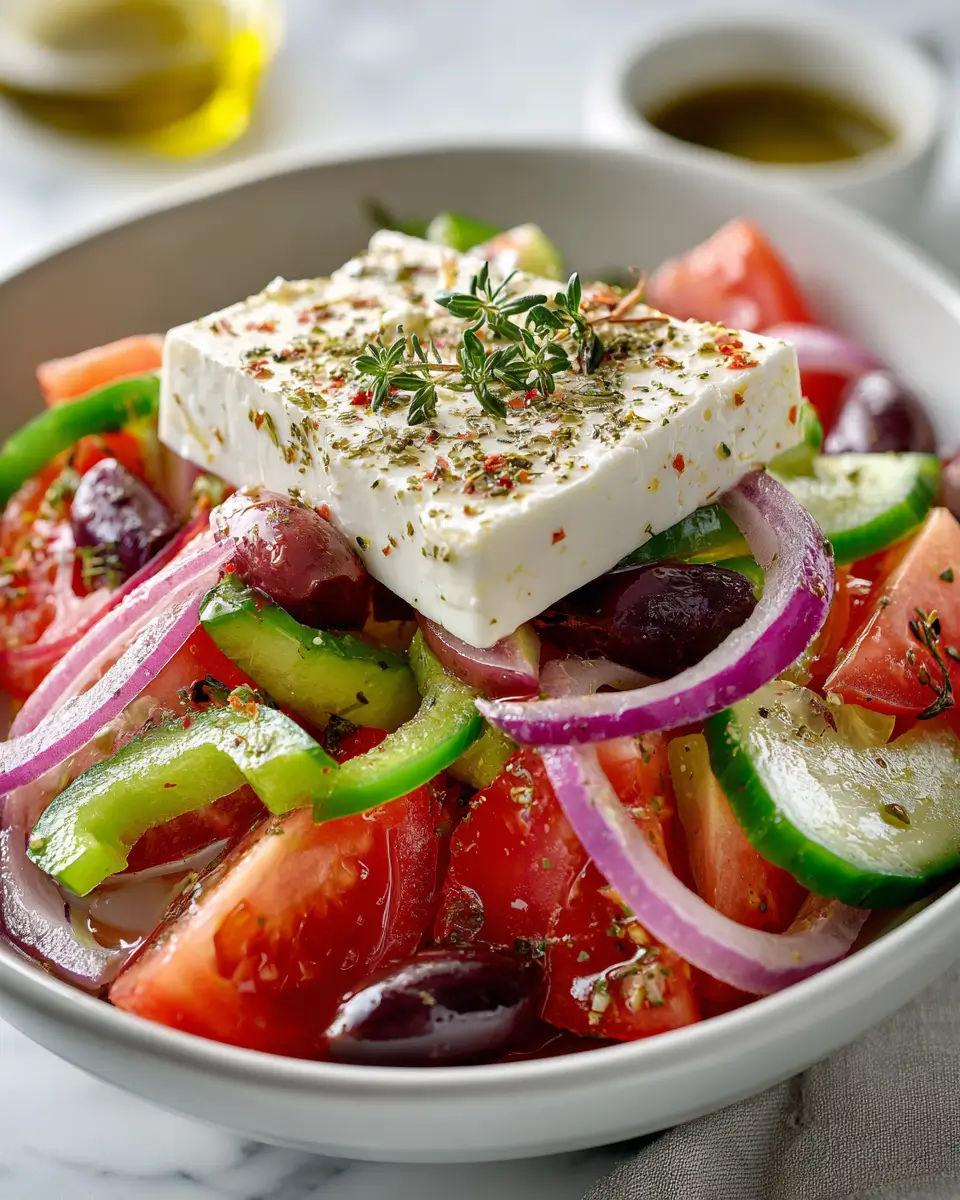
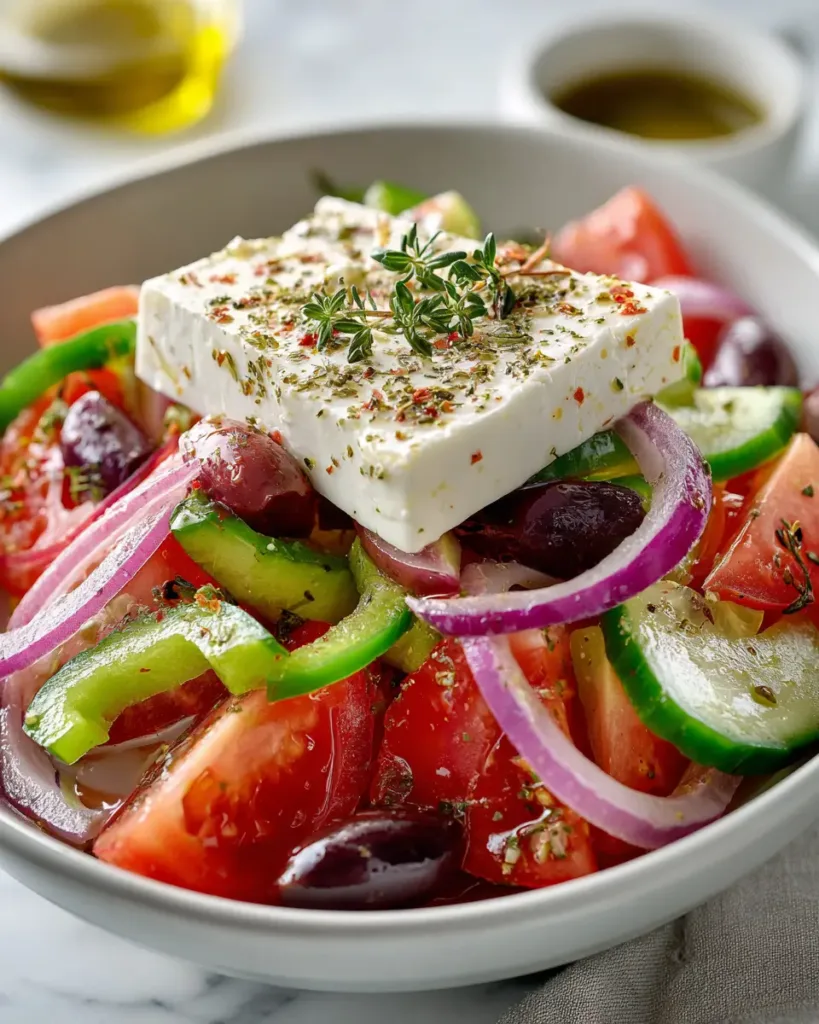
There’s something about a real greek salad recipe that brings me straight back to slow summer evenings, when dinner is just a big bowl of juicy tomatoes, salty feta, and good bread to swipe up every last bit of olive oil. I still remember the first time I tasted a true horiatiki salad at a tiny taverna. No lettuce, no complicated dressing, just sun sweet tomatoes, crisp cucumbers, briny olives, and a slab of feta on top.
It felt almost too simple until I realized that was the magic. This is the version I keep coming back to in my own kitchen when I want a dinner that feels light but satisfying, heart friendly, and honestly, so easy I can throw it together on autopilot.
In this recipe, I’ll walk you through how to make an authentic horiatiki greek salad recipe at home, plus a few gentle variations so you can adapt it to your tastes or pantry. We’ll talk about the ingredients that truly matter, how to build the dressing so it clings to every bite, and how this kind of Mediterranean salad can fit into heart health, diabetes friendly, and cholesterol conscious eating in a realistic way.
Authentic Horiatiki Greek Salad
Ingredients
Method
- Thinly slice the red onion and soak it in a bowl of cold water for 5–10 minutes to mellow its flavor.
- Cut the tomatoes into wedges and slice the cucumber into rounds or half-moons. If needed, remove excess seeds.

- Slice the green bell pepper into thin strips.
- Drain and pat dry the red onion.
- In a large bowl or platter, combine tomatoes, cucumber, green pepper, red onion, and Kalamata olives.

- Sprinkle dried oregano, salt, and black pepper over the vegetables.
- Drizzle the olive oil and red wine vinegar over the salad.
- Gently toss the salad to combine, being careful not to crush the tomatoes.
- Place a slab or thick slices of feta cheese on top.
- Finish with a pinch of oregano and a light drizzle of olive oil over the feta.
- Serve immediately or let sit for 10–15 minutes at room temperature for the flavors to develop.
Nutrition
Notes
Tried this recipe?
Let us know how it was!Key takeaways
- This greek salad recipe is based on traditional horiatiki, the classic village salad with no lettuce.
- Simple ingredients and good olive oil do most of the flavor work, so quality matters more than quantity.
- It comes together in minutes and works as a light main, side dish, or part of a mezze style spread.
- You can keep it heart and diabetes friendly with a few easy tweaks to portions and sides.
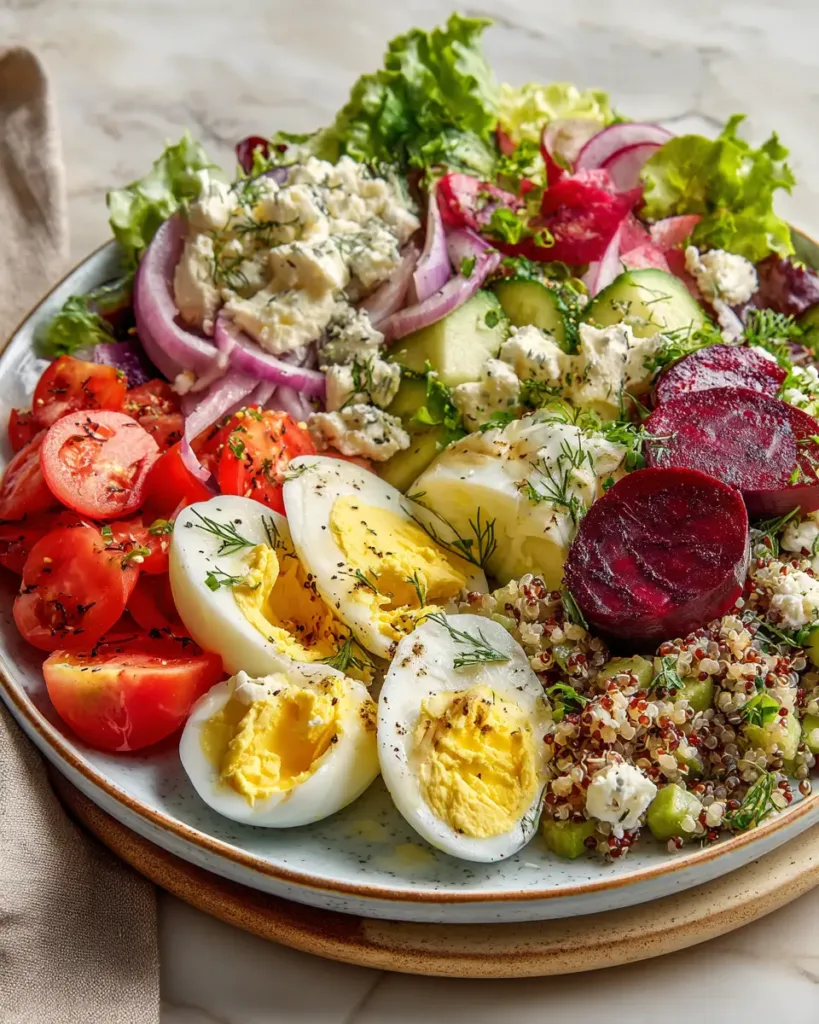
- It pairs beautifully with higher protein recipes like ricotta chips, egg salad with cottage cheese, or beet and quinoa salad for a full meal.
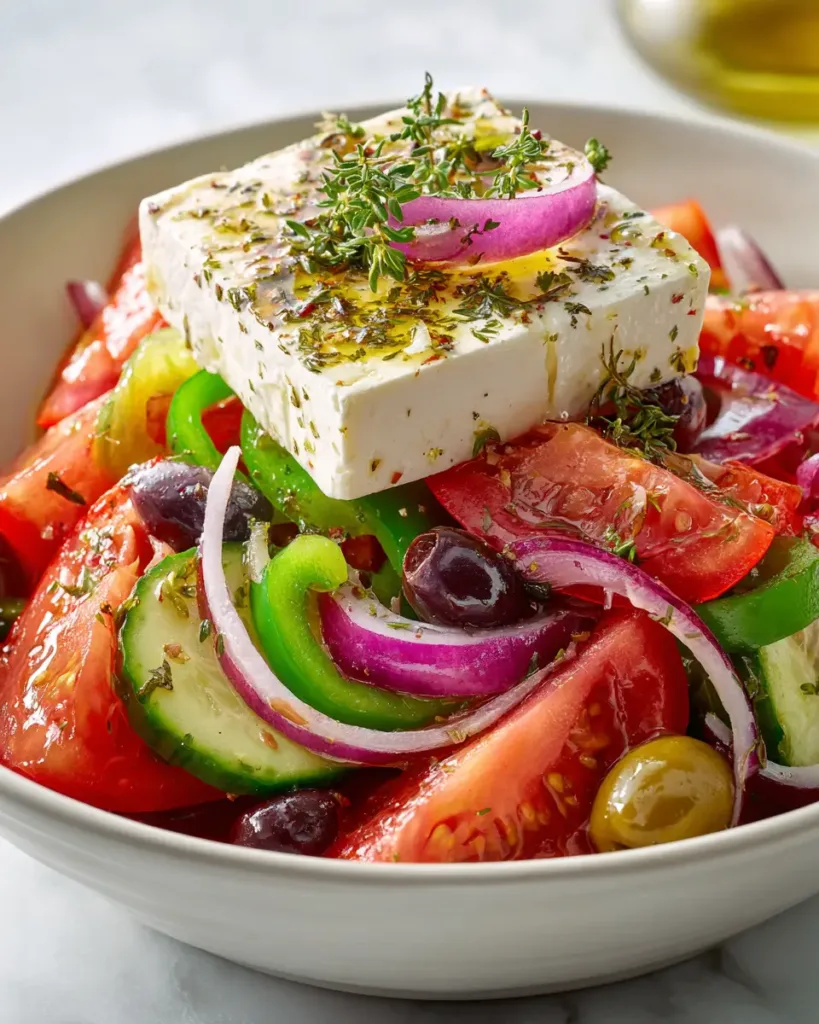
Why you’ll love this greek salad recipe
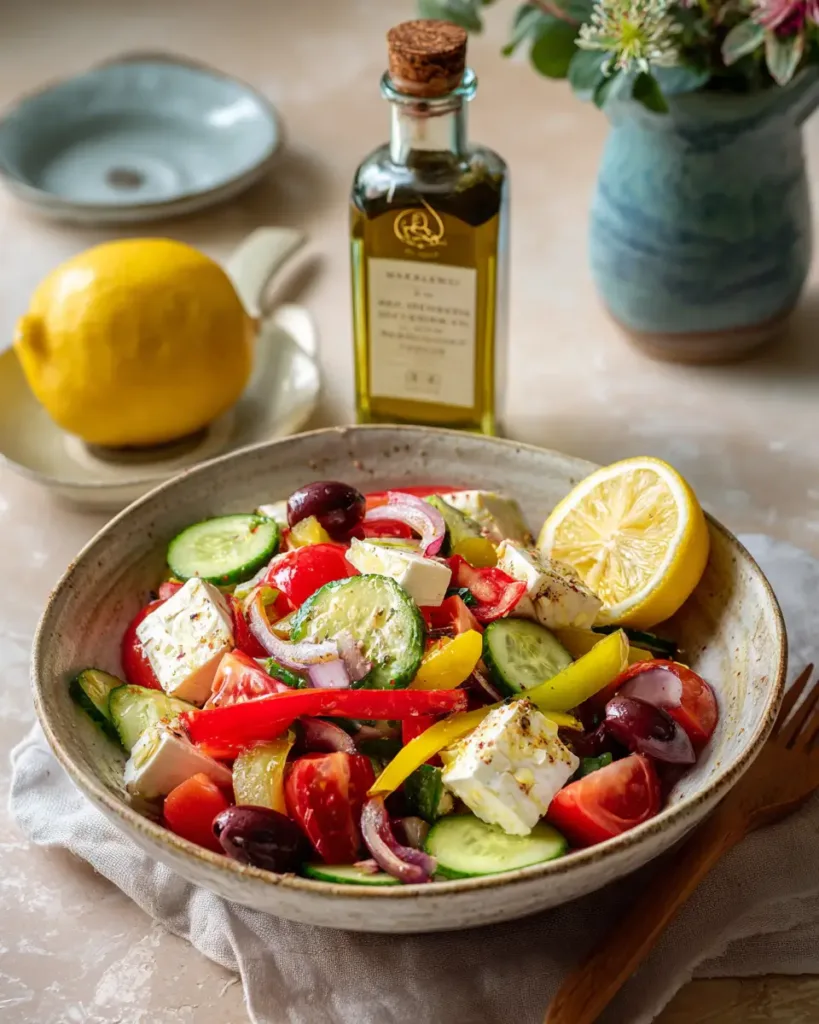
This greek salad recipe is the kind of dish that makes you feel like you cooked without actually spending much time at the stove. Everything happens on the cutting board. You slice ripe tomatoes, crunchy cucumbers, green pepper, and red onion, add a handful of Kalamata olives, then crown the whole thing with a thick slab of feta. The dressing is nothing more than extra virgin olive oil, a splash of red wine vinegar, dried oregano, salt, and pepper, but it tastes like so much more because the vegetables release their juices and mingle with the olive oil as the salad rests.
You’ll love how quickly this greek salad recipe comes together on busy nights. If you can chop vegetables, you can get this on the table in about ten minutes. That’s especially helpful when you want something fresh to balance richer mains or a plate of snacks. I also love that this salad is naturally gluten free and easy to adapt to different eating styles. If you need extra protein, you can pair it with crunchy high protein snacks like ricotta chips or a scoop of egg salad made with cottage cheese instead of mayonnaise. If you’re craving more color, a side of beet and quinoa salad turns the whole meal into a rainbow.
This greek salad recipe is also a quiet everyday way to lean into the Mediterranean diet pattern that health organizations often recommend for heart health, blood sugar support, and cholesterol management. You’re getting plenty of vegetables, healthy fats from olive oil, and a satisfying hit of protein and calcium from feta in one bowl. When you keep the portions balanced and pair it with other real food recipes, it feels like a treat and still fits a wellness minded lifestyle.
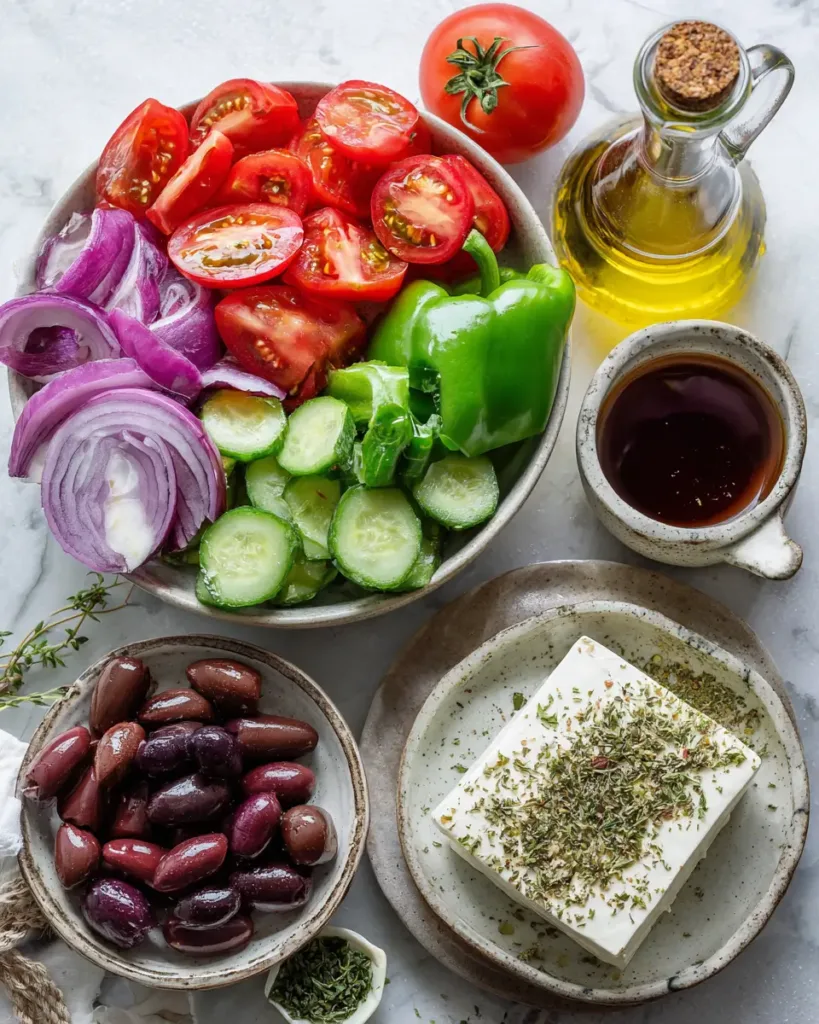
Greek salad recipe ingredients and why they matter
The ingredients in a good greek salad recipe look simple on paper, but each one has a job.
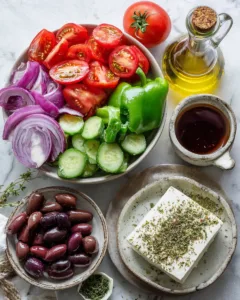
For the base of the salad, you’ll need ripe tomatoes, crisp cucumbers, green bell pepper, red onion, and Kalamata olives. The tomatoes bring juicy sweetness and a little acidity. I like to use firm but ripe tomatoes that still have some structure when you cut them into wedges. Cucumbers add crunch and freshness that balance the saltier notes. A classic horiatiki uses firm, seedless style cucumbers if possible, but any cucumber you have can work if you remove any very watery seeds.
Green bell pepper is one ingredient many home versions skip, but it’s important in a traditional greek salad recipe. It gives that clean, slightly bitter, grassy note that keeps each forkful from feeling too heavy. Thin strips are easier to eat and distribute better in the bowl. Red onion adds a sharp, almost sweet bite when sliced thin and soaked briefly in cold water. Soaking helps tame the punch while keeping the onion’s color and crunch.
Kalamata olives are your salty anchor. You don’t need many, but choosing a good brand and making sure they are pitted makes every bite nicer. Instead of crumbling feta throughout, I like to follow the horiatiki tradition and place a thick slab or a few larger pieces of feta on top. This lets you break off a little with each bite so you can control how salty and creamy each forkful is. It also looks beautiful and feels like the salads you find in Greece.
For the dressing, a high quality extra virgin olive oil is essential. This is where you really taste the difference, because the greek salad dressing is so minimal. Red wine vinegar adds tang, and dried oregano gives that classic herbal aroma. A pinch of sea salt or kosher salt and freshly cracked black pepper are all you need. If you like a touch of sweetness or are using very acidic tomatoes, you can add a tiny splash of balsamic or a pinch of sugar, but usually the vegetables and vinaigrette balance on their own.
If you want to capture searchers looking specifically for “traditional greek salad recipe with lettuce,” you can offer a variation using a small handful of crisp romaine leaves under the vegetables. This keeps the main recipe horiatiki style while still helping readers who expect lettuce in a greek salad recipe.
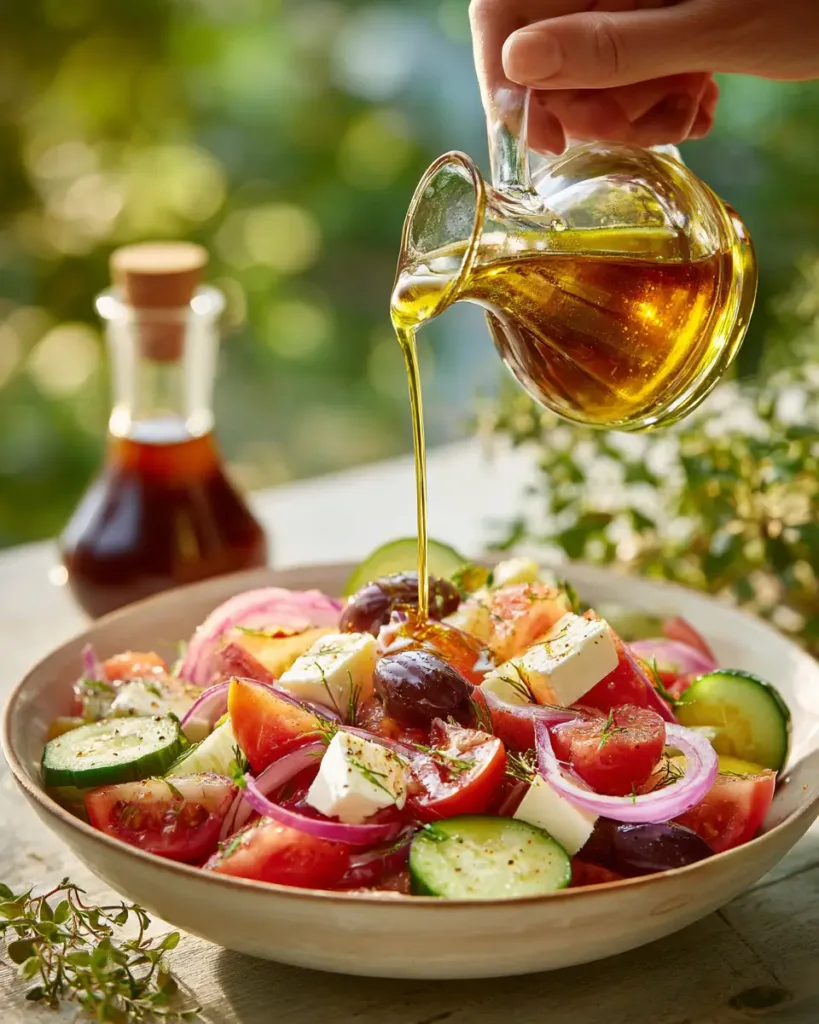
How to make this greek salad recipe step by step
I like to start this greek salad recipe by prepping the onion first. Thinly slice the red onion and drop the slices into a bowl of ice water. Letting the onion sit while you prep the rest of the vegetables softens the bite and brings out a gentler sweetness. It’s a small step, but it makes the salad feel more balanced and easier to digest for many people.
Next, cut your tomatoes into wedges or large chunks, depending on the size. You want pieces big enough to hold their juice but small enough to eat comfortably with a fork. Slice the cucumbers into coins or half moons. If they are very seedy, scoop out the watery center before slicing so the salad doesn’t turn watery too quickly. Cut the green bell pepper into thin strips or small squares. Place all the vegetables into a large shallow bowl or serving platter, leaving room for tossing without everything spilling over the sides.
Drain the soaked red onion slices and pat them dry with a clean towel. Scatter the onion over the vegetables along with a generous handful of pitted Kalamata olives. At this point, I like to sprinkle the salad with dried oregano, salt, and a bit of black pepper so the seasoning has a chance to grab onto the vegetables before the dressing goes on.
To build the dressing, drizzle extra virgin olive oil evenly over the vegetables, followed by a splash or two of red wine vinegar. You don’t need to whisk the greek salad dressing in a separate bowl unless you prefer to. The dressing essentially mixes itself in the salad bowl as the tomato juices mingle with the oil and vinegar. Use clean hands or a large spoon to gently toss everything together, being careful not to crush the tomatoes too much.
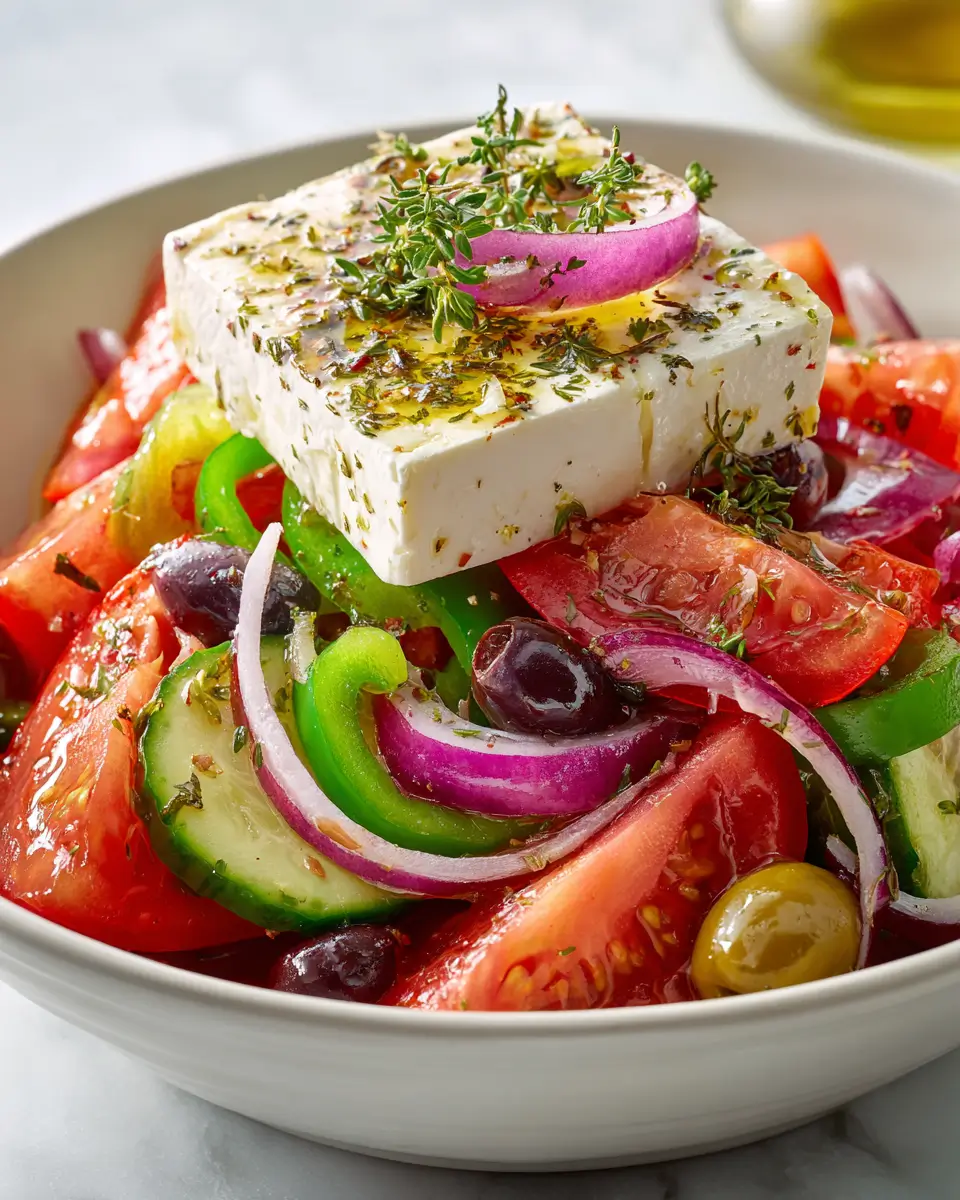
Finally, place your slab of feta or a few thick slices on top of the salad. Sprinkle a little more dried oregano and another tiny drizzle of olive oil over the cheese. You can serve this greek salad recipe immediately, or let it sit for ten to fifteen minutes at room temperature so the flavors deepen and the vegetables release a bit of juice into the dressing. Just be aware that if you let it sit too long, the tomatoes and cucumbers will soften more.
If you’re serving this as a full meal, you can add a side of high protein ricotta chips for crunch, a scoop of egg salad made with cottage cheese instead of mayonnaise, or a beet and quinoa salad for extra fiber and color. Those small additions keep the whole plate satisfying without losing the light, fresh feeling of the greek salad recipe.
On days when I want to keep things very light, I pair the salad with something like baked ricotta chips and skip the bread.
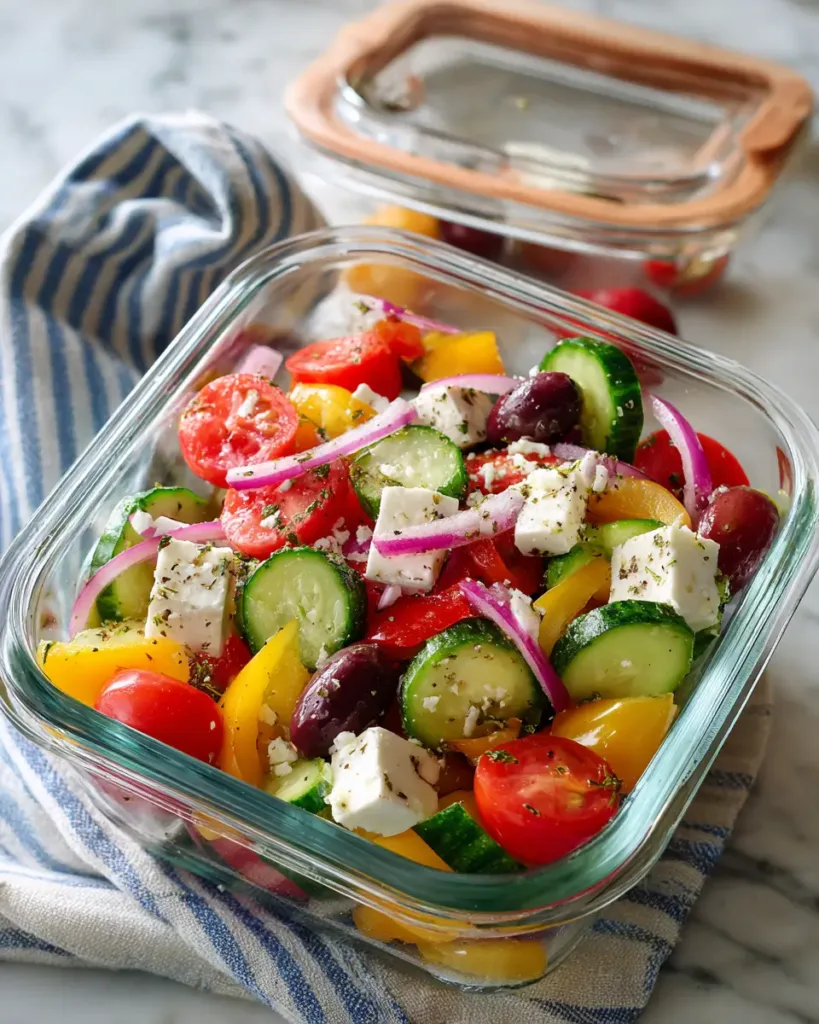
Tips, variations, and ways to serve this greek salad recipe
One of my favorite things about this greek salad recipe is how forgiving it is. If your tomatoes are not quite at their sweet summer peak, you can help them along with a small pinch of sugar in the dressing or an extra splash of red wine vinegar for contrast. If your cucumbers are very watery, removing the seeds and patting them dry before adding them to the bowl keeps the dressing from diluting.
For an authentic horiatiki experience, keep lettuce out of the main recipe. If you want to serve a “traditional greek salad recipe with lettuce” for guests who expect it, you can layer a few crisp romaine leaves on the bottom of the bowl and then build the horiatiki style salad exactly as described on top. This way the base still tastes like a true greek salad recipe, but you also pick up the lettuce focused searches and satisfy those readers.
If you’re craving even more color and fiber, add a scoop of beet and quinoa salad next to this greek salad recipe and turn it into a vibrant Mediterranean style platter.
You can also play with the greek salad dressing recipe without losing the essence. A tiny spoonful of Dijon mustard whisked into the olive oil and vinegar can help the dressing cling more tightly to the vegetables. Fresh herbs like oregano, dill, or parsley can be sprinkled on just before serving for extra brightness. If you are watching sodium, rinse the olives lightly and go a bit lighter on added salt so you still enjoy the briny flavor without going overboard.
To make this greek salad recipe more filling, you can add protein directly into the bowl. Grilled chicken, chickpeas, or even cooked quinoa all work well and keep the Mediterranean mood. I also like to serve it alongside warm bread or baked pita for scooping. On days when I want to keep things very light, I pair the salad with something like baked ricotta chips or cottage cheese based egg salad and skip the bread.
You can store leftovers of this greek salad recipe in the fridge for a day, but keep in mind that the vegetables will continue to soften and release liquid. If you know you want leftovers, you can dress only part of the salad and keep the rest of the chopped vegetables and feta separate, then toss fresh when you are ready to eat.
FAQs about this greek salad recipe
What is in a traditional Greek salad
A traditional Greek salad, often called horiatiki, typically includes ripe tomatoes, cucumber, green bell pepper, red onion, Kalamata olives, and a slab of feta cheese. The dressing is usually extra virgin olive oil, red wine vinegar, dried oregano, salt, and pepper. There is no lettuce in a classic horiatiki greek salad recipe, which is one of the main differences from many restaurant style “Greek salads” served outside Greece. Some variations may add capers or different olive varieties, but the core combination stays very simple.
What is the best salad for heart patients
For heart patients, the best salads are usually rich in vegetables, healthy fats, and fiber, and lighter on high sodium ingredients and heavy dressings. A greek salad recipe built in the horiatiki style fits this pattern well because it centers vegetables and uses extra virgin olive oil, which is a key part of the Mediterranean diet that heart organizations often recommend. To make it even more heart conscious, you can be moderate with the feta, watch your added salt, and pair the salad with lean protein and whole grains instead of processed sides.
Many cardiologists encourage patterns similar to the Mediterranean diet, which emphasizes vegetables, olive oil, and whole foods, like this greek salad recipe does, a style also highlighted by the American Heart Association
Is Greek salad ok for diabetes
Greek salad can be a good option for many people living with diabetes because it focuses on non starchy vegetables, healthy fats, and a reasonable amount of protein. The main carbohydrate sources in this greek salad recipe are tomatoes and possibly a side of bread or grains, so portion size and what you serve alongside it matter. To keep things more blood sugar friendly, you can load up on the vegetables, use a modest portion of feta, and serve the salad with protein rich sides like egg salad with cottage cheese or a quinoa based salad instead of lots of bread or sugary drinks.
Are salads good for lowering cholesterol
Salads built around vegetables, olive oil, and moderate amounts of healthy fats and proteins can be part of a diet that supports healthy cholesterol levels. This greek salad recipe brings together fiber rich vegetables and extra virgin olive oil, which fits into the Mediterranean eating pattern often associated with better heart and cholesterol outcomes when practiced consistently. The key is looking at your whole day of eating. If you pair your salad with minimally processed proteins, healthy sides, and a generally balanced diet, it can absolutely support cholesterol friendly goals over time.
Warm conclusion and gentle call to action
This greek salad recipe has become one of my quiet kitchen rituals. On days when I feel tired or heavy, just chopping the tomatoes and cucumbers, crumbling a bit of feta between my fingers, and watching the olive oil catch the light on the plate reminds me that simple food can be deeply comforting and genuinely supportive of my body at the same time. It is the kind of recipe you can memorize after making it once or twice, then adjust with whatever you have in the fridge.
If you’re craving more Mediterranean inspired, wellness minded ideas after you try this greek salad recipe, pair it with a protein rich snack like ricotta chips, a lighter egg salad with cottage cheese instead of mayo, or a colorful beet and quinoa salad. They all layer beautifully onto the same plate and keep that fresh, bright feeling going. When you make it, notice the textures and small details that make it your own, and don’t be afraid to tweak seasoning, herbs, or sides to fit your life.
If you do try this greek salad recipe, I’d love for you to note what you paired it with and how it made you feel after eating. Those tiny reflections help you build your own version of a Mediterranean style routine that feels realistic, comforting, and truly yours.
