

I first spotted the viral Japanese yogurt cheesecake on a Tuesday night when I was supposed to be folding laundry. The video had this golden, domed little cake just sitting there, barely touching the plate, jiggling like it was breathing. I put down the laundry. I opened my fridge. I had Greek yogurt and eggs, and honestly that was enough.
My first attempt cracked a little on top. The second one was nearly perfect. By the third, I had it down, and my kitchen smelled like a tiny bakery in Tokyo. This Japanese yogurt cheesecake recipe is now one of my most-made desserts. It is lighter than anything I expected, tangy from the yogurt, and impossibly fluffy every single time.
If you have been seeing the viral Japanese cheesecake trend everywhere and wondering if it actually lives up to the hype, I promise you: it does. And the Greek yogurt version? Even better than the original.
Key Takeaways
- This Japanese yogurt cheesecake recipe uses Greek yogurt instead of cream cheese for a lighter, fluffier texture.
- The water bath is not optional. It is what gives this cheesecake its smooth, crack-free, soufflé-like finish.
- Stiff, glossy egg whites folded in gently are the key to that signature jiggle.
- This is one of the most beginner-friendly baked cheesecakes you can make, with just 8 core ingredients.
- It keeps beautifully in the fridge for up to 4 days and tastes even better the next morning.

Japanese Yogurt Cheesecake
Ingredients
Method
- Preheat the oven to 325°F (160°C). Line a 7 to 8-inch round cake pan with parchment paper and wrap the outside of the pan with aluminum foil.
- Place a large baking dish filled with about 1 inch of hot water on the lower rack of the oven to create a water bath.
- Separate the eggs carefully. Place the yolks in one bowl and the whites in a large clean bowl.
- In the bowl with the yolks, whisk together Greek yogurt, sugar, flour, cornstarch, milk, vanilla extract, and lemon juice until smooth and lump-free.
- Using a hand mixer or stand mixer, beat the egg whites until stiff glossy peaks form.
- Add one third of the whipped egg whites to the batter and mix gently to loosen it.
- Fold in the remaining egg whites in two additions using a spatula, mixing gently until just combined.
- Pour the batter into the prepared cake pan and tap the pan lightly on the counter to release large air bubbles.
- Place the cake pan inside the baking dish water bath and bake for 25 minutes at 325°F.
- Reduce the oven temperature to 300°F (150°C) and continue baking for 30 to 35 minutes until the top is lightly golden and the center has a slight wobble.
- Turn off the oven, crack the oven door slightly, and let the cheesecake rest inside for 15 to 20 minutes.
- Remove from the oven and cool completely at room temperature.
- Refrigerate the cheesecake for at least 2 hours, preferably overnight, before slicing.
- Dust with powdered sugar and serve with fresh berries if desired.
Nutrition
Notes
Tried this recipe?
Let us know how it was!Why You Will Love This Japanese Yogurt Cheesecake
This is the kind of dessert that makes people lean in for a second look. It is not a dramatic layer cake or a fussy tart. It is a soft, golden dome that wobbles slightly when you set it down, and that first bite genuinely surprises people. Nothing about it is heavy.
What makes this fluffy Japanese cheesecake so appealing right now is how effortlessly it fits into real life baking. You do not need a stand mixer on the counter all day. You do not need specialty ingredients you have never heard of. Just eggs, sugar, flour, and Greek yogurt, things most of us already have.
The Japanese souffle cheesecake trend has exploded on social media for good reason. Search data shows that queries like “fluffy Japanese cheesecake” and “soft cheesecake” have surged over 1,000 percent in recent months, and “easy Japanese cheesecake” is not far behind. People want this. And once you make it, you will absolutely understand why.
It is also a genuinely lighter dessert. A traditional New York slice can land at 320 to 400 calories, while a slice of this Japanese yogurt cheesecake recipe comes in closer to 160. Not because it tastes like a substitute, but because the yogurt and egg white structure just works differently. You feel like you had something real, not something you need to recover from.
Craving something equally light? Our easy lemon mousse recipe has that same airy, silky quality and comes together without any baking at all.
Japanese Yogurt Cheesecake Recipe: Ingredients and Why They Matter
This Japanese cheesecake with Greek yogurt works because every ingredient has a job. Nothing is filler. Here is what you need and why each item earns its spot in the bowl.

The Base Ingredients
- Full-fat Greek yogurt (1 cup): This is the soul of the recipe. It replaces cream cheese entirely and brings a creamy tang that feels richer than it actually is. Greek yogurt is notably higher in protein than regular yogurt and thick enough to hold its structure during baking. Use full-fat for best results. Low-fat versions can make the batter too loose.
- Eggs, separated (4): The yolks add richness to the batter base. The whites get whipped to stiff peaks and folded in separately, which is exactly what gives this cotton cheesecake its signature lift and jiggle.
- Sugar (1/2 cup): Just enough sweetness to balance the tang without tipping into cloying territory. Japanese-style desserts tend to run lighter on sugar than American ones, and that restraint is part of what makes this so elegant.
- All-purpose flour (1/4 cup): Gives the batter enough structure to hold its shape as it bakes and cools. Some versions use only cornstarch, but a small amount of flour gives a better crumb.
- Cornstarch (1 tbsp): Works alongside the flour to lighten the texture and help prevent cracking. This combination is standard in most easy Japanese cheesecake recipes for good reason.
- Whole milk (1/4 cup): Smooths the batter and helps everything emulsify cleanly. Whole milk works best here for texture.
- Vanilla extract (1 tsp): Adds warmth and depth to what is otherwise a very delicate flavor profile. Do not skip it.
- Lemon juice (1 tbsp, optional): Brightens the whole cake and plays beautifully against the yogurt’s natural tang. Technically optional, but I almost always include it.
Optional Add-Ins and Swaps
| Original Ingredient | Substitute Option |
|---|---|
| Full-fat Greek yogurt | Plain yogurt strained overnight in a cheesecloth |
| All-purpose flour | Cake flour for a slightly more delicate crumb |
| Cornstarch | Arrowroot powder or potato starch |
| Whole milk | 2% milk or unsweetened oat milk |
If you love baking with yogurt, you will want to save our strawberry lemon yogurt bread. It uses the same principle of yogurt keeping a bake moist and tender without weighing it down.

How to Make the Japanese Yogurt Cheesecake Recipe: Step by Step
The process here is straightforward, but a few of the steps genuinely matter. This is not the kind of recipe where you can rush the egg whites or skip the water bath and get the same result. Follow the steps and it will reward you with something that looks like it came from a bakery.
Step 1: Prep the Pan
Line a 7 to 8-inch round cake pan with parchment paper on both the base and the sides. Wrap the outside of the pan completely with aluminum foil. This keeps water from seeping in during the water bath step, which would ruin the texture.
Step 2: Preheat and Set the Water Bath
Preheat your oven to 325 degrees F (160 C). Place a large baking dish filled with about an inch of hot water on the lower oven rack. This is your water bath, and it is not optional. It keeps the heat gentle and even, which is what gives a Japanese souffle cheesecake its signature smooth finish.
Step 3: Separate the Eggs
Carefully crack and separate 4 eggs. Yolks go into one medium bowl, whites into a large clean bowl. Even a small trace of yolk in the whites will prevent them from whipping properly, so take your time here.
Step 4: Build the Batter Base
To the yolk bowl, add your Greek yogurt, sugar, flour, cornstarch, milk, vanilla extract, and lemon juice. Whisk everything together until the mixture is smooth and no lumps remain. It will look pale, slightly thick, and creamy. Set it aside.
Step 5: Whip the Egg Whites
Using a hand mixer or stand mixer, beat the egg whites on medium-high until they form stiff, glossy peaks. The mixture should hold a peak that stands straight up without drooping. This step is the engine of the whole recipe. It is what turns a dense yogurt batter into something that bakes up cloud-light.
Step 6: Fold Gently
Add one third of the whipped egg whites to the batter and stir to loosen the mixture. Then add the rest in two additions, folding with a spatula using slow, deliberate strokes. Stop the moment everything is just combined. Overmixing deflates the whites and you will lose that beautiful airiness.
Step 7: Pour and Tap
Pour the batter into your prepared pan. Give the pan a few gentle taps on the counter to pop any large air bubbles sitting at the surface.
Step 8: Bake Low and Slow
Set the cake pan inside the baking dish filled with water. Bake at 325 F for 25 minutes, then drop the temperature to 300 F and bake for another 30 to 35 minutes. The top should be lightly golden and set around the edges, with just a slight wobble in the very center when you nudge the pan.
Step 9: Cool Gradually
This step matters more than you might expect. Turn the oven off, crack the door slightly, and leave the cheesecake inside for 15 to 20 minutes. A sudden temperature change will cause it to deflate or crack. Patience here pays off in a beautiful, even top.
Step 10: Chill and Serve
Remove from the oven and let it cool fully at room temperature. Then refrigerate for at least 2 hours, ideally overnight, before slicing. The texture firms up beautifully in the fridge. Dust with powdered sugar and serve with berries if you like.
Beginner Tips Worth Knowing
- Use a serrated knife dipped in warm water for clean slices. Wipe the blade between cuts.
- If the top browns too quickly, tent loosely with foil after the first 25 minutes.
- A slight crack on top is normal and very much part of the charm of homemade cotton cheesecake recipe. It does not affect flavor or texture at all.
Nutrition (per serving)
| Nutrient | Amount (per slice) |
|---|---|
| Calories | 160 kcal |
| Carbohydrates | 18 g |
| Protein | 6 g |
| Fat | 7 g |
| Saturated Fat | 2 g |
| Cholesterol | 90 mg |
| Sodium | 80 mg |
| Sugar | 12 g |
Calories: 160 kcal | Carbohydrates: 18g | Protein: 6g | Fat: 7g | Saturated Fat: 2g | Cholesterol: 90mg | Sodium: 80mg | Sugar: 12g
Serving, Storing, and Variations for Your Japanese Yogurt Cheesecake Recipe

The Japanese yogurt cheesecake recipe reaches its best texture after a few hours in the fridge. Fresh from the oven it is soft and delicate. Chilled overnight it becomes creamier and slices like a dream. Both versions are wonderful, just different.
How to Serve It
Serve this slightly chilled, not straight from the fridge. Pull it out 10 minutes before cutting to let it come to just below room temperature. The texture will be at its creamiest right then.
- A light dusting of powdered sugar is all it really needs.
- Add fresh strawberries, peaches, or blueberries for color and a tart contrast.
- A small drizzle of warm Biscoff spread makes for a gorgeous and very shareable presentation.
- Use a serrated knife and wipe the blade between each slice for clean, even cuts.

Storage Tips
Because this is a dairy and egg-based bake, proper storage matters. Store leftover cheesecake in an airtight container in the refrigerator. It keeps well for up to 4 days, though honestly the texture is at its absolute peak within the first 48 hours.
You can freeze individual slices. Wrap each one tightly in plastic wrap, then place in a sealed freezer bag. They keep for up to a month and thaw beautifully overnight in the fridge.
Viral Variations Worth Trying
The base Japanese yogurt cheesecake recipe is neutral and adaptable enough to take on a lot of personality. Here are four variations that are genuinely worth the extra step.
Biscoff Japanese Yogurt Cheesecake
Warm 2 tablespoons of Biscoff spread until it is just pourable, then swirl it into the batter right before it goes into the pan. The caramel spice flavor winding through that airy yogurt base is truly something. You can also press a thin layer of crushed Biscoff cookies into the bottom of the pan for a crust version.

If you love that Biscoff flavor profile, our Biscoff cookie butter cheesecake dip is another recipe worth bookmarking. Same addictive flavor, no baking required.
Matcha Japanese Cheesecake
Add 1 teaspoon of good quality matcha powder to the dry ingredients before combining. It gives the cake a soft sage green color and an earthy, subtly bitter note that balances the sweetness beautifully. This version is very popular in Japanese bakeries and pairs perfectly with a cup of hot green tea.
Lemon Blueberry Version
Fold in half a cup of fresh blueberries and add the zest of one lemon to the batter. The berries collapse into jammy little pockets during baking and the extra citrus makes the whole cake feel bright and summery. This is a great one for spring gatherings.
Chocolate Yogurt Cheesecake
Stir 2 tablespoons of melted dark chocolate (cooled slightly) into the batter before folding in the egg whites. It turns the cake a deep, warm brown and adds a bittersweet depth that makes it feel much more indulgent than it actually is.
If you love easy no-bake treats in the same spirit, our no-bake cheesecake bites are another crowd-pleasing option that comes together in minutes.
For something warm and comforting to serve alongside, our easy lemon icebox pie is a lovely contrast to this light Japanese-style bake. The tartness plays beautifully against the mild sweetness here.

FAQ: Japanese Yogurt Cheesecake Recipe
What yogurt is best for Japanese cheesecake?
Full-fat Greek yogurt is the best choice for a Japanese yogurt cheesecake recipe. It is thick enough to give the batter body without making it heavy, and its natural tang balances the sweetness of the cake. If you only have regular plain yogurt, strain it overnight through a cheesecloth to remove excess liquid before using. Low-fat versions tend to make the batter too loose and the finished texture less creamy.
What is the 2 ingredient Japanese cheesecake trend?
The 2 ingredient yogurt cheesecake trend refers to a simplified no-bake version that became viral on TikTok and social media. It typically involves pressing biscuits or cookies into a tub of Greek yogurt and leaving it in the fridge overnight. The yogurt absorbs the cookie softening into a creamy, cheesecake-like texture. It is not the same as this baked Japanese yogurt cheesecake recipe, but it is a fun, quick version that requires no oven at all.
Is Japanese cheesecake healthier than regular cheesecake?
Generally, yes. A traditional New York-style cheesecake slice can land around 320 to 400 calories, primarily from cream cheese, butter, and a rich crust. This Japanese yogurt cheesecake recipe comes in closer to 160 calories per slice, uses no crust, and gets its structure from whipped egg whites and Greek yogurt rather than heavy cream. According to Healthline’s nutrition research, Greek yogurt is high in protein and supports digestive health, making this a smarter dessert choice without sacrificing the pleasure of eating something genuinely delicious.
What makes Japanese cheesecake different?
Japanese cheesecake, also called cotton cheesecake or Japanese souffle cheesecake, is fundamentally different from Western-style cheesecakes in both technique and texture. It incorporates whipped egg whites folded into the batter, which gives it an airy, soufflé-like lift that no cream-cheese-based cake can replicate. It is also baked in a water bath at a lower temperature for a longer time, producing a silky, smooth interior with a melt-in-your-mouth quality. The flavor is lighter and less sweet than American versions, which is why it pairs so beautifully with simple toppings like powdered sugar or fresh fruit rather than a heavy sauce.
Final Thoughts: Why This Japanese Yogurt Cheesecake Recipe Belongs in Your Kitchen
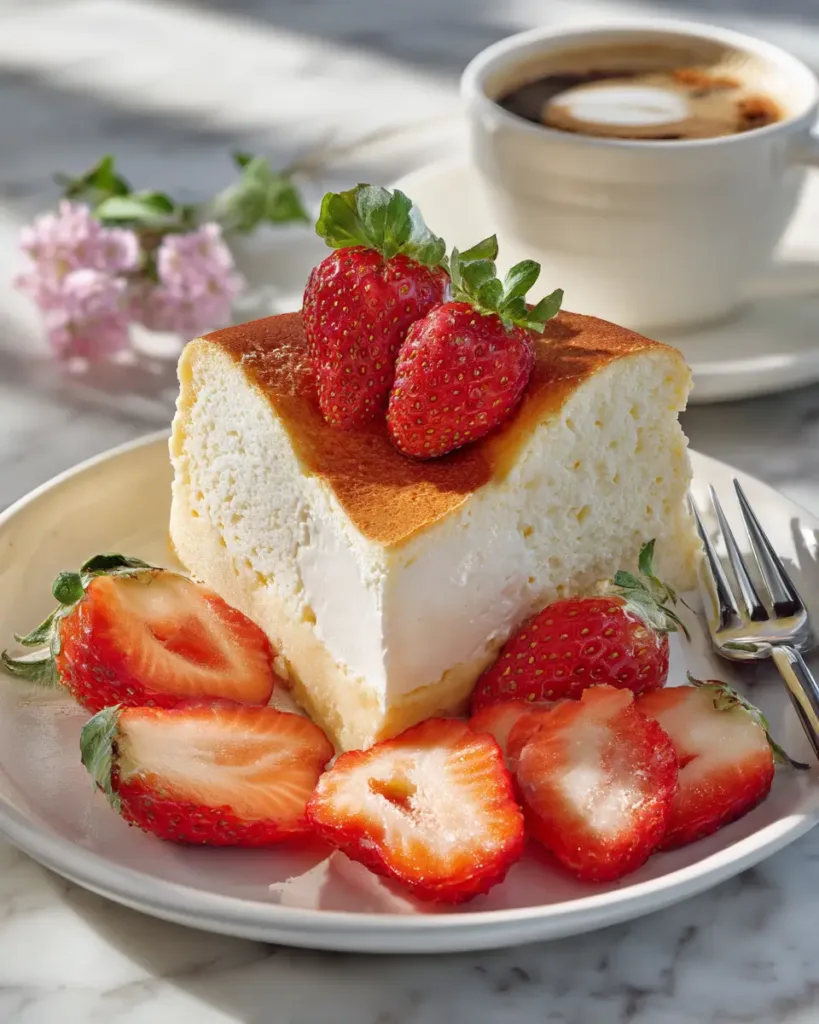
There is something really satisfying about a dessert that looks impressive but does not ask too much of you. This Japanese yogurt cheesecake recipe is exactly that. One bowl for the batter, a quick whip of egg whites, a gentle fold, and then the oven does all the work. The result is a golden, jiggly, cloud-soft cake that genuinely does not taste like something made at home.
I have made this on Tuesday evenings after work. I have made it for dinner parties. I have made it when someone called and said they were stopping by in two hours. Every single time it has worked, and every single time people asked for the recipe.
The viral Japanese cheesecake trend keeps circling back for a reason. It is accessible, it is delightful, and using yogurt instead of cream cheese makes it feel like a dessert you can enjoy without the usual second-guessing. That is a rare thing.
Give it a try. Let it wobble. Slice it cold the next morning with a cup of coffee. I think you will find it earns its place on your regular bake list very quickly.
If you are in the mood to keep baking, our funfetti cheesecake brings a playful spin on a classic. Or if light and fruity is calling you, the vegan mango coconut cake is another crowd-pleaser with a fresh tropical twist.
Made this recipe? We would love to see it. Tag us or leave a comment below. And if you have a variation you discovered along the way, share it. This is the kind of recipe that gets better the more people tinker with it.
Disclaimer: This content is for educational and informational purposes only. Nutritional values are approximate and may vary depending on specific ingredients used.
