
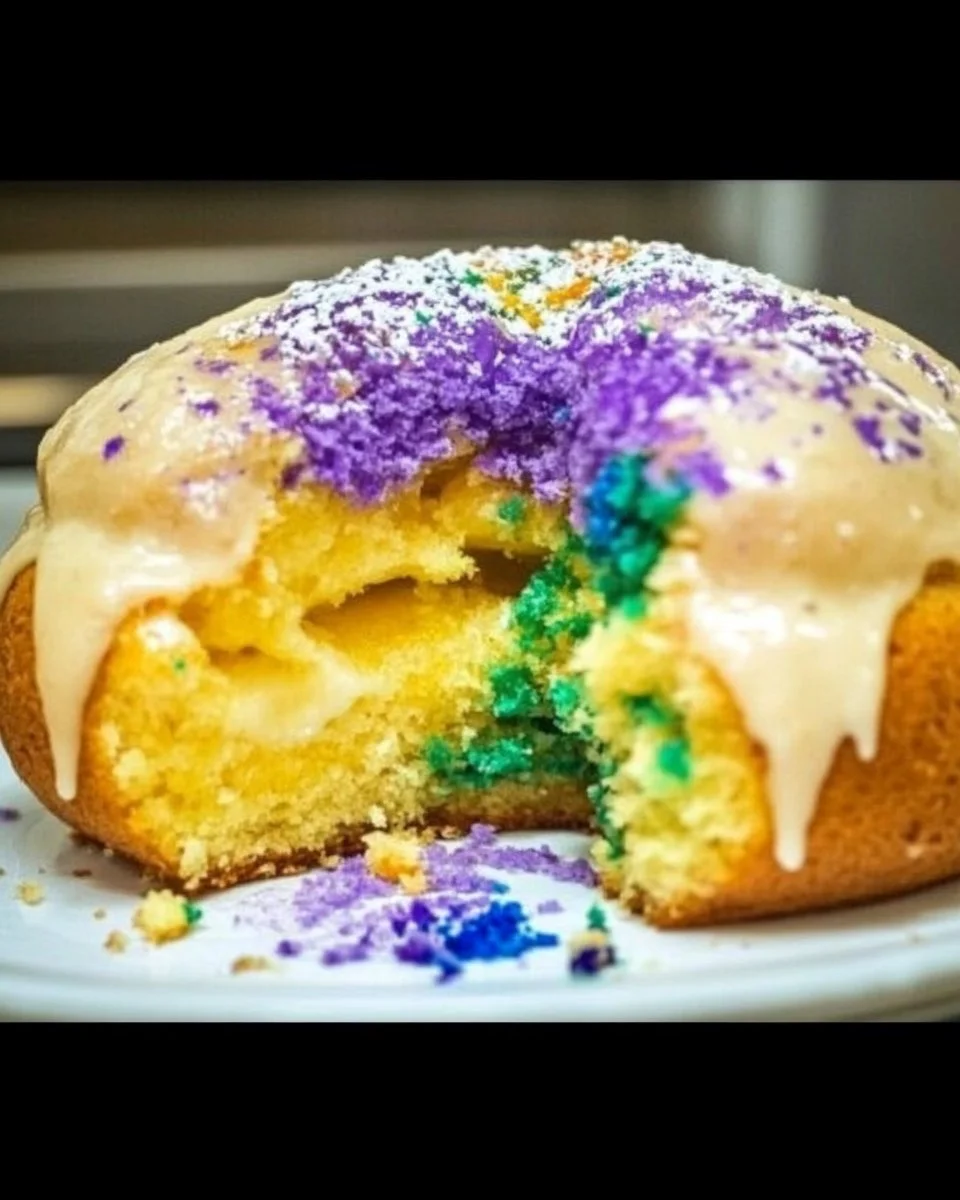
The warm, sugar-sweet air that settles in my kitchen when I pull a freshly baked Traditional King Cake from the oven is the kind of memory I tuck into my pocket and carry with me. The scent of cinnamon and butter curls through the room, and for a brief moment, the morning feels like a gentle hug from an old friend. I often think about how desserts can hold a story, and sometimes I even pull out another favorite to share the table with this cake, like my birthday trifle cake, when a celebration calls for more than one kind of sweetness.
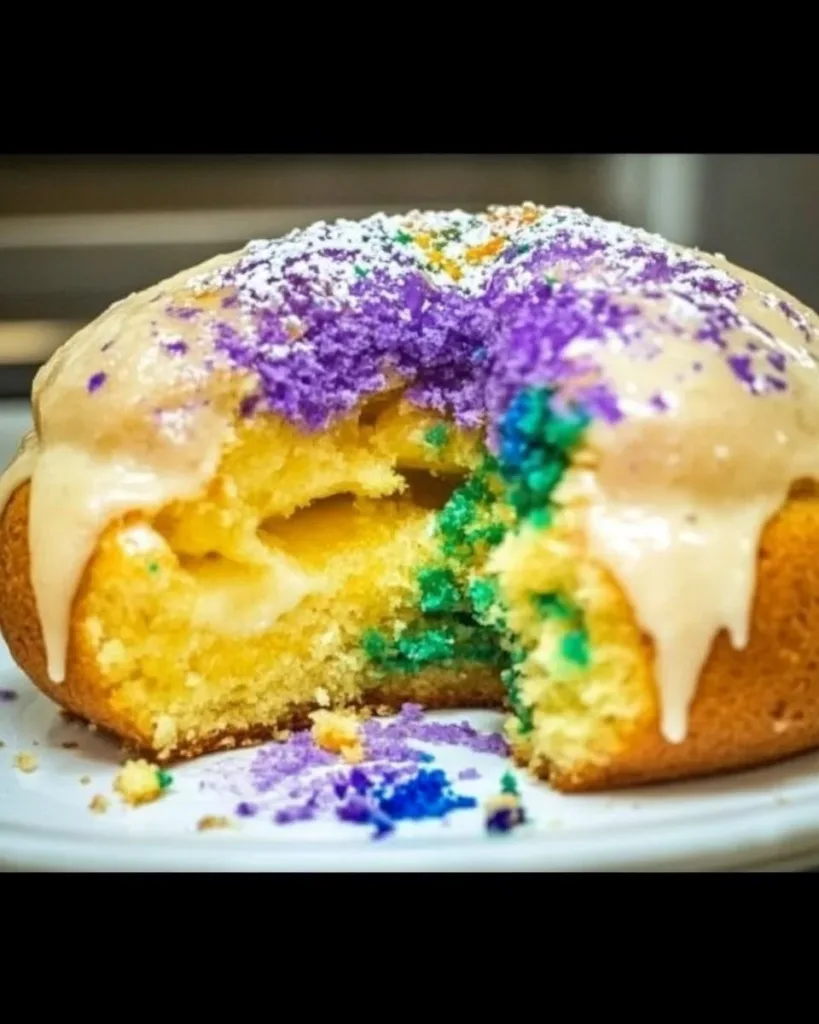
Traditional King Cake
Ingredients
Method
- In a glass measuring cup or small bowl, stir together yeast, warm water, and sugar and let stand for 5 minutes.
- Stir gently and check for bubbles. If the surface stays flat, the yeast may be inactive.
- In a medium saucepan over low heat or in a microwave, combine sour cream, 2 Tbsp sugar, 2 Tbsp butter, and salt until the butter melts and the mixture is warm (100° to 110°F).
- Mix the wet and dry ingredients in the bowl of a stand mixer, adding the egg and half of the flour.
- Then gradually add remaining flour until a soft dough forms.
- Knead the dough using a stand mixer or by hand until smooth and elastic, about 10 minutes.
- Place the dough in a greased bowl and cover with a cloth. Let rise in a warm place for 1 hour.
- Preheat the oven to 350°F.
- Divide the dough in half and roll each portion into a rectangle. Spread butter and sprinkle sugar-cinnamon mixture on each rectangle.
- Roll each rectangle tightly, then pinch seams and shape into a braided ring.
- Let rise again for 20 to 30 minutes.
- Bake for 25 to 35 minutes until golden. Cool before glazing.
- Mix glaze ingredients until smooth. Pour over the warm cake and decorate with sprinkles.
- Let cool completely and slice to serve.
Nutrition
Notes
Tried this recipe?
Let us know how it was!Why This Traditional King Cake Means So Much
This cake has a quiet way of saying welcome, and that is everything to me. I first made it years ago for a family brunch that somehow turned into a ritual. The braid of dough, the buttery ribbon of filling, and the glaze that drips into every nook and curve felt like an easy magic trick that anyone could learn.
It is the sort of recipe that keeps asking for company. Neighbors drop by, kids come back for one more slice, and conversations stretch until midafternoon. What matters is not just the technique but the sharing. That is why this cake lives in our house as a bridge between ordinary days and small celebrations.
What Makes This Traditional King Cake Special
There are cakes that look like effort and cakes that reveal their love in each bite. This one does both. The soft tang from sour cream, the warm hug of cinnamon, and the glossy glaze that sets into bands of color create a sensory story at every step.
When you cut into it, the crumb should be tender, the swirls of cinnamon rich and even, and the butter notes rounded. You notice little things like how the edges brown just so, and how the inside keeps a soft pull. Those details are a gentle reward for taking your time.
How to Make Traditional King Cake
“Every time I stir this pot, it smells just like Sunday at home.”
Making this cake is a rhythm. You start with small, clear actions that build up to something generous and warm. There is a moment when the dough feels just right under the hook, a moment when the cinnamon sugar spreads like a promise, and a moment when the glaze pours like memory.
When this cake is working, you hear the soft whir of the mixer and the quiet creak of the oven door. You watch the dough bloom in a bowl, and you breathe in the aroma that fills the kitchen while it bakes. Those are the parts I treasure, because they are easy to share.
Ingredients for Traditional King Cake
For the Dough
- 1/4 oz active dry yeast (2 1/4 tsp or 1 packet) – fresh yeast gives a lively rise
- 1/4 cup warm water (100°–110°F), warm but not hot
- 1/2 tablespoon granulated sugar, to feed the yeast
- 8 oz full-fat sour cream, for tang and tenderness
- 2 tablespoons granulated sugar, for the dough
- 2 tablespoons unsalted butter, for richness
- 1/2 teaspoon salt, to balance sweetness
- 1 large egg, lightly beaten and at room temperature
- 3 to 3 1/2 cups bread flour (all-purpose works too)
For the Cinnamon Filling
- 1/3 cup unsalted butter, softened
- 1/2 cup granulated sugar (brown sugar for deeper flavor)
- 1 1/2 teaspoons ground cinnamon
For the Glaze
- 3 cups powdered sugar, sifted if needed
- 3 tablespoons cream cheese, softened (or butter)
- 2 to 4 tablespoons milk, added gradually
- 2 tablespoons fresh lemon juice
- 1/4 teaspoon vanilla extract
For Decorating
Purple, green, and gold sprinkles
Bringing Traditional King Cake Together
This cake asks for a calm, steady pace. Start with the yeast the way you would with any good bread. Let it bloom until it is foamy and confident. That little bloom is like seeing the first smile at a family table.
Warm the sour cream and butter until the butter melts and the mixture is close to body temperature. Mix the wet and dry with care; you want a dough that comes together without fighting you. Then give it time to become smooth and elastic under the mixer or your hands.
Step-by-Step Directions for Traditional King Cake
In a glass measuring cup or small bowl, stir together yeast, warm water, and sugar and let stand for 5 minutes. The yeast should become foamy and be ‘activated’ after that time.
Stir gently and watch for small bubbles that show life. If the surface stays flat, the yeast may be tired and you should try again with fresh yeast.Add first 4 ingredients in a medium saucepan over low heat OR into a microwave safe cup. Heat using the stove or microwave, stirring often until the butter is melted. Remove from the heat & cool down the mixture to 100° to 110°F.
Stir until glossy and smooth, then let the mixture rest so it does not kill the yeast. You should feel the warmth but not heat it to the point of burning the yeast.In the bowl of a stand mixer with a dough hook attachment, add the sour cream mixture, yeast mixture, egg and half of the flour.
Give a quick stir with a spatula before mixing to settle the ingredients. This helps the dough come together more evenly.Give a quick stir with a spatula and then turn the mixer on medium speed. As the ingredients start to come together, reduce speed to low, and gradually add the remaining flour until a soft dough forms.
Watch the dough closely as it gathers on the hook. It should clean the sides of the bowl and form a cohesive ball.Once the dough forms, lower the speed setting and allow the dough to knead until smooth and elastic (this can take up to 10 minutes). The dough should not be sticky or too dry. It should release from the sides of the bowl.
Feel for a gentle spring when you press the dough. That gives you confidence that the gluten has developed and the cake will have structure.Place in a lightly greased bowl and cover with a linen cloth or plastic wrap. Let rise in a warm place (75-78° is ideal) for 1 hour or until the dough has doubled in size.
Breathe in the warmth of the rising dough and notice how the room fills with a faint tang. The rise is a quiet change that rewards patience.After the dough is finished proofing, divide the dough in half.
Handle it gently so you keep the air that the yeast created. Those little bubbles help make the crumb tender and light.Roll a portion of dough into a long rectangle using a rolling pin (about 16″ in length and 8-9″ in width).
Roll with a steady hand and keep the thickness even. The rectangle is your canvas for the filling.Spread HALF of the 1/3 cup butter evenly on the rectangle, leaving a 1-inch border.
Use softened butter and spread with a gentle finger or a spatula so the dough does not tear. The butter should look like a golden sheet.In a small bowl, combine the sugar and cinnamon and sprinkle HALF the amount evenly over the butter.
Sprinkle until you see a thin, even dusting. It should glisten a bit and smell of spice.Roll the dough (like a cinnamon roll) from the bottom up, ensuring a tight roll.
Seal it firmly so it does not unwind during the next rise. A tight roll means more visible spirals inside the cake.Pinch the seam tightly.
Press the seam so it will hold through the braid and the bake. A strong seam is a small, important act.Repeat steps 8 – 12 with the other portion of dough.
Work at a steady pace so both logs are similar in size and shape. That balance helps the final ring look even.Next, form the cake. Place the dough rolls seam side down on a sheet lined with parchment. Pinch one of the ends together, and twist the dough logs over each other to give a braided look. Bring the other ends around together to form a ring, ensuring to make a good seal at the seam.
Twist gently so the layers stay intact. The braid should look rustic and inviting, not perfect.Cover and let rise in a warm place again, 20 to 30 minutes or until doubled in size.
This short rise helps the braid relax and puff. Watch the size gently increase and feel the excitement of the next step.Preheat the oven to 350°F.
Give your oven time to come to temperature while the ring has its last rise. A steady oven gives a gentle golden crust.Bake for 25 to 35 minutes or until golden.
Watch the edges turn golden and the top take on a warm brown. If it seems to be coloring too quickly, tent with foil for the last few minutes.After the cake is done baking, allow to cool most of the way.
Let it rest so the crumb can set and the filling settles. The wait lets the flavors marry and keeps the glaze from sliding off completely.Meanwhile, in a large bowl mix the glaze ingredients until smooth & creamy using a hand mixer.
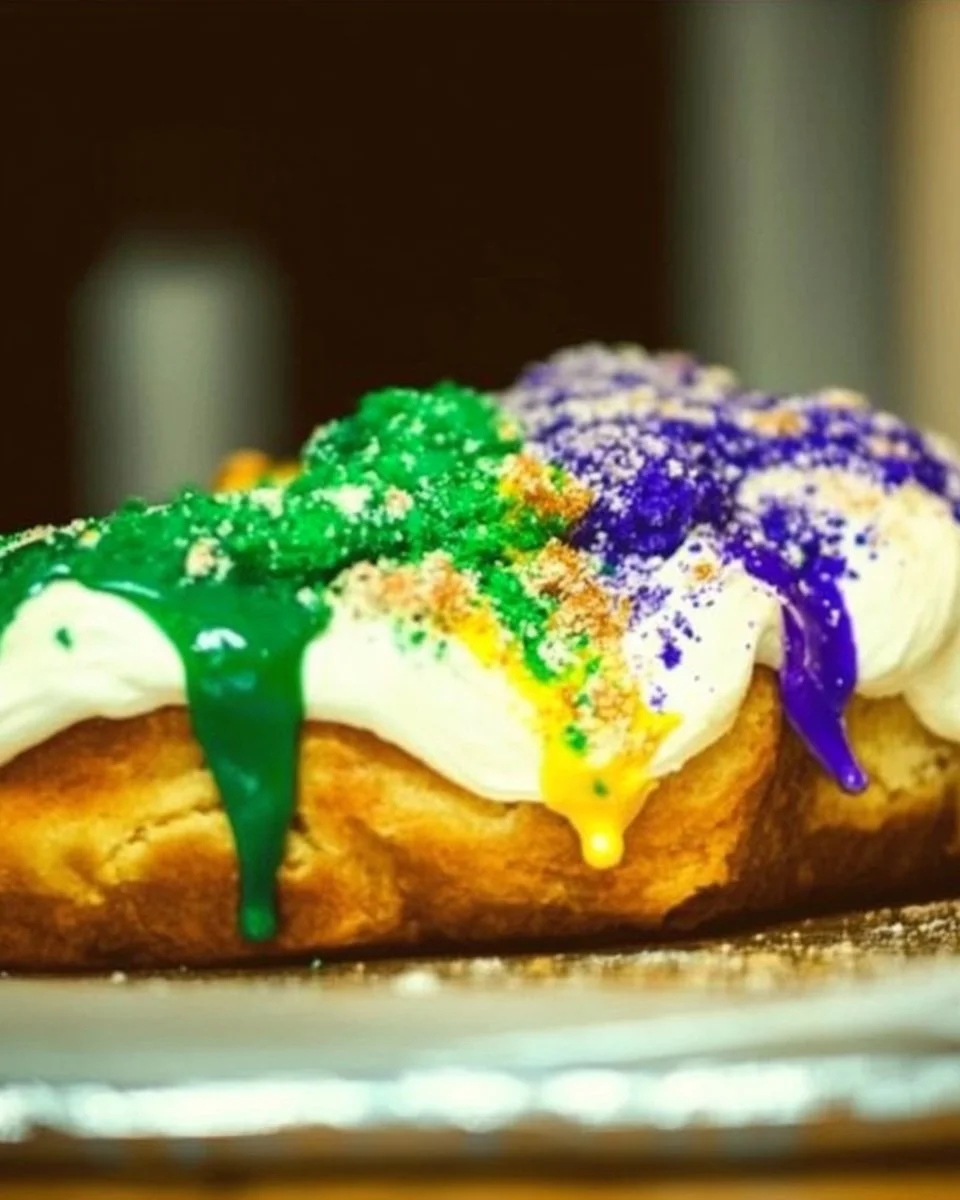
Beat until glossy and thick, then add milk slowly to reach a pourable consistency. Taste and adjust the lemon for a bright note.Pour glaze evenly over warm cake; sprinkle with colored sugars, alternating colors and forming bands.
Pour evenly and let the glaze fall into valleys and ridges. Add sprinkles in purple, green and gold bands to finish with tradition and color.Let cool completely & serve.
The glaze should set slightly and the cake should be warm but not hot. Slice with a serrated knife and serve with a smile.
Serving Traditional King Cake With Family Warmth
We slice this King Cake into generous pieces and pass plates around, and there is always someone who asks for one more nibble. I love placing it right in the center of the table so everyone can help themselves, no ceremony required. A thin slice of King Cake with a cup of coffee has a way of turning even the quietest moment into something complete and comforting.
For a brunch spread, set out bowls of fruit, a simple scramble, and a small plate of cheeses. This cake is rich, so a bright salad or fresh berries does the job of balancing the sweetness. When we have guests, the cake becomes the anchor of the table and the conversation seems to stretch a little longer.
You can pair this cake with something else sweet if you like variety. I sometimes set a lighter dessert nearby, like a lemony tart or a simple custard. If you want a pairing suggestion for a different kind of celebration, try offering a soft cake such as my chocolate chip ricotta cake for those who want a softer texture and a different flavor note.
Storing Traditional King Cake for Tomorrow
This cake keeps its charm for a day or two when stored with care. Wrap it lightly in plastic wrap or store in an airtight container so it does not dry out. Keep at room temperature if you plan to eat it within 48 hours.
If you need to keep it longer, slice and freeze portions wrapped tightly in foil, then place in a freezer bag. Thaw at room temperature and warm gently in a low oven for a few minutes before serving. The warmth brings the butter back to life and the glaze softens just enough.
If the glaze softens or picks up humidity, the cake still tastes lovely. Flavors often mellow and deepen overnight. The cinnamon note becomes more integrated and the butter flavor grows richer as the cake rests.
Clara’s Kitchen Notes
Use room temperature ingredients whenever possible. Eggs and butter that are not cold help the King Cake dough come together smoothly and reduce mixing time. This small step makes a noticeable difference in the final texture and tenderness of the cake.
If your King Cake dough looks sticky when you start kneading, resist the urge to add too much extra flour at once. Add it a tablespoon at a time and focus on kneading until the dough gathers into a smooth ball. It’s always better to work with slightly tacky dough than to end up with a stiff, dry dough that bakes up dense.
For a quick bake shortcut, you can make the dough in the evening and let it rise slowly in the fridge overnight. Bring it to room temperature before shaping. This helps with timing and flavor development.
If you do not have a stand mixer, knead by hand for 10 to 12 minutes on a lightly floured surface. It is arm work, but it is satisfying, and you get to feel when the dough becomes smooth.
Clean up tip. Line your baking sheet with parchment before placing the ring on it. That saves scrubbing and keeps the bottom even as it bakes.
Family Variations on Traditional King Cake
Our family loves to try small changes that still feel like home. In some seasons I fold chopped pecans into the filling for a crunchy surprise. It gives the cake a nutty note that pairs well with coffee.
At times I swap half of the cinnamon for orange zest and a touch of nutmeg for a brighter, spiced version. It brings a citrus lift that is especially nice in late winter when oranges are at their best. For a chocolate-loving crowd, a thin layer of chocolate spread under the cinnamon sugar is a decadent twist.
If you want to make mini versions, shape the dough into smaller rings or twists and bake them on a sheet. They bake faster and are perfect for sharing at a picnic or a potluck.
FAQs About Traditional King Cake
Can I Make King Cake Ahead of Time?
Yes, and honestly, it might taste even better the next day once the flavors have settled and come together. Store it in an airtight container at room temperature for up to two days, or freeze slices for longer storage.
Is Cream Cheese Required for the King Cake Glaze?
No, you can use softened butter instead if you prefer. Cream cheese gives a tang that balances the sugar, while butter makes the glaze simpler and more buttery.
Why Didn’t My King Cake Dough Rise?
Check your yeast and the water temperature. If the yeast did not foam during the activation step, it may be inactive. Also make sure the dough is in a warm, draft-free place for rising. A modestly warm oven with the light on can help.
Can I Make King Cake Without a Stand Mixer?
Yes, you can knead by hand for about 10 to 12 minutes until smooth and elastic. The dough will tell you when it is ready by feeling springy and pulling away from the surface.
How Can I Keep King Cake Glaze From Melting Off?
Allow the cake to cool slightly before glazing so the paste does not melt away. Pour the glaze when the cake is warm but not piping hot, and let it set on a rack to firm up before moving.
Keep Exploring Cozy, Feel-Good Desserts
As you keep exploring cozy, feel-good baking, there are so many lovely pies and treats waiting for you in the YourDailyTaste kitchen. If this Traditional King Cake brought a little warmth to your day, you might also enjoy the gentle sweetness of Salted Honey Pie, the nostalgic comfort of Amish Peanut Butter Cream Pie, or the playful charm of Peanut Butter and Jelly Pie.
For seasonal cravings, Simple Dark Chocolate Pumpkin Tart, Pumpkin Mascarpone Pie, Fluffernutter Pie, and Maple Buttermilk Pie all offer their own kind of comfort, while Candy Cane Whipped Shortbread is perfect when you want something light and festive. You can explore these and many more recipes through the YourDailyTaste sitemap and wander at your own pace.
For daily inspiration, behind-the-scenes moments, and fresh recipe ideas, come say hello on Pinterest and Facebook.
