

I remember the summer the kids learned to climb into the kitchen stool by themselves. The sun fell soft through the curtains, and the house smelled faintly of sunscreen and grass. I put on my old apron, dug into the butter dish, and started a cake that would become the kind of comfort people ask for at midnight. That slice, with its tender crumb and quiet coconut notes, was the answer to a small household pileup of homework, soccer gear, and a burned dinner that needed to be forgiven. If you need another cozy, backyard kind of cake, try this Chocolate Chip Ricotta Cake that we make when mornings are short and mouths are hungry.
Why Homemade Coconut Cake Fits Our Real Life
This cake fits our house because it forgives a lot of ordinary mistakes. I have dropped a pan or two, whisked a little too long, or misread a timer, and the recipe still came out comforting. It became a staple because it bakes reliably even when life is messy, and the coconut pieces hide a little of my hurry.
The first time it really worked was a rainy afternoon when the power blinked and the kids had a math test the next day. I mixed and folded with a cup of coconut milk and a handful of shredded coconut, and while the oven did its job I wrapped up school papers and pulled together lunches. The cake cooled on the counter and smelled like something that belonged to us, not to a magazine.
Over time I learned what to trust about the recipe. The butter needs to be soft but not melting. The eggs should be at room temperature if you can plan ahead, but they will still do their job if you forget. These small rules fit into our family rhythm because they allow for the everyday rush and a few shortcuts without ruining the end result.
This cake is also a small ritual. We eat it between the rush of after school and the quiet of evening. It is what I bring to a neighbor when a baby arrives or when someone needs to know they are not alone. The texture is forgiving, and the coconut keeps it interesting without being fussy.
How to Make Homemade Coconut Cake
“This is the part where the kitchen starts to smell like dinner is really happening.”
The moment the butter and sugar start to cream, the kitchen changes. You will hear the mixer slow, smell sweet butter, and see the sugar crystals start to blur into a soft ribbon. I like to pause here and tell the kids to wash their hands before they help crack an egg, because they always want to.
When you add the eggs one at a time, you are building structure and richness. Mix them in gently, then stir in the vanilla and breathe in that familiar scent. In another bowl, the dry mix sits quietly: flour, baking powder, and salt. You will gradually combine those with the coconut milk, and the batter will go from grainy to smooth.
Folding in the shredded coconut is the last small whisper of texture. It keeps the cake honest and slightly rustic. Pour the batter into the two prepared pans and watch the top shine before it goes into the oven. When the timer dings, look for a golden edge and a toothpick that comes out mostly clean.
Let the cakes rest for ten minutes in their pans so they settle properly. Then transfer them to wire racks and resist the urge to frost them while they are still warm. Once cooled, sandwich them with a layer of coconut custard so that every slice has a soft, creamy center. Dust lightly with powdered sugar to keep things homey and simple.
Ingredients You’ll Need
1 cup unsalted butter, softened.
2 cups granulated sugar.
4 large eggs.
1 teaspoon vanilla extract.
3 cups all-purpose flour.
1 tablespoon baking powder.
1/2 teaspoon salt.
1 cup coconut milk.
1 cup shredded coconut.
1 cup coconut custard (for filling).
Powdered sugar (for dusting).
These are the basics we keep on the shelf and in the fridge, the kind of things that stretch across several meals. The butter makes the cake tender and gives the crumb body. The sugar does more than sweeten the batter; it helps with browning and gives that little crust on the edge that kids always argue about.
The eggs make the cake lift and stay together, and the vanilla is a small kindness that reads as home. Flour, baking powder, and salt are the backbone. Coconut milk and shredded coconut give it the character that makes people pause and ask what you used. The coconut custard filling is the surprise, the little moment of extra comfort in every slice.
If you are short on time, use store-bought custard. It keeps the recipe realistic for busy evenings, and still makes the cake feel special later that evening. If you want a snack for the kids to nibble on while you plate slices, I sometimes pair a slice with Homemade Digestive Gummies with Ginger and Fennel when little tummies need a calm-down treat. Those small additions are the kind of practical touches that fit our leftover life.
Step-by-Step Directions
-
Preheat the oven to 350°F (175°C). Grease and flour two 9-inch round cake pans. Take a moment to set a timer and line a cooling rack near the oven so you are ready. This small prep stops the scramble when the cake comes out.
-
In a large bowl, cream together the butter and sugar until light and fluffy. Use a hand mixer or stand mixer if you have one, and scrape down the sides so all butter gets mixed in. You will see the mixture turn pale and airy, and that is a good signal.
-
Add the eggs one at a time, mixing well after each addition. Stir in the vanilla extract and watch the batter become smooth and glossy. If the mixture looks a little separated, keep beating; it comes back together.
-
In another bowl, mix together the flour, baking powder, and salt. Gradually add this mixture to the creamed mixture, alternating with the coconut milk. Mix until just combined so the cake stays tender; overmixing will make it dense.
-
Fold in the shredded coconut. Use a spatula and move gently so you keep the air you built in the batter. The coconut will feel small and rough in the batter and it makes the crumb pleasantly textured.
-
Divide the batter evenly between the prepared cake pans. Smooth the tops with a spatula and tap the pans lightly on the counter to remove big air pockets. This helps the cake bake evenly and keeps it from doming too sharply.
-
Bake for 25-30 minutes or until a toothpick inserted into the center comes out clean. Look for the edges to pull away slightly from the pan; that golden ring is a good sign. If your oven runs hot, check at 20 minutes so you do not overbake.
-
Let the cakes cool in the pans for 10 minutes, then transfer to wire racks to cool completely. Once cooled, you can press a clean towel under the wire racks to catch crumbs. Let the cakes rest while you clean up so they are ready for filling.
-
Once cooled, place one cake layer on a serving plate, spread coconut custard filling on top, then place the second layer on top. Use a spatula or the back of a spoon for an even layer, and wipe any spills with a damp cloth. This is the part where the center becomes soft and inviting.
-
Dust with powdered sugar before serving. Keep the dusting light so the custard peeks through and the cake feels homemade. Serve at room temperature; a too-chilled cake hides the aroma.
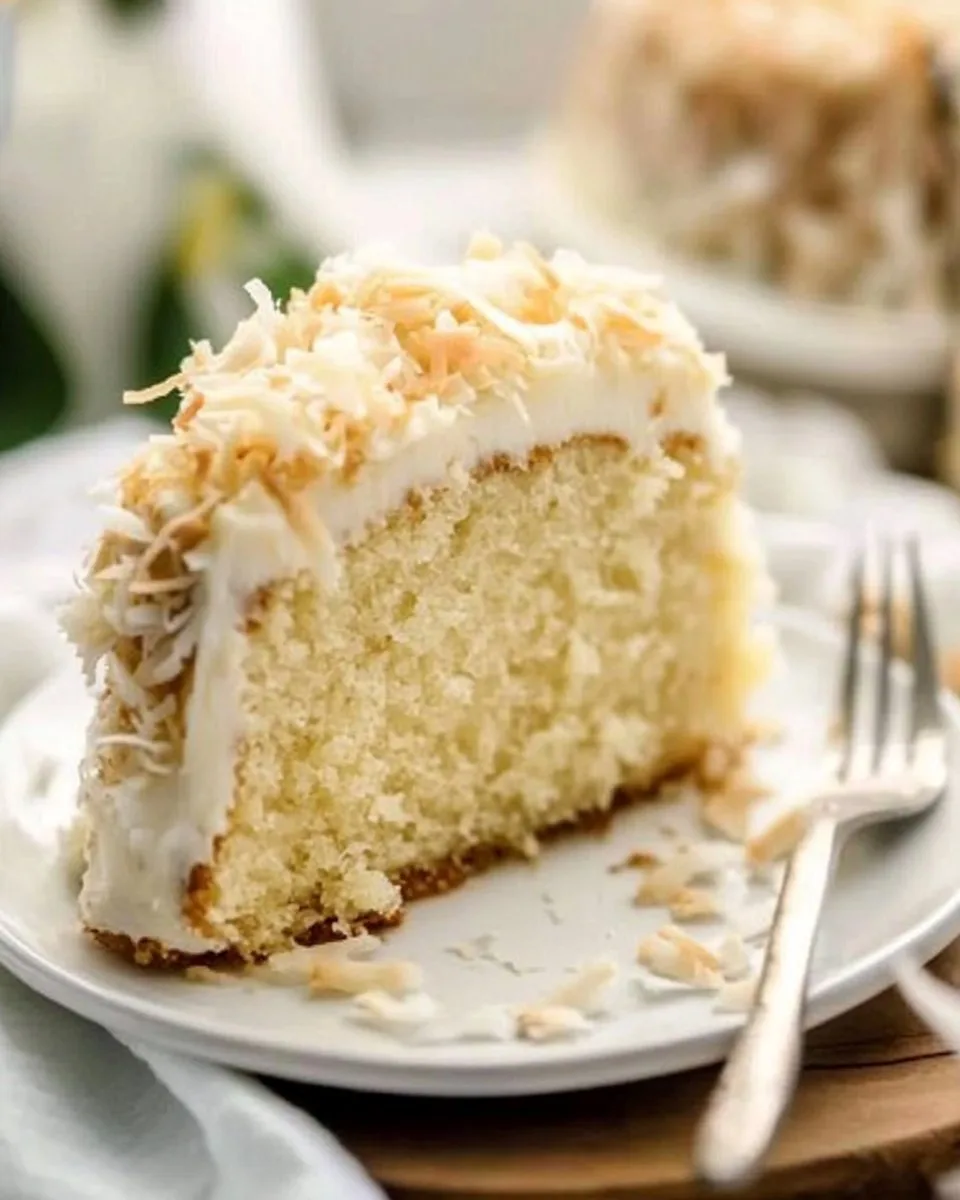
Serving Homemade Coconut Cake in Real Life
We eat this cake between the usual chaos and a calm evening ritual. A slice at the kitchen counter becomes a quiet checkpoint after homework, when papers are stacked and backpacks slump in the corner. One kid likes his slice warm with a smear of butter while another wants it cold with a tall glass of milk.
I often set the plate in the middle of the table and let everyone pick their piece while I tidy up pots and pans. Sometimes we have it with a quick bowl of fruit or a cup of tea. I find that simple sides make it feel more like an event and less like dessert rescue.
For birthdays, I add a few fresh berries on top and a candle in the middle. It never looks perfect, but the kids clap anyway. If I bring it to a potluck, I slice it ahead and pack it in a sturdy container so the custard does not smear.
When we have neighbors over after a storm or an impromptu porch visit, I put the cake on a simple platter and let people serve themselves. The powdered sugar dusting gives it a homemade look that feels generous without fuss. It travels well wrapped in foil for a short drive and does not demand a strict timetable.
Storing Homemade Coconut Cake for Busy Days
Leftovers are honest here. I wrap slices in plastic wrap or put them in an airtight container and keep them at room temperature for a day. The texture changes slightly overnight; the coconut softens more into the custard and the flavors meld.
If you need to keep it longer, refrigerate it for up to three days. Bring it back to room temperature before serving so the custard is supple and the butter in the cake relaxes. For a quick warm slice, pop it in the microwave for 12 to 15 seconds; that short blast revives the crumb without making it soggy.
You can freeze slices for up to two months. Flash-freeze the slices on a tray and then wrap each piece tightly in plastic wrap and foil. Thaw in the fridge overnight or on the counter for a couple of hours; avoid microwaving from frozen as the custard can become watery.
If the custard is homemade and especially soft, I store the filled cake in the fridge and let it sit out for 20 to 30 minutes before serving. This makes the cake feel less like a refrigerated dessert and more like something baked that morning.
Clara’s Kitchen Notes
-
Butter temperature matters. If the butter is too hard, it will not cream properly. If it is melting, the batter will be greasy. I soften mine on the counter for about 30 to 45 minutes.
-
Room-temperature eggs help the batter come together smoothly. If you forget, place eggs in a bowl of warm water for 5 to 7 minutes and they will warm up quickly.
-
Folding is gentle work. Use a spatula and turn the batter over rather than stir hard. This keeps the crumb light and makes the cake feel less like a loaf and more like a tender layer.
-
Clean as you go. I know it sounds small, but a tidy counter keeps you from panicking when the kitchen fills up with instruments and sticky measuring cups. Wipe bowls and utensils as you finish to save time later.
-
If the edges brown too fast, cover loosely with foil. Ovens vary and the silver will protect the top while the center finishes. I keep a sheet of foil nearby for this exact moment.
Family Variations on Homemade Coconut Cake
Sometimes we make the cake in a single pan and slice it like a coffee cake when there are fewer mouths at the table. It is less showy but feels more right for a weekday afternoon. The texture changes slightly but stays comforting.
For a lemon-laced version, I fold in a teaspoon of lemon zest into the batter and mix a light lemon glaze to drizzle on top. The kids call this one “sunny cake” and it disappears at soccer practice. The lemon adds brightness without changing the cozy feeling.
If someone in the family is dairy-free, swap the butter for a plant-based stick margarine and use full-fat coconut milk throughout. The cake takes on a more coconut-forward personality and we still feel warm after a slice.
For a richer celebration cake, toast the shredded coconut lightly in a dry pan until golden and then fold half into the batter and sprinkle the rest on top. The toasted coconut gives a deeper flavor that feels like a little party.
If you want to sneak in some healthy bits for picky eaters, add a half cup of mashed banana or applesauce and reduce the coconut milk by a couple of tablespoons. It makes the cake denser but also moist, and sometimes that is exactly what we need.
FAQs About Homemade Coconut Cake
Can I make this ahead of time?
Yes. You can bake the layers a day ahead and keep them wrapped in plastic. Assemble with the custard the next day so the filling stays fresh. On busy weeks this really helps dinner feel less frantic.
What if I do not have coconut milk?
You can use whole milk instead, though the coconut flavor will be lighter. If you want the coconut presence without coconut milk, increase the shredded coconut by a quarter cup. Both methods work when you are in a pinch.
How do I fix a dry cake?
Brush the layers with a simple syrup of equal parts water and sugar while they are still warm. This brings moisture back and is a trick I use when my oven runs a little hot or the timer tricks me.
Can I use sweetened or unsweetened coconut?
Either works. Sweetened coconut adds extra sweetness and chew, while unsweetened is milder. Adjust your sugar slightly if you prefer less sweetness.
Is the custard filling necessary?
No, but it makes the cake feel layered and special. On hectic nights I spread a thin layer of jam or whipped cream instead. The cake still reads as a treat even when the filling is simpler.
A Final Thought
I keep making this cake because it sits well with our life and because a simple, reliable dessert feels like caring. It is not perfect, and neither are we, but that is part of the point. The crumbs, the little custard spots on the plate, the argument over who gets the biggest slice, all of it adds up to the ordinary warmth I aim for in my kitchen.
I hope this Homemade Coconut Cake becomes one of those recipes you glance at when the week is full and know you can pull it off. Make it when you need a pause, or when you want to show someone you are thinking of them. If you make a mistake, laugh, clean up, and take a small slice anyway. That is the kind of cooking I believe in, and that is the kind of life I keep inviting into my kitchen.
Homemade Coconut Cake
Ingredients
Method
- Preheat the oven to 350°F (175°C). Grease and flour two 9-inch round cake pans.
- In a large bowl, cream together the butter and sugar until light and fluffy.
- Add the eggs one at a time, mixing well after each addition. Stir in the vanilla extract.
- In another bowl, mix together the flour, baking powder, and salt.
- Gradually add the dry mixture to the creamed mixture, alternating with the coconut milk, mixing until just combined.
- Fold in the shredded coconut gently.
- Divide the batter evenly between the prepared cake pans.
- Bake for 25-30 minutes or until a toothpick inserted into the center comes out clean.
- Let the cakes cool in the pans for 10 minutes, then transfer to wire racks to cool completely.
- Once cooled, place one cake layer on a serving plate and spread coconut custard filling on top.
- Place the second layer on top and dust with powdered sugar before serving.
