

I can still smell it now, the bright citrus that wakes up the whole house when I pull a pan from the stove and the steam curls under the kitchen light. Those tiny spoonfuls of sunshine, my Homemade Lemon Drops, bring my kids running, and for a moment the day slows down and we all crowd the counter like it is a holiday. The sugar crackles, the zest perfumes the air, and I find myself smiling at how such a simple thing can hold so many small, sweet memories.
Why This Homemade Lemon Drops Means So Much
The first time I made these, it was because my youngest declared a lemon phase and wanted everything tart and bright. I dug into the pantry with a laugh and found sugar, lemons, and a little stubborn will. By the time the candy had cooled, the kitchen felt like a place where simple joys were made, and that feeling has stuck with me ever since.
These candies became my kind of comfort food, the sort of thing you share in the car after piano lessons or hide in a jar for a rainy afternoon. I think of my grandmother stirring a pot, though she loved jam more than candy, and I hear her voice telling me to watch the heat. That memory sits in the edges of the recipe and makes every batch gentle and true.
Making candy at home can sound intimidating, but Homemade Lemon Drops are a lesson in patience and attention, not fancy tools. You do need a thermometer and a steady hand, and you learn to read the sugar by its sound and the way it shines. That quiet practice, the listening and waiting, is what makes it feel like home.
If you love small, handcrafted treats and the kind of care that goes into them, you might enjoy exploring other chewy candies that live in my recipe box. Try a different kind of homemade comfort with a recipe for homemade digestive gummies with ginger and fennel when you want something soothing after a heavy meal.
How to Make Homemade Lemon Drops
“Every time I stir this pot, it smells just like Sunday at home.”
There is a rhythm to making this candy that feels like a slow, comforting song. First the sugar and water dissolve and turn glassy and clear, then tiny bubbles gather and the lemon scent edges through like a bright chorus. You watch for the color and listen for the tiny change in sound that tells you the sugar has reached the right moment.
The kitchen will fill with steam that smells like lemon peel and warm sugar, and that steam is the promise that your effort will become something crisp and sweet. Use the thermometer as your friend; it reads what your eyes can guess but your hands cannot. When the pot is ready, you move quickly and carefully, because the sugar does not wait.
I find a quiet pleasure in the pour and spread step, watching the glossy yellow pool and cool into something that snaps when you bend it. That moment, when the kitchen goes from active to still, is almost ceremonial. Once the candies are dusted in cornstarch and tucked into a jar, they feel like a small, bright reward for patience and attention.
Ingredients You’ll Need
1 cup granulated sugar
1/2 cup water
1/2 cup fresh lemon juice
1 tablespoon lemon zest
1/4 teaspoon cream of tartar
1/2 teaspoon lemon extract (optional)
Cornstarch (for dusting)
A few warm notes: a little extra lemon zest will make the scent sing, and fresh lemons give the best brightness. If you like a rounder aroma, a whisper of vanilla will soften the edge. Cornstarch keeps the pieces from sticking and gives them a soft matte finish that makes them feel homemade.
Step-by-Step Directions
-
In a saucepan, combine sugar, water, lemon juice, lemon zest, and cream of tartar.
Stir over low heat until the sugar dissolves and the mixture looks glossy and clear.
Keep the heat steady and the lid off so you can watch the color and steam. -
Stir over medium heat until sugar dissolves.
Watch as the mixture moves from glassy to a gentle bubbling.
Breathe in the lemon scent that rises and steady the pan as the bubbles shift. -
Increase heat and bring to a boil. Avoid stirring at this stage.
Let the pot run, and listen for a change as the boil becomes steady and lively.
Do not stir; the sugar will concentrate and the temperature will climb evenly. -
Use a candy thermometer to monitor the temperature, aiming for the hard crack stage (300°F).
Clip the thermometer to the pan and keep an eye on it as the temperature rises.
The sound of the boil sharpens as it approaches the target and the color will deepen a touch. -
Once reached, remove from heat and let it cool slightly.
Give the pan a short rest so the bubbles settle and the pour is smooth.
The sugar should still be fluid, glossy, and a warm golden yellow. -
If desired, add lemon extract and stir.
Fold the extract in quickly and carefully to preserve the gloss.
This is the moment to tweak the scent, adding a touch of brightness if needed. -
Pour the mixture onto a greased baking sheet and let it cool until firm.
Tilt the sheet gently to spread if needed and watch the shine become satin.
Wait until the candy is completely set and gives just a little when pressed. -
Once hardened, cut into pieces and dust with cornstarch to prevent sticking.
Use a sharp knife or kitchen shears to portion the candy while it is firm but not brittle.
Toss the pieces in cornstarch if they feel tacky and shake off the excess. -
Store in an airtight container.
Line the container with parchment to preserve the texture and keep the candies separate.
They will keep their snap for several weeks in a cool, dry place, and the scent will mellow into something deep and inviting.
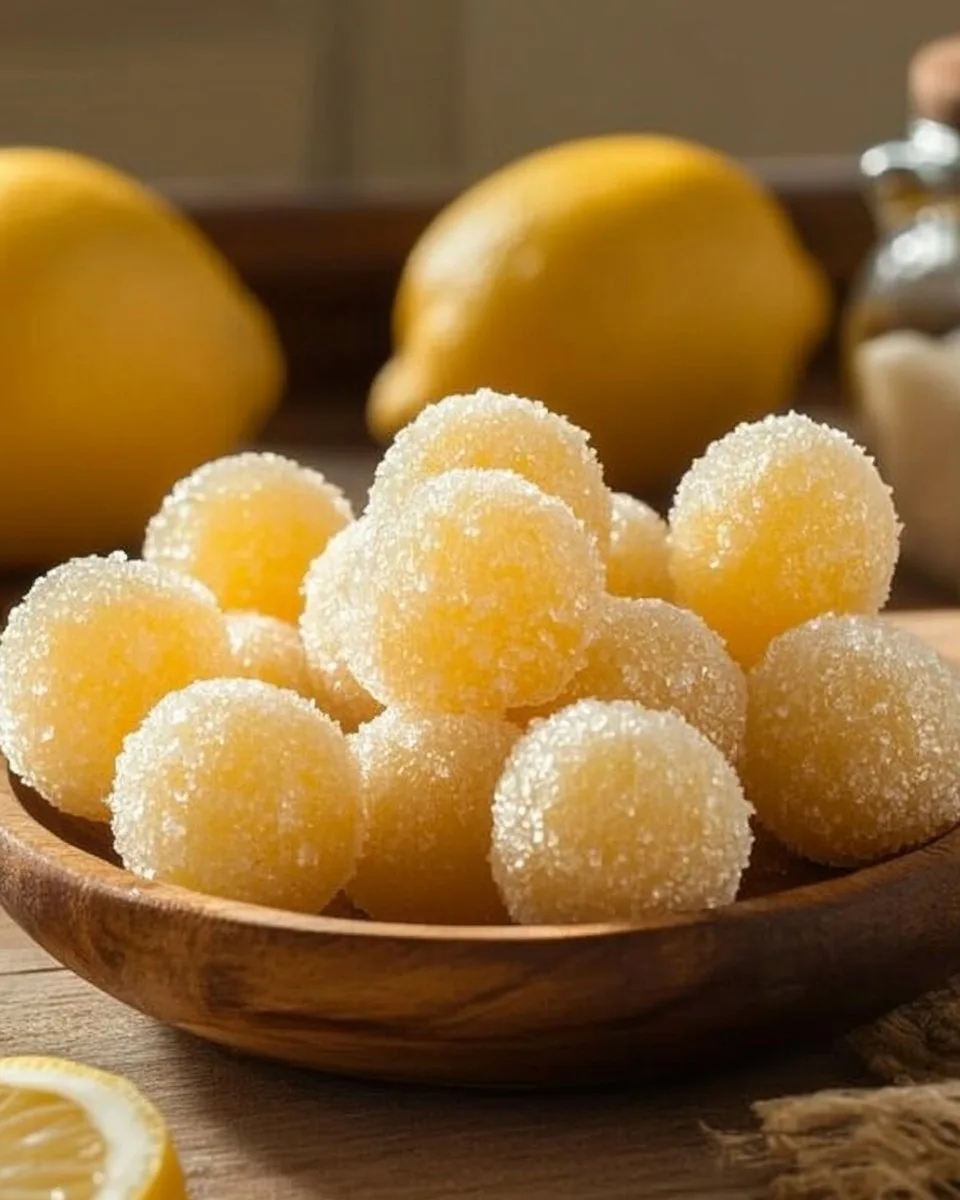
Bringing Homemade Lemon Drops Together
There is a quiet joy in the final assembly that makes me smile every time, like tucking a child into bed after a long day. Laying the candies in neat rows in a jar, the pale yellow pieces catch the light and promise small pleasures all week long. I sometimes tie a string around the jar and leave it on the counter as a small gift for whoever needs a lift.
I love to watch the kids when they discover a jar on the shelf, how the faces light and the day brightens for a minute. We have a little ritual where each child gets to choose a favorite shape or bite to enjoy after homework. Those tiny moments are why this recipe is more than sugar and lemon; it is a small, edible kindness that shows up in our daily life.
When friends come over, I place a few candies in a small dish near the coffee pot and suggest they help themselves. The candies are a simple way to say welcome without fuss. Homemade Lemon Drops make conversation sweeter and bring a moment of calm clarity to the little rushes of ordinary life.
Serving Homemade Lemon Drops With Family Warmth
Serve them on a small plate after dinner or pass a little jar around at a Sunday brunch and watch the way people pause and smile. I like to set a bowl by the tea kettle for guests who prefer something tart with their black tea. For children, I wrap a few pieces in wax paper and tuck them in lunch boxes as a secret treat.
For an afternoon pick-me-up, I sometimes place a few lemon drops next to a warm muffin or soft cookie and let the contrast make both feel new. The sharpness of the candy cuts through rich and buttery flavors and brings lightness to heavy sweets. Presentation does not need to be fancy; a simple white dish and a sprig of scrubbed mint is enough to feel thoughtful.
If you want to add a playful note, arrange the candies with small wooden picks so each person can choose without sticky fingers. That little detail makes sharing tidy and silly at the same time. These small rituals are what turn a recipe into a family habit that everyone looks forward to.
Storing Homemade Lemon Drops for Tomorrow
Store them in an airtight container at room temperature away from heat and humidity, and they will stay crisp for weeks. If the air is humid where you live, pop a small piece of paper towel into the jar to absorb extra moisture and keep the candies from softening. Check the jar occasionally and toss any pieces that look cloudy or sticky to keep the rest fresh.
Flavors seem to settle and deepen overnight, so if you can wait a day you might find the lemon becomes rounder and more balanced. The bright sharpness that greets you fresh from the pan quiets into a mellow, sunny note after a night in the jar. I often say that patience is part of the recipe, because waiting makes the candy more comforting in a small, meaningful way.
If you need to transport them, wrap the candies in parchment and keep them in a sturdy tin to prevent breakage. A little care goes a long way when sharing these with friends or bringing them to a potluck. People will notice the attention and tell you it tastes like home.
Amelia’s Kitchen Notes
-
Use fresh lemon juice and zest for the cleanest brightness.
Fresh lemons give a fragrance that bottled juice cannot match.
The oils in the zest are what make the candies smell like sunshine. -
A candy thermometer is worth owning and learning to read.
There is a calm confidence in watching numbers and knowing what to expect.
If you make candies a few times, that tool will become one of your favorites. -
Keep the pan and the thermometer clean between batches.
Residue from a previous mix can cause crystallization and grainy texture.
Wiping the thermometer and washing the pan quickly keeps the next batch smooth. -
Dust the pieces lightly with cornstarch and shake off the excess.
Too much cornstarch will feel chalky, and too little will let the candies stick.
A light tumble in a small bowl gives the right finish and a soft touch.
These notes are the sort I would share leaning on the counter over a cup of tea. Small things make a big difference, and the gentleness of this recipe means you can tweak it to fit your kitchen and your life. I promise, a little care returns joyful results.
Family Variations on Homemade Lemon Drops
We have a few family spins that keep this candy feeling new, and I like to rotate them through the year. In late summer I sometimes add a spoon of pureed raspberry to make a rosy twist that pairs beautifully with the lemon. That one makes the kids squeal because it looks so bright and feels like a little festival in the mouth.
When we want something softer, we make a hybrid with a bit more water and a lower final temperature, which makes chewier lemony bites. They are less crisp and more like a lemon gummy, and they are perfect for little ones who find hard candy a bit too much. For an adventurous note, try small bits of candied ginger tucked into the mix for a pop of warming spice.
If you enjoy the idea of exploring other citrus and fruit candies, try something like homemade peach rings for a different chewy, tangy delight. A playful recipe to try next is homemade gummy peach rings which share the same hands-on joy and make a lovely companion to your lemon batch. These variations keep a simple recipe fresh and full of surprises for the family.
Helpful Notes Before You Cook
Choose a heavy-bottomed saucepan for even heat and less chance of hot spots.
A thinner pan can scorch the sugar and ruin the smooth gloss you want.
Stir and heat gently at first, then let the science of sugar take over on the boil.
Keep small children at a safe distance when you are at the stove.
Boiling sugar is dangerous and the steam and splatters can cause serious burns.
I always have a separate small space prepared for little hands to play with dough or stickers, so they feel involved without getting too near.
Plan the final steps so a baking sheet and spatula are ready before you hit the hard crack stage.
Once the temperature is right you move fast, and there is no time to hunt for tools.
Lay out parchment, butter the pan lightly, and have a cloth to clean up splatters.
FAQs About Homemade Lemon Drops
Can I make this ahead of time?
Yes, absolutely. These candies store well and often taste even better the next day once the flavors settle and the lemon mellows.
What if I do not have a candy thermometer?
You can use the cold water test, dropping a small bit of syrup into cold water to see if it forms brittle threads.
However, a thermometer makes the process clearer and reduces guesswork, which I find comforting.
Why did my candy turn out cloudy or grainy?
Grain can happen if sugar crystals splash back into the syrup or if the pan is disturbed while boiling.
Try cleaning the pan, dissolving the sugar fully at the start, and avoiding stirring once it boils.
Can I make these with lime or orange instead?
Yes, swap citrus freely for lime or orange, and adjust zest and juice to taste.
Each fruit gives a different scent and balance, and trying new ones is one of my favorite small adventures.
A Warm Note From My Kitchen
I hope this Homemade Lemon Drops brings a little sunshine to your kitchen in the same way it brings light to mine. There is a quiet pleasure in turning simple things into something that can be shared and in the routine of stirring, waiting, and listening to the pot. When you pass a candy from your jar to a friend or tuck a piece in a lunch box, you are giving a small piece of the care it took to make it.
If you want to make a memory, take the process slowly and let someone stand with you by the stove, even if they only watch. Tell stories while the sugar heats, or listen to a favorite song and let that become part of your ritual. These little practices stitch recipes into the fabric of family life.
Until next time, keep your lemons close and your jars ready, and remember that small acts of kindness often live on a saucer or in a shallow tin. I cannot wait to hear your stories about who you shared your first batch with and what little rituals you invented. May your kitchen smell like bright peel and warm sugar, and may that scent always bring you home.

Homemade Lemon Drops
Ingredients
Method
- In a saucepan, combine sugar, water, lemon juice, lemon zest, and cream of tartar.
- Stir over low heat until the sugar dissolves and the mixture looks glossy and clear.
- Keep the heat steady and the lid off so you can watch the color and steam.
- Stir over medium heat until sugar dissolves, and the mixture moves to gentle bubbling.
- Increase heat and bring to a boil. Avoid stirring at this stage.
- Use a candy thermometer to monitor the temperature, aiming for the hard crack stage (300°F).
- Once reached, remove from heat and let it cool slightly.
- If desired, add lemon extract and stir gently to combine.
- Pour the mixture onto a greased baking sheet and let it cool until firm.
- Once hardened, cut into pieces and dust with cornstarch to prevent sticking.
- Store in an airtight container lined with parchment to maintain texture.
